
Tirzepatide,
does it really help with Reduced composite risk of cardiovascular death or worsening heart failure and improved health status in HFpEF with obesity?
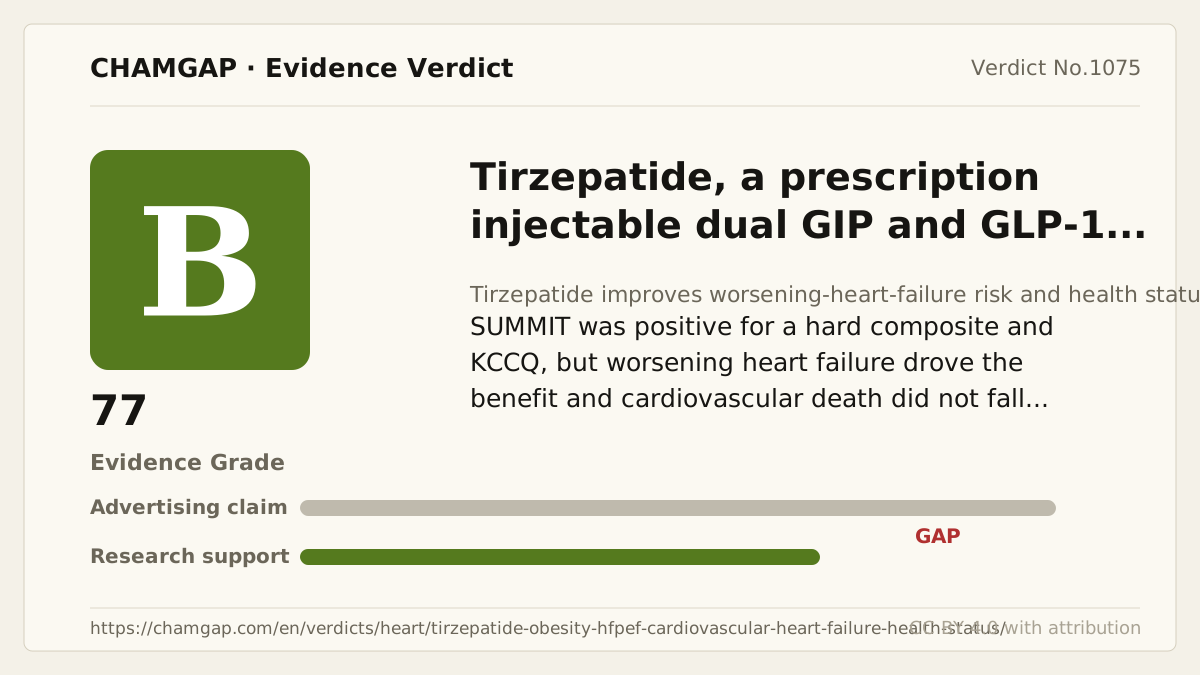
research showsTirzepatide is rated B for reducing the composite of cardiovascular death or worsening heart failure and improving health status in heart failure with preserved ejection fraction and obesity. In the 731-person randomized double-blind SUMMIT trial, composite events occurred in 9.9% versus 15.3%, with a hazard ratio of 0.62, and the 52-week between-group improvement in the Kansas City Cardiomyopathy Questionnaire clinical summary score was 6.9 points. The composite benefit was driven by worsening-heart-failure events, 29 versus 52, while cardiovascular deaths were 8 versus 5, with a hazard ratio of 1.58 and a very wide 95% confidence interval of 0.52 to 4.83. One medium-sized manufacturer-funded trial and substantial weight-loss mediation support B with 77 points rather than A. Gastrointestinal adverse effects, gallbladder disease, rare pancreatitis, and injection burden remain separate safety issues.
ads claimA 38% relative reduction in the composite can be transformed into a claim of 38% fewer cardiovascular deaths or improved survival in every person with HFpEF. The trial was restricted to HFpEF with obesity, worsening-heart-failure events drove the benefit, and cardiovascular death alone was not reduced.
Useful facts when choosing a product
- Tirzepatide is a once-weekly prescription subcutaneous injection that activates GIP and GLP-1 receptors, and SUMMIT escalated the dose according to tolerability up to 15 mg.
- Mounjaro is the diabetes brand containing the same ingredient, while HFpEF event reduction is a separate clinical-evidence claim, so country-specific indications and coverage should be checked in the product label.
- SUMMIT evidence applies to symptomatic HFpEF with left ventricular ejection fraction of at least 50% and body-mass index of at least 30 kg/m² and should not be generalized to HF without obesity or to other heart-failure phenotypes.
- Nausea, diarrhea, vomiting, and constipation are common; gallbladder disease, dehydration-related kidney injury, rare pancreatitis, and injection-site reactions require attention, and a personal or family history of medullary thyroid carcinoma or MEN2 is a contraindication.
Chamgap Semantic Classification Code
Candidate index · review held
M.tirzepatide.UNK.composite-risk-of-cardiovascular-death-or-worsening-heart-failure-and-improved-health-status-in-hfpef-with-obesity.reduce.placeboMedicinal interventions > Tirzepatide > Unknown > composite risk of cardiovascular death or worsening heart failure and improved health status in HFpEF with obesity > Reduction claim > Placebo
An automated migration candidate, not an issued permanent code; exact claim scope remains under review. This machine-generated migration candidate helps retrieval but is not a permanent assignment. The original verdict ID and URL remain authoritative.
What the research actually shows
Packer and colleagues randomized 731 participants with left ventricular ejection fraction of at least 50% and body-mass index of at least 30 kg/m² to once-weekly tirzepatide up to 15 mg or placebo, with median follow-up of 104 weeks. Cardiovascular death or worsening heart failure occurred in 36 versus 56 participants, and 52-week KCCQ-CSS changed by 19.5 versus 12.7 points. Worsening-heart-failure events fell from 52 to 29, whereas cardiovascular deaths were 5 on placebo and 8 on tirzepatide, so prevention of cardiovascular death alone is not established. A secondary analysis by Borlaug and colleagues found improvements in blood pressure, estimated blood volume, C-reactive protein, and selected cardiac and kidney markers, but it is mechanistic follow-up of the same trial, not independent replication. Associations with weight loss support mediation but do not prove a separate direct cardiac action.
Why this is classified as B (77)
An adjudicated cardiovascular-death or worsening-heart-failure composite and KCCQ health status, both direct clinical endpoints, were positive in one international double-blind randomized trial. Worsening heart failure drove the composite, cardiovascular deaths were 8 versus 5 without evidence of reduction, and limitations include 731 participants, one Eli Lilly trial, and substantial weight-loss mediation. The prescription hard-outcome exception means manufacturer funding alone does not impose a C ceiling, but absent independent large replication the result is high B with 77 points. Gastrointestinal, gallbladder, and pancreatic risks remain separate safety issues.
Counterpoint. For patients whose obesity is a major driver of HFpEF, tirzepatide can address weight, symptoms, and worsening-heart-failure risk together. It should not displace established heart-failure therapy without clinical guidance, and diabetes, kidney function, blood pressure, diuretics, and gastrointestinal tolerability require coordinated management.
Rejudgment record. New verdict — Accepted the adjudicated cardiovascular-death or worsening-heart-failure composite hazard ratio of 0.62 and the 6.9-point KCCQ treatment difference in SUMMIT as direct clinical outcomes, while assigning high B rather than A because worsening heart failure drove the composite, cardiovascular deaths were 8 versus 5 without reduction, the evidence comes from one 731-person Eli Lilly trial, and weight-loss mediation is substantial
Sub-claim grades by effect
This ingredient is marketed for several effects. A single overall grade blends strong and weak claims together, so each effect is graded separately here. The overall grade reflects the strongest disconfirming or core claim.
| Effect (sub-claim) | Grade | Basis |
|---|---|---|
| Reduction in the composite risk of cardiovascular death or worsening heart failure | B | The adjudicated composite had a hazard ratio of 0.62, but it came from one trial and was driven by worsening heart failure rather than cardiovascular death. |
| Reduction in worsening-heart-failure events | B | Events fell to 29 versus 52, hazard ratio 0.54, but no independent large replication is available. |
| Improved health status measured by KCCQ | B | The 6.9-point between-group difference at week 52 is clinically meaningful, but it is patient reported and was the second primary endpoint in the same single trial. |
Cross-check — AI research and Codex final gate
Evidence Table
| Study | Design | Sample | Funding | Endpoint | Result | Weight |
|---|---|---|---|---|---|---|
| SUMMIT, Packer et al. 2025 | International multicenter randomized double-blind placebo-controlled event and health-status trial | 731 participants; 364 assigned to tirzepatide and 367 to placebo | Funded by Eli Lilly and included employee authors | First cardiovascular death or worsening-heart-failure event composite and change in KCCQ-CSS at 52 weeks | Composite events were 9.9% versus 15.3%, hazard ratio 0.62; the KCCQ treatment difference was 6.9 points. Cardiovascular deaths were 8 versus 5. | Key direct clinical-event and health-status evidence |
| SUMMIT mechanistic secondary analysis, Borlaug et al. 2025 | Prespecified and exploratory biomarker and hemodynamic secondary analysis | 731 SUMMIT participants with measure-specific available data | Funded by Eli Lilly and included employee authors | Blood pressure, estimated blood volume, C-reactive protein, kidney function, and cardiac-injury markers | At 52 weeks, treatment differences included -5 mmHg in systolic blood pressure, -0.58 L in estimated blood volume, and -37.2% in C-reactive protein, with improvement in selected cardiac and kidney markers. | Mechanistic support but a surrogate secondary analysis of the same trial |
Receipt — 3 References
All 3 cited sources were verified for existence at the original page (as of 2026-07-21).
Final verification and publication gate: Codex · Evidence date: 2026-07-21 · Corrections: none
Cite this verdict
[Chamgap] Tirzepatide x heart-failure events and health status in HFpEF with obesity — Evidence Grade B·77. 3 cited sources checked. Source: https://chamgap.com/en/verdicts/heart/tirzepatide-obesity-hfpef-cardiovascular-heart-failure-health-status/ · CC BY 4.0CC BY 4.0 — free to use with attribution; do not distort grades, numbers, or verdict meaning.
What this document does and does not do
Chamgap is an information source. It reports what research has and has not confirmed; it does not tell readers what to take or buy. That decision belongs to readers and, when needed, medical or legal professionals. This verdict reflects literature available up to the search date and may change as new research appears. Nothing here is medical advice.