
Selenium,
does it really help with Primary prevention of cardiovascular disease in adults?
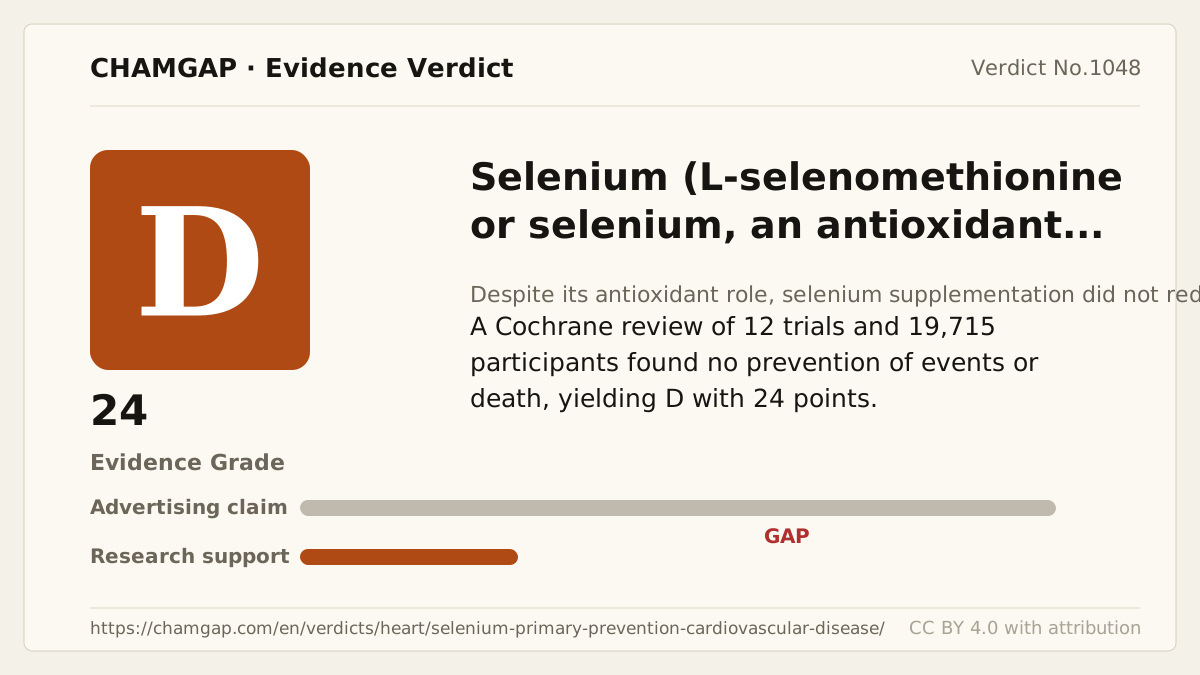
research showsSelenium supplements are rated D for primary prevention of cardiovascular disease in adults. A Cochrane review included 12 randomized trials and 19,715 participants and found no prevention of total cardiovascular events, risk ratio 1.03 (95% CI 0.95 to 1.11), cardiovascular death, risk ratio 0.97 (0.79 to 1.20), or nonfatal cardiovascular events, risk ratio 0.96 (0.89 to 1.04). A long-term cardiovascular secondary analysis of the NPC trial was also neutral, with a hazard ratio of 1.03 for total cardiovascular disease and 1.22 for cardiovascular death. Antioxidant mechanisms and changes in selenium status do not replace a reduction in clinical events. Large human evidence is null, yielding D with 24 points; F grades for separate selenium claims such as prostate cancer or diabetes were not transferred automatically. Selenosis and a diabetes-risk signal are separate safety concerns.
ads claimMarketing may convert antioxidant defense, slower vascular aging, or heart protection mechanisms into prevention of myocardial infarction and stroke. Antioxidant-enzyme biology and correction of deficiency do not mean that extra supplementation reduces cardiovascular events in generally well-nourished adults.
Useful facts when choosing a product
- Selenium supplements use forms such as L-selenomethionine, selenium-enriched yeast, and inorganic selenium, which can differ in absorption and content.
- Selenium is an essential trace nutrient, but the margin between required and excessive intake is limited. Intake from food, multivitamins, and single-ingredient products should be added together.
- Chronic excess can cause selenosis, with garlic odor on the breath, metallic taste, nausea, diarrhea, fatigue, neurologic symptoms, hair loss, and brittle or lost nails.
- The United States adult upper intake level is 400 micrograms per day, while the European Food Safety Authority set an adult upper level of 255 micrograms per day. A diabetes-risk signal has also been reported, weakening the rationale for long-term high-dose use without established deficiency.
Chamgap Semantic Classification Code
Candidate index · review held
S.selenium.UNK.primary-prevention-of-cardiovascular-disease.prevent.UNKSupplements and nutraceuticals > Selenium > Unknown > Primary prevention of cardiovascular disease > Occurrence-prevention claim > Unknown
An automated migration candidate, not an issued permanent code; exact claim scope remains under review. This machine-generated migration candidate helps retrieval but is not a permanent assignment. The original verdict ID and URL remain authoritative.
What the research actually shows
The Cochrane review by Rees and colleagues included 12 selenium-supplement trials with 19,715 participants who did not have cardiovascular disease. Clinical-event evidence came mainly from the United States SELECT and NPC trials, with neutral risk ratios of 1.03 for total cardiovascular events, 0.97 for cardiovascular death, and 0.96 for nonfatal events. The NPC secondary analysis by Stranges and colleagues followed 1,004 participants without cardiovascular disease at baseline for an average of 7.6 years; selenized yeast providing 200 micrograms per day did not reduce total cardiovascular disease, myocardial infarction, stroke, or cardiovascular death. Cardiovascular events were not the original primary purpose of those cancer-prevention trials, but their large samples and long-term null results do not support prevention.
Why this is classified as D (24)
The Cochrane review of 12 trials and 19,715 participants found neutral direct clinical outcomes: risk ratio 1.03 for total events, 0.97 for cardiovascular death, and 0.96 for nonfatal events, consistent with the long-term NPC analysis. This meets the D criterion for null large human evidence and yields 24 points. Because the cardiovascular evidence came mainly from secondary analyses of two large cancer-prevention trials and the United States Preventive Services Task Force does not specifically recommend against selenium, F grades from prostate-cancer or diabetes claims were not transferred automatically.
Counterpoint. Treatment of medically confirmed selenium deficiency is separate. Smoking cessation, blood-pressure and LDL control, exercise, diet, and diabetes management have more direct evidence for reducing first cardiovascular events.
Rejudgment record. Cross-check incorporated — Applied rule ② for D because the Cochrane review of 12 trials and 19,715 participants and the long-term NPC secondary analysis were consistently neutral for cardiovascular events and death; did not transfer F from other claim axes because repeated dedicated cardiovascular-trial refutation or a strong guideline recommendation against use was not established
Sub-claim grades by effect
This ingredient is marketed for several effects. A single overall grade blends strong and weak claims together, so each effect is graded separately here. The overall grade reflects the strongest disconfirming or core claim.
| Effect (sub-claim) | Grade | Basis |
|---|---|---|
| Prevention of a first cardiovascular event in adults | D | Across 12 randomized trials, total cardiovascular events were not reduced, with a risk ratio of 1.03. |
| Prevention of cardiovascular death in adults | D | Neither the Cochrane risk ratio of 0.97 nor the NPC long-term hazard ratio of 1.22 showed a significant preventive effect. |
| Overall primary prevention of cardiovascular disease through antioxidant selenium supplementation | D | Despite the antioxidant rationale, pooled clinical events including myocardial infarction and stroke were neutral. |
Cross-check — AI research and Codex final gate
Evidence Table
| Study | Design | Sample | Funding | Endpoint | Result | Weight |
|---|---|---|---|---|---|---|
| Rees K et al. 2013 Cochrane review | Cochrane systematic review and meta-analysis of randomized controlled trials | 12 trials and 19,715 participants; seven trials lasted at least three months | Academic Cochrane review; clinical-event data came mainly from SELECT and NPC | Total cardiovascular events, cardiovascular death, nonfatal cardiovascular events, and all-cause death | Risk ratios were neutral at 1.03 (95% CI 0.95 to 1.11) for total cardiovascular events, 0.97 (0.79 to 1.20) for cardiovascular death, and 0.96 (0.89 to 1.04) for nonfatal events. | Key large clinical-event synthesis; null |
| Stranges S et al. 2006 | Cardiovascular secondary analysis of a randomized clinical trial | 1,004 participants without cardiovascular disease at baseline; mean follow-up 7.6 years | NPC trial supported by the United States National Cancer Institute | Total cardiovascular disease, myocardial infarction, stroke, and cardiovascular death | Selenized yeast providing 200 micrograms per day did not prevent disease: hazard ratio 1.03 (95% CI 0.78 to 1.37) for total cardiovascular disease and 1.22 (0.76 to 1.95) for cardiovascular death. | Long-term direct clinical-event null result; secondary analysis |
Receipt — 3 References
All 3 cited sources were verified for existence at the original page (as of 2026-07-21).
Final verification and publication gate: Codex · Evidence date: 2026-07-21 · Corrections: none
Cite this verdict
[Chamgap] Selenium x primary prevention of cardiovascular disease in adults — Evidence Grade D·24. 3 cited sources checked. Source: https://chamgap.com/en/verdicts/heart/selenium-primary-prevention-cardiovascular-disease/ · CC BY 4.0CC BY 4.0 — free to use with attribution; do not distort grades, numbers, or verdict meaning.
What this document does and does not do
Chamgap is an information source. It reports what research has and has not confirmed; it does not tell readers what to take or buy. That decision belongs to readers and, when needed, medical or legal professionals. This verdict reflects literature available up to the search date and may change as new research appears. Nothing here is medical advice.