
Rosuvastatin,
does it really help with Primary prevention of a first major cardiovascular event in adults without high LDL cholesterol but with elevated hs-CRP?
research showsRosuvastatin is rated B for reducing first major cardiovascular events in adults without cardiovascular disease whose LDL cholesterol was below 130 mg/dL and hs-CRP was at least 2 mg/L. JUPITER randomized 17,802 participants and reduced the composite cardiovascular event rate from 1.36 to 0.77 per 100 person-years (HR 0.56, 95% CI 0.46 to 0.69). However, it was one large AstraZeneca-sponsored trial stopped early after a median 1.9 years, and neither the incremental value of hs-CRP selection nor extension to adults at still lower absolute risk was directly tested. Muscle and liver effects and a small increase in new diabetes are kept separately under safety.
ads claimPromotion can turn the result into 'anyone with normal cholesterol but inflammation needs a statin.' The evidence instead concerns prescription treatment in a JUPITER-eligible population defined by age, LDL-C, hs-CRP, and exclusion criteria, with overall cardiovascular risk, contraindications, and preferences still considered.
Useful facts when choosing a product
- JUPITER used rosuvastatin 20 mg once daily. In practice, the dose is selected according to overall cardiovascular risk, the LDL-C goal, kidney and liver function, and interacting medicines.
- Hs-CRP can rise transiently with infection or injury, so a single value does not by itself establish a statin indication. The trial did not validate hs-CRP itself as a treatment target.
- Myalgia, creatine kinase elevation, liver-enzyme abnormalities, and rare rhabdomyolysis can occur, and rosuvastatin should not be used during pregnancy.
- Physician-reported new diabetes increased slightly in JUPITER. This is a separate safety and monitoring issue, not evidence that cardiovascular efficacy is absent.
Chamgap Semantic Classification Code
Candidate index · review held
M.rosuvastatin.UNK.primary-prevention-of-a-first-major-cardiovascular-event-without-high-ldl-cholesterol-but-with-elevated-hs-crp.prevent.placeboMedicinal interventions > Rosuvastatin > Unknown > Primary prevention of a first major cardiovascular event without high LDL cholesterol but with elevated hs-CRP > Occurrence-prevention claim > Placebo
An automated migration candidate, not an issued permanent code; exact claim scope remains under review. This machine-generated migration candidate helps retrieval but is not a permanent assignment. The original verdict ID and URL remain authoritative.
What the research actually shows
Ridker and colleagues randomized 17,802 JUPITER participants to rosuvastatin 20 mg or placebo; after a median 1.9 years, the primary composite hazard ratio was 0.56. The AstraZeneca-sponsored trial was stopped after a prespecified interim analysis. A subsequent analysis found more incident diabetes among participants with diabetes risk factors, while cardiovascular and mortality benefits exceeded that hazard. The evidence establishes treatment efficacy in the defined JUPITER population, but does not establish that hs-CRP is independently necessary for treatment selection or that very-low-risk adults obtain net benefit.
Why this is classified as B (74)
The direct cardiovascular hazard ratio of 0.56 in a 17,802-participant randomized trial is strong positive evidence. Concentration in one AstraZeneca-sponsored trial, early stopping at a median 1.9 years, and lack of a test of the independent value of hs-CRP selection limit the verdict to B with 74 points. Diabetes and muscle or liver harms are separated from efficacy scoring.
Counterpoint. Even for people resembling JUPITER participants, absolute benefit depends on age, blood pressure, smoking, diabetes, family history, and baseline event risk. This is a prescription medicine to consider after global risk assessment, not a medicine to self-start from hs-CRP alone.
Rejudgment record. New verdict — Gave substantial weight to JUPITER's large randomized design and direct major cardiovascular outcomes while accounting for a single AstraZeneca-sponsored pivotal trial, early stopping, and no isolated test of the incremental value of hs-CRP selection
Sub-claim grades by effect
This ingredient is marketed for several effects. A single overall grade blends strong and weak claims together, so each effect is graded separately here. The overall grade reflects the strongest disconfirming or core claim.
| Effect (sub-claim) | Grade | Basis |
|---|---|---|
| Reduction of first major cardiovascular events in adults with non-high LDL-C and elevated hs-CRP | B | The large JUPITER hard-outcome trial was positive, but it was one sponsored trial stopped early. |
| Hs-CRP screening itself selects treatment candidates better than otherwise equivalent risk assessment | ? | No efficacy trial directly compared an hs-CRP-based selection strategy with otherwise equivalent risk assessment. |
| The same net benefit in very-low-risk adults outside JUPITER criteria | ? | Direct human efficacy literature for this extension was not identified. |
Cross-check — AI research and Codex final gate
Evidence Table
| Study | Design | Sample | Funding | Endpoint | Result | Weight |
|---|---|---|---|---|---|---|
| Ridker PM et al. JUPITER 2008 | Multicenter randomized double-blind placebo-controlled trial | 17,802 participants | Sponsored by AstraZeneca | Composite of myocardial infarction, stroke, arterial revascularization, unstable-angina hospitalization, or cardiovascular death | 0.77 versus 1.36 events per 100 person-years, HR 0.56 (95% CI 0.46 to 0.69); stopped early at a median 1.9 years. | Pivotal large hard-outcome randomized trial |
| Ridker PM et al. JUPITER diabetes analysis 2012 | Follow-up randomized-trial analysis stratified by prespecified risk factors | 17,603 JUPITER participants without diabetes | JUPITER data with AstraZeneca research support | Cardiovascular events, mortality, and incident diabetes | Cardiovascular and mortality benefits exceeded the diabetes hazard even in the at-risk group, although diabetes diagnosis was accelerated by an average 5.4 weeks. | Net-benefit and safety context |
Receipt — 2 References
All 2 cited sources were verified for existence at the original page (as of 2026-07-20).
Final verification and publication gate: Codex · Evidence date: 2026-07-20 · Corrections: none
Cite this verdict
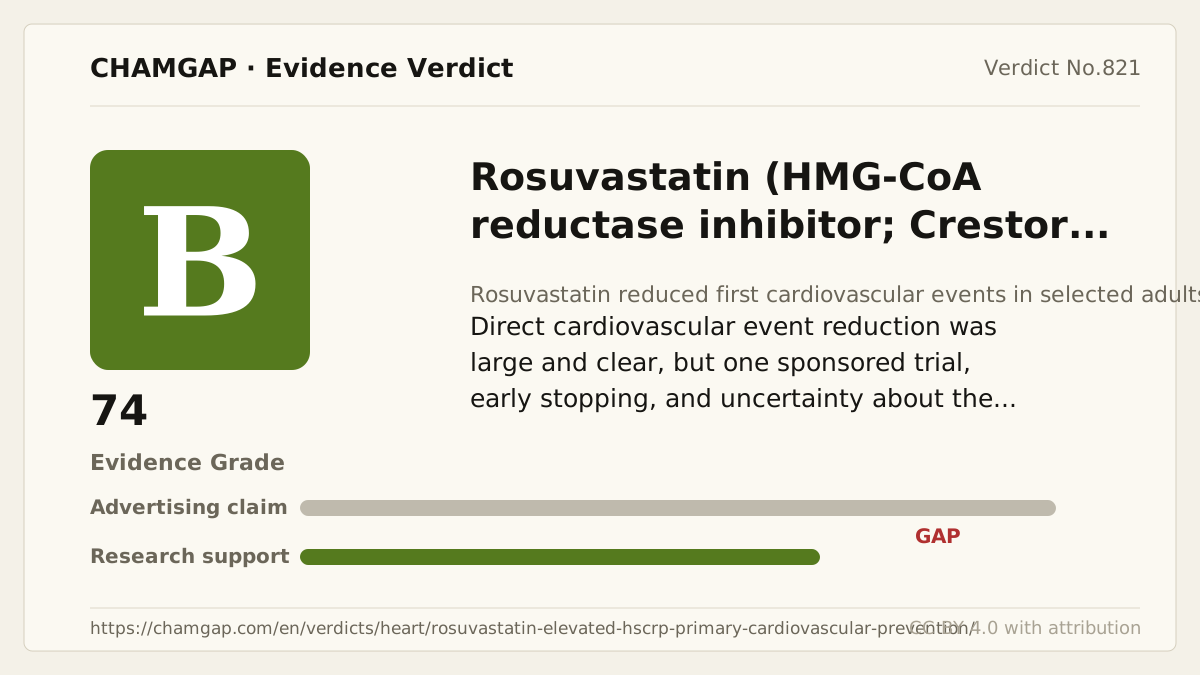
[Chamgap] Rosuvastatin x prevention of a first major cardiovascular event in adults with non-high LDL and elevated hs-CRP — Evidence Grade B·74. 2 cited sources checked. Source: https://chamgap.com/en/verdicts/heart/rosuvastatin-elevated-hscrp-primary-cardiovascular-prevention/ · CC BY 4.0CC BY 4.0 — free to use with attribution; do not distort grades, numbers, or verdict meaning.
What this document does and does not do
Chamgap is an information source. It reports what research has and has not confirmed; it does not tell readers what to take or buy. That decision belongs to readers and, when needed, medical or legal professionals. This verdict reflects literature available up to the search date and may change as new research appears. Nothing here is medical advice.