
Restrictive red-cell transfusion,
does it really help with Reduced red-cell use while keeping major clinical events within an acceptable margin in moderate- to high-risk cardiac surgery with cardiopulmonary bypass?
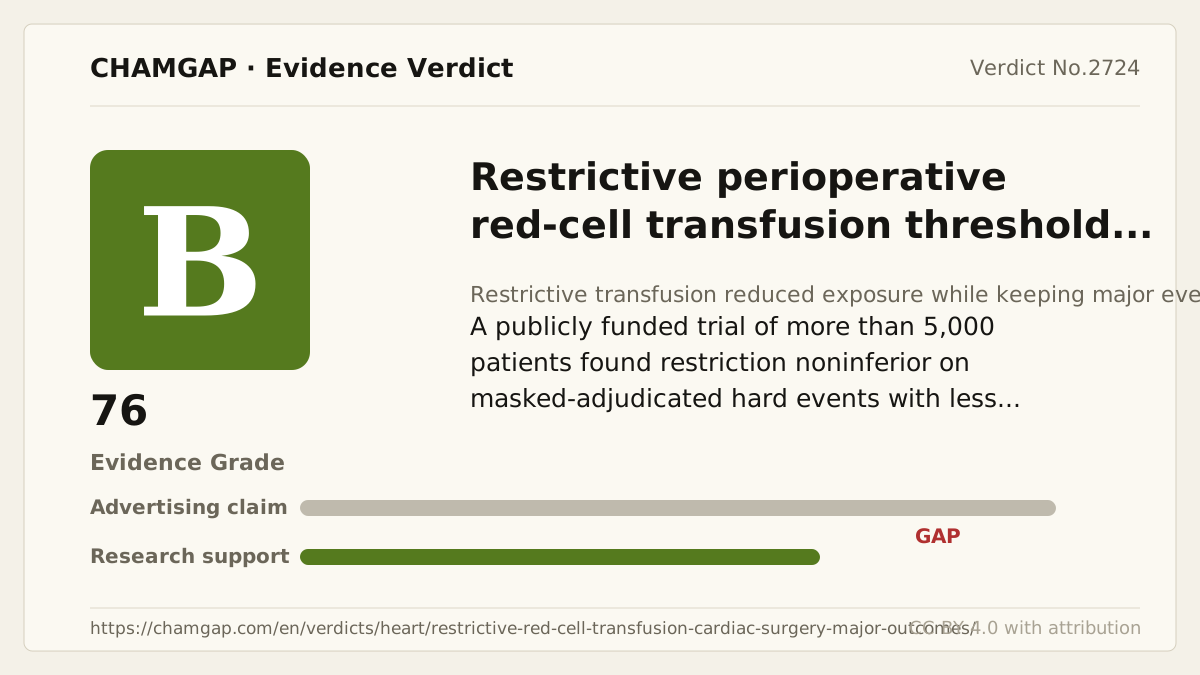
research showsThe grade is B. TRICS III randomized 5,243 patients, and the prespecified primary per-protocol analysis included 4,860 who underwent surgery, 2,430 per arm. Death, myocardial infarction, stroke, or new dialysis by discharge or day 28 occurred in 11.4% with the restrictive strategy and 12.5% with the liberal strategy. The risk difference of -1.11 points (95% CI -2.93 to 0.72) remained within the prespecified 3-point noninferiority margin. The modified intention-to-treat analysis of 5,092 patients was supportive and assessed consistency. Red-cell exposure, a prespecified secondary outcome, fell from 72.6% to 52.3%. This supports reduced transfusion with preserved outcomes within the margin, not superiority of restriction.
ads claimThis is not a universal instruction to withhold transfusion whenever hemoglobin is low. The trial compared perioperative protocols, while active bleeding, coagulation treatment, and other clinical decisions remained with treating clinicians.
Useful facts when choosing a product
- The restrictive trigger was hemoglobin below 7.5 g/dL; liberal triggers were below 9.5 in the operating room or ICU and below 8.5 on the ward.
- The prespecified primary analysis was per protocol in 4,860 surgical participants, 2,430 per arm; modified intention-to-treat analysis in 5,092 was supportive for consistency.
- Verdict 2324 is D with 34 points for a different question in acute myocardial infarction with anemia.
Chamgap Semantic Classification Code
Candidate index · review held
P.restrictive-perioperative-red-cell-transfusion-threshold.procedural.red-cell-use-while-keeping-major-clinical-events-within-an-acceptable-margin-in-moderate-to-high-risk-cardiac-surgery-with-cardiopulmonary-bypass.reduce.UNKProcedures, devices and tests > Restrictive perioperative red-cell transfusion threshold > Procedural > red-cell use while keeping major clinical events within an acceptable margin in moderate- to high-risk cardiac surgery with cardiopulmonary bypass > Reduction claim > Unknown
An automated migration candidate, not an issued permanent code; exact claim scope remains under review. This machine-generated migration candidate helps retrieval but is not a permanent assignment. The original verdict ID and URL remain authoritative.
What the research actually shows
At 73 international centers, 5,243 adults scheduled for cardiopulmonary-bypass cardiac surgery with EuroSCORE I of at least 6 were assigned to restrictive or liberal thresholds. The prespecified primary per-protocol analysis included 4,860 who underwent surgery, 2,430 per arm. The modified intention-to-treat population of 5,092 and adjusted analyses were supportive analyses used to examine consistency of the treatment effect. Participants were not actively informed of assignment; deaths were centrally verified and other primary components were adjudicated by a committee unaware of assignment. The primary composite was 11.4% versus 12.5%, risk difference -1.11 points (95% CI -2.93 to 0.72), noninferiority P<.001. Red-cell exposure, a prespecified secondary outcome, was 52.3% versus 72.6%. The trial was supported by the Canadian Institutes of Health Research, Canadian Blood Services–Health Canada, Australia's National Health and Medical Research Council, and New Zealand's Health Research Council. The paper states that the funders had no role in trial design or conduct; data collection, management, analysis, or interpretation; or preparation or review of the manuscript. Canadian Blood Services is an independent registered charitable organization funded primarily by governments and operates the national blood and plasma supply system; that fact alone does not establish a competing interest. Prespecified integration of TRICS II pilot participants was part of the same program and was not counted as independent replication.
Why this is classified as B (76)
A large publicly funded hard-outcome trial met its prespecified margin, but one open noninferiority trial gives B with 76 points.
Counterpoint. B does not mandate one threshold for every cardiac-surgery patient. Active bleeding, tissue hypoxia, acute coronary disease, and individual risk still matter.
Rejudgment record. One large noninferiority trial — A publicly funded 5,243-participant trial met a prespecified 3-point margin on masked-adjudicated hard outcomes and reduced transfusion exposure, with caps for one noninferiority trial
| Endpoint | H | Hard endpoint - actual events such as death |
| Replication | R1 | Single confirmatory trial |
| Independence | I2 | Decisive evidence is publicly or non-profit funded |
| Effect size | E+ | Meets the clinically important threshold |
Stored derived and displayed grades match; this is not a current recalculation or validity check (B).
Sub-claim grades by effect
This ingredient is marketed for several effects. A single overall grade blends strong and weak claims together, so each effect is graded separately here. The overall grade reflects the strongest disconfirming or core claim.
| Effect (sub-claim) | Grade | Basis |
|---|---|---|
| Restrictive transfusion without an unacceptable increase in major 28-day events | B | The unfavorable risk-difference bound of 0.72 points was within the prespecified 3-point margin. |
| Reduced exposure to red-cell transfusion | B | In this prespecified secondary outcome, exposure was about 20 points lower, 52.3% versus 72.6%. |
Cross-check — AI research and Codex final gate
Evidence Table
| Study | Design | Sample | Funding | Endpoint | Result | Weight |
|---|---|---|---|---|---|---|
| Mazer CD et al. 2017 TRICS III | Seventy-three-center open randomized noninferiority trial with central and masked event adjudication | 5,243 randomized; prespecified primary per-protocol analysis of 4,860 who underwent surgery, 2,430 per arm; supportive modified intention-to-treat analysis of 5,092 | Canadian Institutes of Health Research, Canadian Blood Services–Health Canada, Australian NHMRC, and Health Research Council of New Zealand | Composite of death, myocardial infarction, stroke, or new dialysis through discharge or postoperative day 28 | Primary composite 11.4% versus 12.5%, risk difference -1.11 points (95% CI -2.93 to 0.72), noninferiority P<.001; prespecified secondary red-cell transfusion outcome 52.3% versus 72.6% | Large publicly funded direct hard-outcome evidence from one noninferiority trial |
Receipt — 1 References
All 1 cited sources were verified for existence at the original page (as of 2026-08-18).
Final verification and publication gate: Codex · Evidence date: 2026-08-18 · Corrections: none
Cite this verdict
[Chamgap] Restrictive red-cell transfusion x major outcomes after cardiac surgery — Evidence Grade B·76. 1 cited sources checked. Source: https://chamgap.com/en/verdicts/heart/restrictive-red-cell-transfusion-cardiac-surgery-major-outcomes/ · CC BY 4.0CC BY 4.0 — free to use with attribution; do not distort grades, numbers, or verdict meaning.
What this document does and does not do
Chamgap is an information source. It reports what research has and has not confirmed; it does not tell readers what to take or buy. That decision belongs to readers and, when needed, medical or legal professionals. This verdict reflects literature available up to the search date and may change as new research appears. Nothing here is medical advice.