
Renal denervation,
does it really help with Blood-pressure reduction in hypertension uncontrolled by medication?
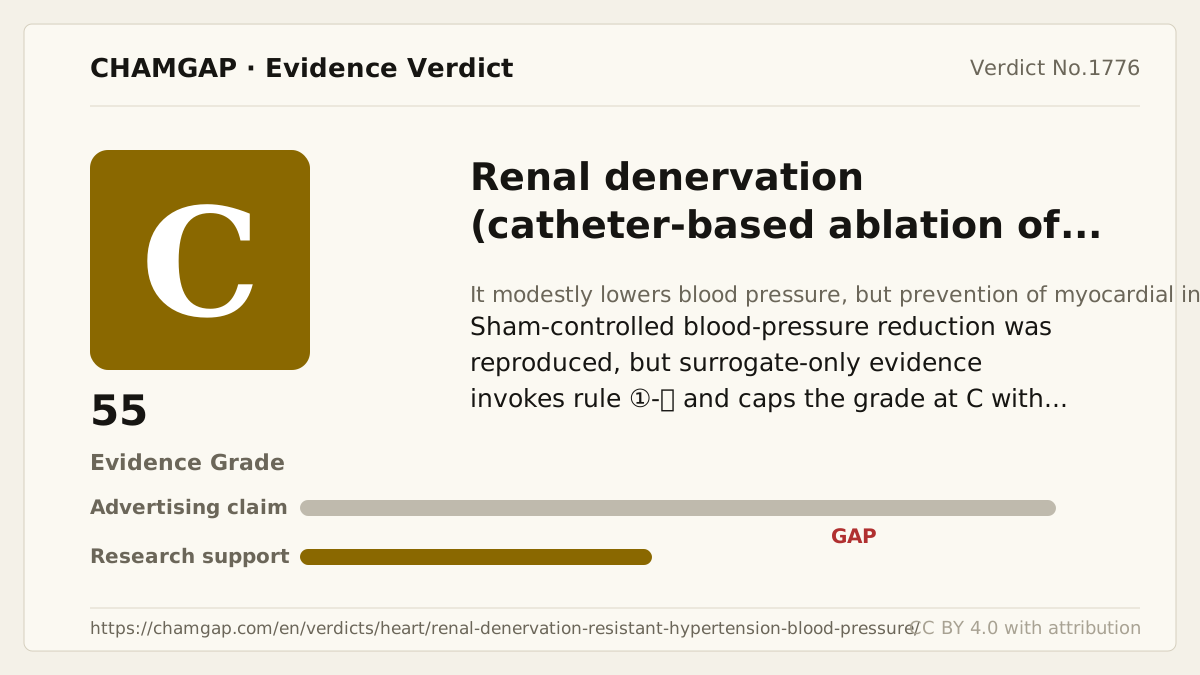
research showsRenal denervation lowered blood pressure by about 4 to 5 mm Hg in modern sham-controlled trials, but blood pressure is a surrogate, so rule ①-ⓐ caps the verdict at C with 55 points. In the Medtronic-led 535-participant SYMPLICITY HTN-3 trial (Bhatt 2014, NEJM), the prespecified six-month systolic-pressure primary endpoint failed, with a between-group difference of minus 2.39 mm Hg, P=.26. Later sham-controlled signals were reproduced in Medtronic-led SPYRAL HTN-OFF MED with 331 participants and SPYRAL HTN-ON MED with 80, and ReCor-led RADIANCE-HTN SOLO with 146, TRIO with 136, and RADIANCE II with 224. No cardiovascular hard-outcome evidence exists.
ads claimPromotion can portray the procedure as a proven way to stop medication and prevent heart attack or stroke. Evidence establishes only a several-millimeter blood-pressure reduction in selected patients, not cardiovascular-event prevention.
Useful facts when choosing a product
- A catheter is advanced into the renal arteries and radiofrequency or ultrasound energy is used to reduce sympathetic signaling.
- Trial populations underwent medication-adherence checks and evaluation for secondary hypertension, so results do not apply to all hypertension.
- Blood-pressure follow-up and medication adjustment remain necessary after the procedure.
Chamgap Semantic Classification Code
Candidate index · review held
P.renal-denervation.procedural.blood-pressure-reduction-in-hypertension-uncontrolled-by-medication.reduce.shamProcedures, devices and tests > Renal denervation > Procedural > Blood-pressure reduction in hypertension uncontrolled by medication > Reduction claim > Sham procedure or device
An automated migration candidate, not an issued permanent code; exact claim scope remains under review. This machine-generated migration candidate helps retrieval but is not a permanent assignment. The original verdict ID and URL remain authoritative.
What the research actually shows
The Medtronic-led SYMPLICITY HTN-3 trial (Bhatt 2014, NEJM) included 535 sham-controlled participants and failed its prespecified six-month systolic-pressure primary endpoint, with a between-group difference of minus 2.39 mm Hg (95% CI minus 6.89 to 2.12; P=.26). Later sham-controlled trials reproduced an approximately 4- to 5-mm Hg blood-pressure reduction: Medtronic-led SPYRAL HTN-OFF MED with 331 participants and SPYRAL HTN-ON MED with 80, and ReCor-led RADIANCE-HTN SOLO with 146, TRIO with 136, and RADIANCE II with 224. Demonstrated efficacy is limited to a blood-pressure surrogate, with no evidence for myocardial infarction, stroke, or mortality. Verdict 1767, which is D with 28 points, concerns lumbar radiofrequency denervation and differs in target and purpose.
Why this is classified as C (55)
The successful 136-person intention-to-treat primary endpoint in RADIANCE-HTN TRIO is accepted, but SYMPLICITY HTN-3 failed its 535-person primary efficacy endpoint and positive findings remain limited to a blood-pressure surrogate. Rule ①-ⓐ caps the grade at C with 55 points.
Counterpoint. After lifestyle measures, adherence, secondary causes, and adequate combination therapy are addressed, a specialist may discuss it as an optional adjunct.
Rejudgment record. Cross-check applied — Balanced the prespecified primary failure in SYMPLICITY HTN-3 against replicated sham-controlled blood-pressure reductions in SPYRAL and RADIANCE, while applying the rule ①-ⓐ ceiling because hard-outcome evidence is absent and benefit remains a blood-pressure surrogate
Sub-claim grades by effect
This ingredient is marketed for several effects. A single overall grade blends strong and weak claims together, so each effect is graded separately here. The overall grade reflects the strongest disconfirming or core claim.
| Effect (sub-claim) | Grade | Basis |
|---|---|---|
| Short-term ambulatory blood-pressure reduction in resistant hypertension | C | Sham-controlled results are positive, but the endpoint is a surrogate and is capped at C. |
| Office blood-pressure reduction | C | Some modern trials are positive, but the SYMPLICITY HTN-3 primary endpoint failed. |
| Prevention of myocardial infarction, stroke, or death | D | Human trials measured events but were not powered to test event reduction and found no significant benefit. |
Cross-check — AI research and Codex final gate
Evidence Table
| Study | Design | Sample | Funding | Endpoint | Result | Weight |
|---|---|---|---|---|---|---|
| Azizi M et al. 2021 | Multicenter single-blind randomized sham-controlled trial | 136 randomized; actual primary analysis 136 by intention to treat | Sponsored by ReCor Medical; company employees were coauthors | Change in daytime ambulatory systolic blood pressure at two months | Median between-group difference −4.5 mm Hg, adjusted P=0.022; primary endpoint succeeded. | Key modern positive trial; surrogate endpoint |
| Bhatt DL et al. 2014 | Multicenter single-blind randomized sham-controlled trial | 535 randomized; actual efficacy analysis 535 | Funded by Medtronic, which also supported data analysis | Change in office systolic blood pressure at six months | Between-group difference −2.39 mm Hg, P=0.26; primary efficacy endpoint failed. | Key large negative sham trial |
Receipt — 2 References
All 2 cited sources were verified for existence at the original page (as of 2026-07-24).
Final verification and publication gate: Codex · Evidence date: 2026-07-24 · Corrections: none
Cite this verdict
[Chamgap] Renal denervation x blood-pressure reduction in resistant hypertension — Evidence Grade C·55. 2 cited sources checked. Source: https://chamgap.com/en/verdicts/heart/renal-denervation-resistant-hypertension-blood-pressure/ · CC BY 4.0CC BY 4.0 — free to use with attribution; do not distort grades, numbers, or verdict meaning.
What this document does and does not do
Chamgap is an information source. It reports what research has and has not confirmed; it does not tell readers what to take or buy. That decision belongs to readers and, when needed, medical or legal professionals. This verdict reflects literature available up to the search date and may change as new research appears. Nothing here is medical advice.