
Raw unsalted cashews, 30 g daily,
does it really help with Lower systolic blood pressure in type 2 diabetes?
research showsThe grade is C with 46 points. The registered primary glycemic outcome failed in a 300-person randomized trial, while the positive finding was secondary systolic blood pressure. Among 269 completers, changes were -4.9 plus or minus 13.7 versus -1.7 plus or minus 11.6 mmHg; a simple independent-groups approximation gives -3.2 mmHg with an approximate 95% CI of -6.3 to -0.2.
ads claimA secondary blood-pressure difference after failure of the primary glycemic outcome should not be expanded into established antihypertensive efficacy.
Useful facts when choosing a product
- The intervention was raw, unsalted, crushed cashews at 30 g daily, providing 182 kcal. It was not roasted cashews, cashew butter, or cashew oil.
- Adding 30 g without replacing another food increases daily energy intake by 182 kcal.
- Cashews originated in the New World, so absence from East Asian classical texts is expected.
- Verdict 226 is C with 43 points for pumpkin-seed oil and urinary or hair outcomes. An oil is different from raw whole cashews, and the indications also differ.
Chamgap Semantic Classification Code
Candidate index · review held
F.cashew-seed-raw-unsalted-crushed.food.systolic-blood-pressure.reduce.UNKFoods and beverages > Raw unsalted crushed cashew seed > Food consumption > Systolic blood pressure > Reduction claim > Unknown
An automated migration candidate, not an issued permanent code; exact claim scope remains under review. This machine-generated migration candidate helps retrieval but is not a permanent assignment. The original verdict ID and URL remain authoritative.
What the research actually shows
The 2018 Journal of Nutrition paper by Mohan and colleagues was checked against the CTRI record. Main support came from the Cashew Export Promotion Council of India and India's Department of Commerce. Samsons Trading, Kerala Nut Food, Alphonsa Cashew, the Cashew Manufacturers Association, Western India Cashew, and Intersnack also provided products or support. Public and cashew-industry funding were mixed.
Why this is classified as C (46)
Blood pressure is a surrogate, the positive result was secondary after failure of the registered glycemic primary outcome, completers were analyzed, and the standardized difference was only about 0.25. This yields C with 46 points.
Counterpoint. An independent trial with blood pressure as the prospective primary outcome, intention-to-treat analysis, and longer clinical-event follow-up is needed.
Rejudgment record. Cross-check applied — Paper and registry cross-checked, with approximate difference, interval, and standardized magnitude calculated from 269 completers and primary failure plus funding structure retained
| Endpoint | S | Surrogate marker - laboratory or imaging measures |
| Replication | R1 | Single confirmatory trial |
| Independence | I1 | Mixed funding sources |
| Effect size | E~ | Statistically positive but below the threshold |
Stored derived and displayed grades match; this is not a current recalculation or validity check (C).
Sub-claim grades by effect
This ingredient is marketed for several effects. A single overall grade blends strong and weak claims together, so each effect is graded separately here. The overall grade reflects the strongest disconfirming or core claim.
| Effect (sub-claim) | Grade | Basis |
|---|---|---|
| Thirty grams of raw unsalted cashews provides 182 kcal | ? | This is a trial-food composition fact, not a graded clinical outcome. |
| Raw unsalted cashews at 30 g daily lower systolic blood pressure in type 2 diabetes | C | A small secondary blood-pressure difference followed failure of the primary glycemic outcome. |
Cross-check — AI research and Codex final gate
Evidence Table
| Study | Design | Sample | Funding | Endpoint | Result | Weight |
|---|---|---|---|---|---|---|
| Mohan V et al., J Nutr, 2018 | Twelve-week parallel randomized controlled trial with completer analysis | 300 randomized, 269 analyzed: 129 cashew and 140 control | India's Department of Commerce, Cashew Export Promotion Council, and six cashew-industry organizations or companies | Null primary glycemic outcome; secondary systolic blood pressure | -4.9±13.7 versus -1.7±11.6 mmHg, p=0.04; approximate difference -3.2, 95% CI -6.3 to -0.2, d about 0.25 | Small positive secondary surrogate after primary failure |
Receipt — 3 References
All 3 cited sources were verified for existence at the original page (as of 2026-08-02).
Final verification and publication gate: Codex · Evidence date: 2026-08-02 · Corrections: none
Cite this verdict
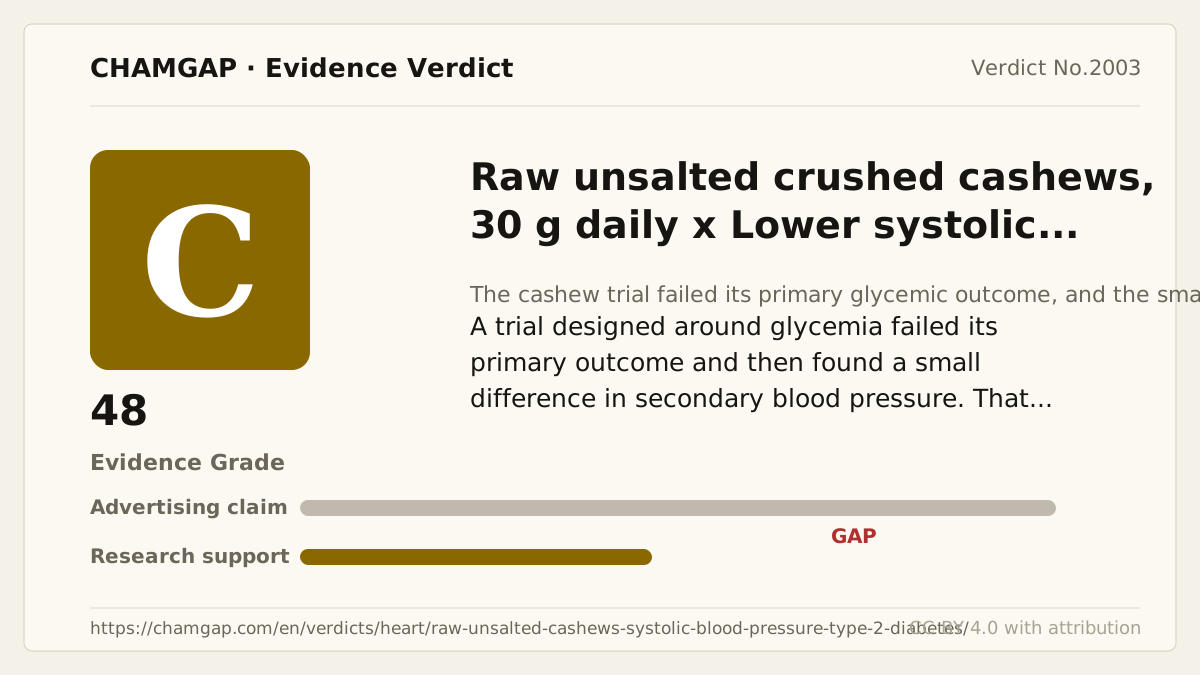
[Chamgap] Raw unsalted cashews, 30 g daily x systolic blood pressure in type 2 diabetes — Evidence Grade C·46. 3 cited sources checked. Source: https://chamgap.com/en/verdicts/heart/raw-unsalted-cashews-systolic-blood-pressure-type-2-diabetes/ · CC BY 4.0CC BY 4.0 — free to use with attribution; do not distort grades, numbers, or verdict meaning.
What this document does and does not do
Chamgap is an information source. It reports what research has and has not confirmed; it does not tell readers what to take or buy. That decision belongs to readers and, when needed, medical or legal professionals. This verdict reflects literature available up to the search date and may change as new research appears. Nothing here is medical advice.