
Prasugrel,
does it really help with Reduced composite risk of cardiovascular death, myocardial infarction, or stroke versus clopidogrel in acute coronary syndrome scheduled for PCI?
research showsPrasugrel is rated B because it reduced the composite of cardiovascular death, nonfatal myocardial infarction, or nonfatal stroke versus clopidogrel in acute coronary syndrome scheduled for PCI. Among 13,608 TRITON–TIMI 38 participants, the primary endpoint fell from 12.1% to 9.9%, but TIMI major bleeding rose from 1.8% to 2.4%. Myocardial infarction drove much of the benefit, and the component-specific evidence and bleeding trade-off support B with 76 points.
ads claimPromotion can simplify stronger platelet inhibition into universal superiority for every patient with acute coronary syndrome. The evidence concerns aspirin-based treatment in patients scheduled for PCI, where bleeding-risk selection is central.
Useful facts when choosing a product
- Prasugrel is an oral prescription drug that irreversibly inhibits platelet P2Y12 receptors and is used with aspirin in acute coronary syndrome managed with PCI.
- Active pathological bleeding and a history of TIA or stroke are contraindications, and unplanned discontinuation can increase thrombotic risk.
- It is generally not recommended at age 75 years or older, and a lower maintenance dose is considered below 60 kg because of bleeding risk.
- Gastrointestinal, intracranial, and procedural bleeding are major concerns, and the treating clinician should determine interruption before surgery.
Chamgap Semantic Classification Code
Candidate index · review held
M.prasugrel.UNK.composite-risk-of-cardiovascular-death-myocardial-infarction-or-stroke.reduce.activeMedicinal interventions > Prasugrel > Unknown > composite risk of cardiovascular death, myocardial infarction, or stroke > Reduction claim > Active comparator
An automated migration candidate, not an issued permanent code; exact claim scope remains under review. This machine-generated migration candidate helps retrieval but is not a permanent assignment. The original verdict ID and URL remain authoritative.
What the research actually shows
The TRITON–TIMI 38 Investigators randomized 13,608 patients with moderate-to-high-risk acute coronary syndrome scheduled for PCI to prasugrel or clopidogrel under double masking. At a median 14.5 months, cardiovascular death, nonfatal myocardial infarction, or nonfatal stroke occurred in 9.9% versus 12.1%, HR 0.81, and stent thrombosis in 1.1% versus 2.4%. Non-CABG TIMI major bleeding occurred in 2.4% versus 1.8%, while fatal bleeding occurred in 0.4% versus 0.1%.
Why this is classified as B (76)
TRITON–TIMI 38 showed MACE falling from 12.1% to 9.9%, HR 0.81, and less stent thrombosis, but one active-controlled trial and major bleeding rising from 1.8% to 2.4% support B with 76 points.
Counterpoint. This verdict is limited to acute coronary syndrome scheduled for PCI and does not substitute for evidence in other coronary settings or against other P2Y12 inhibitors.
Rejudgment record. New verdict — In a 13,608-patient active-controlled trial of acute coronary syndrome scheduled for PCI, MACE and stent thrombosis fell, but major and fatal bleeding increased and myocardial infarction drove much of the composite benefit
Sub-claim grades by effect
This ingredient is marketed for several effects. A single overall grade blends strong and weak claims together, so each effect is graded separately here. The overall grade reflects the strongest disconfirming or core claim.
| Effect (sub-claim) | Grade | Basis |
|---|---|---|
| Reduced composite risk of cardiovascular death, myocardial infarction, or stroke | B | TRITON–TIMI 38 found 9.9% versus 12.1%, HR 0.81; increased major bleeding is a separate safety trade-off. |
| Reduced stent thrombosis | B | Definite or probable stent thrombosis fell from 2.4% to 1.1%. |
| Reduced nonfatal myocardial infarction | B | This component drove much of the composite benefit but does not establish superiority for cardiovascular death alone. |
Cross-check — AI research and Codex final gate
Evidence Table
| Study | Design | Sample | Funding | Endpoint | Result | Weight |
|---|---|---|---|---|---|---|
| TRITON–TIMI 38 Investigators. 2007 | Multinational randomized double-blind active-controlled trial | 13,608 patients with acute coronary syndrome scheduled for PCI | Supported by Daiichi Sankyo and Eli Lilly | Composite of cardiovascular death, nonfatal myocardial infarction, or nonfatal stroke | 9.9% versus 12.1%, HR 0.81 (95% CI 0.73 to 0.90); stent thrombosis 1.1% versus 2.4%. | Pivotal large hard-endpoint randomized trial |
| TRITON–TIMI 38 bleeding analysis. 2007 | Prespecified safety-endpoint analysis | 13,608 randomized participants | Supported by Daiichi Sankyo and Eli Lilly | Non-CABG TIMI major and fatal bleeding | Major bleeding was 2.4% versus 1.8% and fatal bleeding 0.4% versus 0.1%, both higher with prasugrel. | Key safety evidence separate from efficacy |
Receipt — 2 References
All 2 cited sources were verified for existence at the original page (as of 2026-07-23).
Final verification and publication gate: Codex · Evidence date: 2026-07-23 · Corrections: none
Cite this verdict
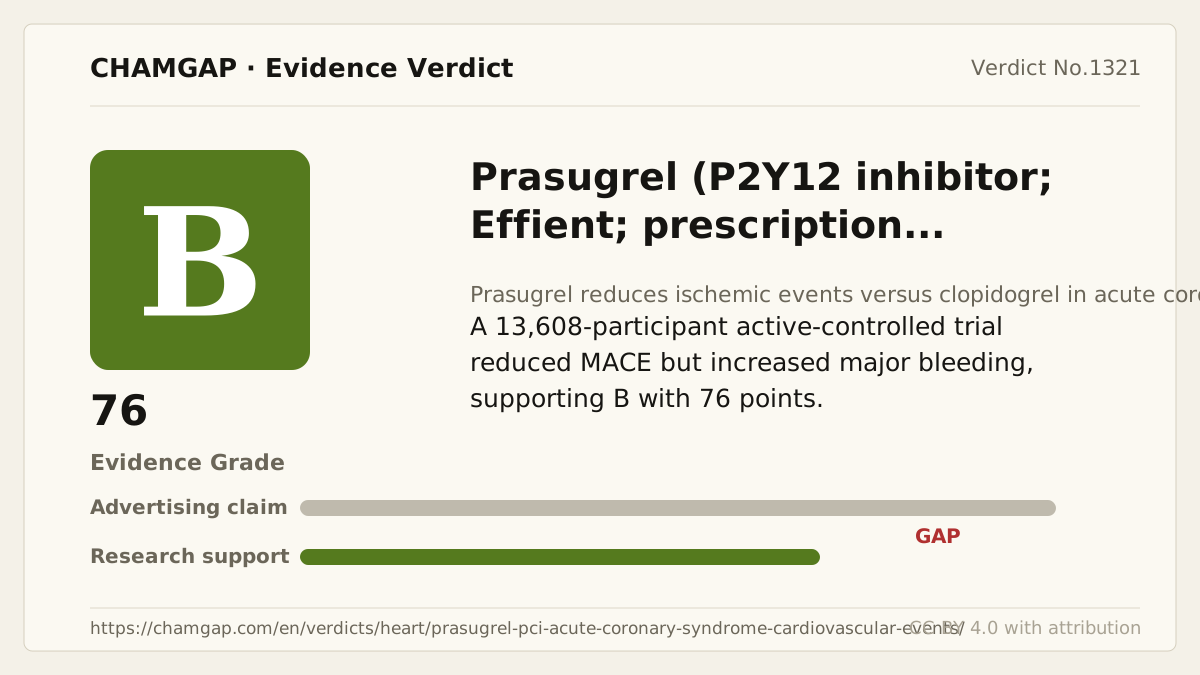
[Chamgap] Prasugrel x reduced cardiovascular events in acute coronary syndrome scheduled for PCI — Evidence Grade B·76. 2 cited sources checked. Source: https://chamgap.com/en/verdicts/heart/prasugrel-pci-acute-coronary-syndrome-cardiovascular-events/ · CC BY 4.0CC BY 4.0 — free to use with attribution; do not distort grades, numbers, or verdict meaning.
What this document does and does not do
Chamgap is an information source. It reports what research has and has not confirmed; it does not tell readers what to take or buy. That decision belongs to readers and, when needed, medical or legal professionals. This verdict reflects literature available up to the search date and may change as new research appears. Nothing here is medical advice.