
Nonsurgical periodontal therapy,
does it really help with Prevention of recurrent myocardial infarction, stroke, and other cardiovascular events?
research showsThe grade is D with 34 points. PAVE randomized 303 participants to intensive therapy, 151, or community dental care and referral, 152. The registered one-year primary endpoint comprised hospitalized myocardial infarction, cardiac revascularization, fatal coronary heart disease, unstable angina, or hospitalized ischemic stroke; cardiovascular adverse events numbered 24 versus 23, P=.85. Control contamination, treatment delay, short recruitment, and low power prevent precise exclusion of benefit.
ads claimCo-occurrence of gum and heart disease cannot be converted into a claim that gum treatment prevents recurrence. Randomized treatment did not reduce events, and the trial was not definitive.
Useful facts when choosing a product
- Some periodontal measures improved after intensive therapy.
- Cardiovascular adverse events numbered 24 with intensive therapy and 23 with community care.
- Verdict 828 is B with 62 points for local plaque and gingivitis effects of chlorhexidine mouthwash, a different indication.
Chamgap Semantic Classification Code
Candidate index · review held
P.intensive-nonsurgical-periodontal-therapy-with-follow-up-in-patients-with-cardiovascular-disease-and-periodontitis.procedural.recurrent-myocardial-infarction-stroke-and-other-cardiovascular-events.prevent.UNKProcedures, devices and tests > Intensive nonsurgical periodontal therapy with follow-up in patients with cardiovascular disease and periodontitis > Procedural > recurrent myocardial infarction, stroke, and other cardiovascular events > Occurrence-prevention claim > Unknown
An automated migration candidate, not an issued permanent code; exact claim scope remains under review. This machine-generated migration candidate helps retrieval but is not a permanent assignment. The original verdict ID and URL remain authoritative.
What the research actually shows
PAVE was an open pilot randomized across five cardiac-dental centers. The registered one-year primary endpoint in NCT00066053 comprised hospitalized myocardial infarction, cardiac revascularization, fatal coronary heart disease, unstable angina, or hospitalized ischemic stroke. The papers describe feasibility and preparation for a future event trial. Recruitment fell short of target; planned treatment was received by 92.7% of the intensive arm, but about 30% started after two months, and 48% of controls obtained preventive or periodontal care. Funding came from NIH/NIDCR.
Why this is classified as D (34)
Control contamination, treatment delay, short recruitment, and low power limit the null 24-versus-23 result, giving D with 34 points.
Counterpoint. D does not deny local periodontal-treatment benefits or the observational association with cardiovascular disease.
Rejudgment record. Cross-check applied — Separated observational association from treatment efficacy and verified the registered primary endpoint, event counts, treatment delay, control contamination, recruitment shortfall, and low power
| Endpoint | H | Hard endpoint - actual events such as death |
| Replication | R1 | Single confirmatory trial |
| Independence | I2 | Decisive evidence is publicly or non-profit funded |
| Effect size | E0 | Null |
| Precision | C0 | The confidence interval leaves room for benefit |
Stored derived and displayed grades match; this is not a current recalculation or validity check (D).
Sub-claim grades by effect
This ingredient is marketed for several effects. A single overall grade blends strong and weak claims together, so each effect is graded separately here. The overall grade reflects the strongest disconfirming or core claim.
| Effect (sub-claim) | Grade | Basis |
|---|---|---|
| Prevention of recurrent cardiovascular events | D | The pilot found 24 versus 23 events and did not precisely exclude benefit. |
| Short-term periodontal improvement | B | Some local measures, including probing depth, improved. |
Cross-check — AI research and Codex final gate
Evidence Table
| Study | Design | Sample | Funding | Endpoint | Result | Weight |
|---|---|---|---|---|---|---|
| PAVE 2008-2009 | Multicenter randomized pilot trial | 303 randomized, 151 versus 152 | US NIH/NIDCR U01 grants | Cardiovascular adverse events and periodontal measures | Cardiovascular events: 24 versus 23, P=.85. | Only direct randomized event evidence, but a pilot |
Receipt — 3 References
All 3 cited sources were verified for existence at the original page (as of 2026-08-04).
Final verification and publication gate: Codex · Evidence date: 2026-08-04 · Corrections: none
Cite this verdict
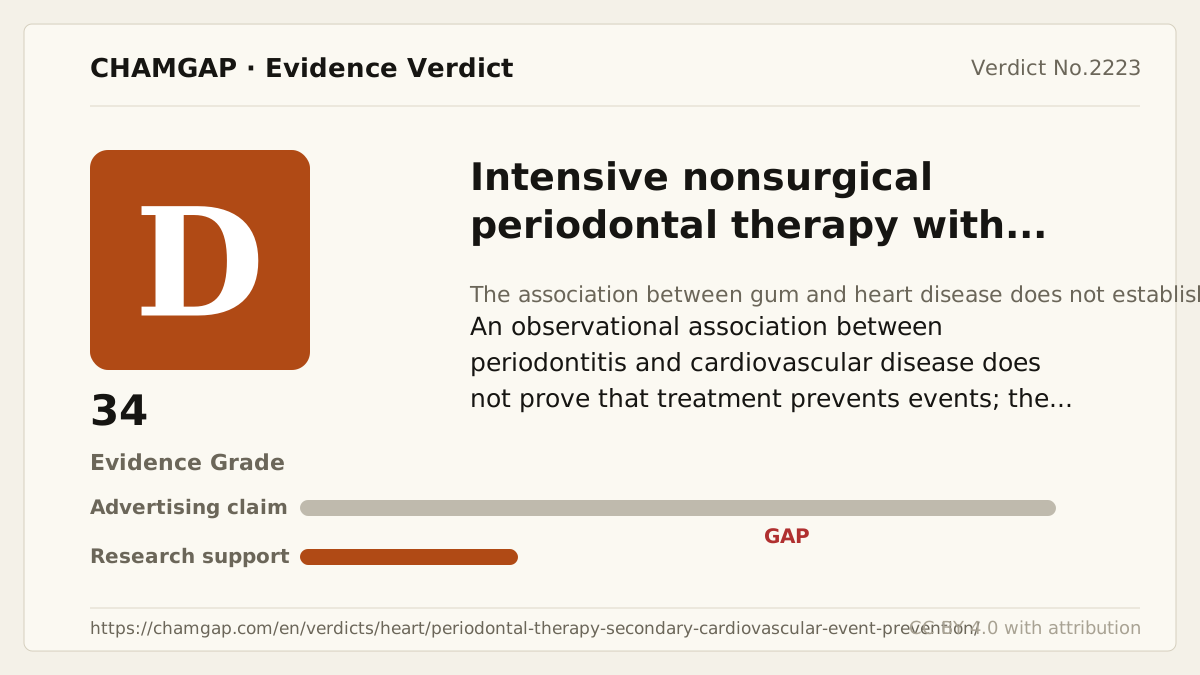
[Chamgap] Nonsurgical periodontal therapy x prevention of recurrent cardiovascular events — Evidence Grade D·34. 3 cited sources checked. Source: https://chamgap.com/en/verdicts/heart/periodontal-therapy-secondary-cardiovascular-event-prevention/ · CC BY 4.0CC BY 4.0 — free to use with attribution; do not distort grades, numbers, or verdict meaning.
What this document does and does not do
Chamgap is an information source. It reports what research has and has not confirmed; it does not tell readers what to take or buy. That decision belongs to readers and, when needed, medical or legal professionals. This verdict reflects literature available up to the search date and may change as new research appears. Nothing here is medical advice.