
Noodle consumption,
does it really help with Increased incidence of hypertension?
research showsThe grade is C. In 56,580 HEXA participants followed for a mean 4.9 years, 14,299 developed hypertension. Top versus bottom noodle-intake quintile HRs were 1.273 (95% CI 1.166 to 1.390) in men and 1.116 (1.038 to 1.199) in women. The exposure was not ramen alone, and diet was not randomized.
ads claimThe exposure combined several noodle dishes. It should not be read as the effect of one ramen packet.
Useful facts when choosing a product
- The exposure included ramen and several fried, nonfried, cold, and restaurant noodle dishes.
- The paper provides no common serving composition; sodium and other nutrients vary with product and broth consumption.
- Verdict 1714 is C with 58 points for DASH lowering blood pressure; this verdict concerns observational incident hypertension with noodle intake.
Chamgap Semantic Classification Code
Candidate index · review held
F.combined-intake-of-instant-ramen.oral.incidence-of-hypertension.increase.UNKFoods and beverages > Combined intake of instant ramen > Oral > incidence of hypertension > Increase claim > Unknown
An automated migration candidate, not an issued permanent code; exact claim scope remains under review. This machine-generated migration candidate helps retrieval but is not a permanent assignment. The original verdict ID and URL remain authoritative.
What the research actually shows
Choi analyzed 56,580 HEXA participants without baseline hypertension using a 106-item FFQ and follow-up blood pressure or medication data. Exposure covered total intake of instant ramen, kalguksu, udon, jajangmyeon, jjamppong, naengmyeon, and buckwheat noodles. Incident hypertension meant at least 140/90 mmHg or antihypertensive use. The paper reported a general Korean instant-noodle sodium range of 600 to 2,770 mg per serving, not measurements of the study products. Korean government funding and a no-conflict declaration were verified.
Why this is classified as C (56)
Positive sex-specific associations in a large cohort remain limited by mixed exposure, residual confounding, and unregistered multiple analysis, giving C with 56 points.
Counterpoint. Persistence after sodium adjustment does not prove processing itself was causal.
Rejudgment record. Cross-check applied — Assessed sex-specific adjusted hazard ratios, mixed noodle exposure, sodium adjustment, residual confounding, and multiple analysis
| Endpoint | H | Hard endpoint - actual events such as death |
| Replication | R1 | Single confirmatory trial |
| Independence | I2 | Decisive evidence is publicly or non-profit funded |
| Effect size | E+ | Meets the clinically important threshold |
Stored derived and displayed grades match; this is not a current recalculation or validity check (C).
Sub-claim grades by effect
This ingredient is marketed for several effects. A single overall grade blends strong and weak claims together, so each effect is graded separately here. The overall grade reflects the strongest disconfirming or core claim.
| Effect (sub-claim) | Grade | Basis |
|---|---|---|
| High noodle intake and incident hypertension | C | Sex-specific HRs were positive, but this was neither ramen-only nor causal. |
Cross-check — AI research and Codex final gate
Evidence Table
| Study | Design | Sample | Funding | Endpoint | Result | Weight |
|---|---|---|---|---|---|---|
| Choi S et al., 2024 HEXA | Prospective cohort analysis | 56,580 participants, mean 4.9 years, 14,299 cases | Korean government NRF grant 2022R1F1A1074279 | Incident hypertension | Top versus bottom quintile HR 1.273 (1.166 to 1.390) in men and 1.116 (1.038 to 1.199) in women | Large, but observational evidence with mixed FFQ exposure |
Receipt — 1 References
All 1 cited sources were verified for existence at the original page (as of 2026-08-03).
Final verification and publication gate: Codex · Evidence date: 2026-08-03 · Corrections: none
Cite this verdict
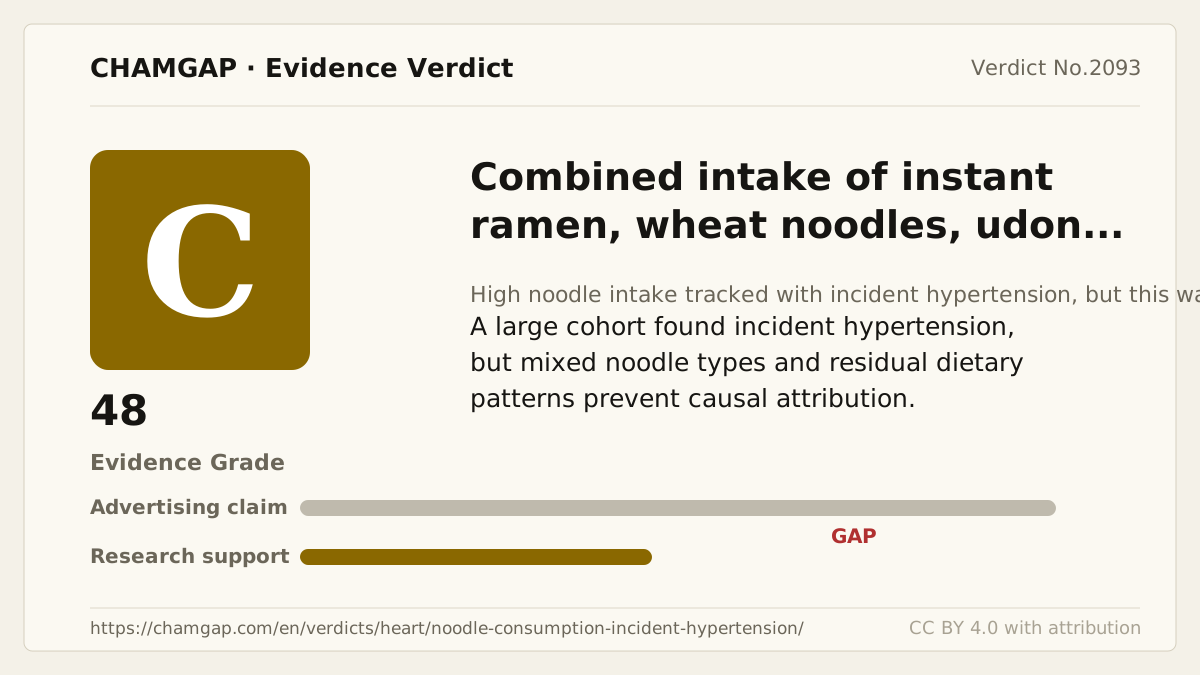
[Chamgap] Noodle consumption x incident hypertension — Evidence Grade C·56. 1 cited sources checked. Source: https://chamgap.com/en/verdicts/heart/noodle-consumption-incident-hypertension/ · CC BY 4.0CC BY 4.0 — free to use with attribution; do not distort grades, numbers, or verdict meaning.
What this document does and does not do
Chamgap is an information source. It reports what research has and has not confirmed; it does not tell readers what to take or buy. That decision belongs to readers and, when needed, medical or legal professionals. This verdict reflects literature available up to the search date and may change as new research appears. Nothing here is medical advice.