
Mipomersen 200 mg by weekly subcutaneous injection,
does it really help with Reduced LDL-C laboratory values in homozygous familial hypercholesterolaemia?
research showsThe grade is C with 50 points. Among 51 patients with homozygous familial hypercholesterolaemia receiving maximally tolerated lipid-lowering therapy, 26-week LDL-C changed by -24.7% (95% CI -31.6 to -17.7) with mipomersen and -3.3% (-12.1 to 5.5) with placebo. The -21.4-point contrast was large, but LDL-C is a surrogate and caps the grade at C.
ads claimThe population was the ultra-rare homozygous form of familial hypercholesterolaemia. The finding should not be expanded to common heterozygous or ordinary hypercholesterolaemia. In the US, use was restricted under a hepatotoxicity boxed warning and REMS; the EMA refused authorization because of concerns including long-term liver safety and discontinuations.
Useful facts when choosing a product
- Mipomersen is an antisense oligonucleotide inhibitor of apolipoprotein B-100 synthesis, given as 200 mg subcutaneously each week.
- Injection-site reactions occurred in 26/34 (76%) versus 4/17 (24%).
- In the HoFH trial, ALT >=3x ULN occurred in 4/34 (12%) versus 0/17 and ALT >=5x ULN in 3/34 (9%) versus 0/17.
- The HoFH trial did not measure liver fat. In FDA-reviewed HeFH and hyperlipidaemia trials, however, median absolute MRI liver-fat increase at week 26 was 10% from a 0% baseline, and pooled phase 3 data showed frequent injection-site and flu-like symptoms.
Chamgap Semantic Classification Code
Candidate index · review held
M.mipomersen-by-subcutaneous-injection.subcutaneous.ldl-c-laboratory-values-in-homozygous-familial-hypercholesterolaemia.reduce.placeboMedicinal interventions > Mipomersen by subcutaneous injection > Subcutaneous > LDL-C laboratory values in homozygous familial hypercholesterolaemia > Reduction claim > Placebo
An automated migration candidate, not an issued permanent code; exact claim scope remains under review. This machine-generated migration candidate helps retrieval but is not a permanent assignment. The original verdict ID and URL remain authoritative.
What the research actually shows
The allocation method was: "Randomisation was done centrally with a computer-generated randomisation sequence through an interactive voice response system," with blocked randomization by weight stratum. Patients and clinical, medical, and pharmacy personnel were masked, and all 51 randomized participants entered the ITT primary analysis. Limitation name: small ultra-rare-disease trial Which listed item: small sample (fewer than 200 total participants) Original evidence that the requirement was met: "34 patients were assigned to mipomersen and 17 to placebo," totaling 51. Could it have been avoided: possible - rarity explains difficult recruitment, but a longer international confirmatory trial or registry-linked follow-up could enlarge the sample and capture events. Isis Pharmaceuticals and Genzyme funded the study, and company-affiliated authors including Chasan-Taber, Tribble, Flaim, and Crooke participated in development, analysis, and reporting, assigning I0.
Why this is classified as C (50)
The primary endpoint was the S surrogate of LDL-C change, capping the grade at C. Despite a large reduction, there was no independent replication, Isis and Genzyme sponsorship with company coauthors assigns I0, and the total sample of 51 is a listed small-study limitation, giving C with 50 points.
Counterpoint. For homozygous patients with very few options, LDL-C lowering remains relevant. Use still requires careful selection and hepatic monitoring, and the result cannot be expanded into prevention evidence for ordinary hypercholesterolaemia.
Rejudgment record. Cross-check applied — Cross-checked NCT00607373, the Lancet trial, FDA labeling, and EMA regulatory documents for LDL-C, randomization, masking, ITT, company involvement, and hepatic harm
| Endpoint | S | Surrogate marker - laboratory or imaging measures |
| Replication | R1 | Single confirmatory trial |
| Independence | I0 | Evidence comes only from manufacturer studies |
| Effect size | E+ | Meets the clinically important threshold |
Stored derived and displayed grades match; this is not a current recalculation or validity check (C).
Sub-claim grades by effect
This ingredient is marketed for several effects. A single overall grade blends strong and weak claims together, so each effect is graded separately here. The overall grade reflects the strongest disconfirming or core claim.
| Effect (sub-claim) | Grade | Basis |
|---|---|---|
| LDL-C reduction in homozygous familial hypercholesterolaemia | C | The 26-week placebo-adjusted difference was -21.4 percentage points, but this is a laboratory surrogate. |
| Reduced cardiovascular events | D | This trial did not test myocardial infarction, stroke, or death. |
Cross-check — AI research and Codex final gate
Evidence Table
| Study | Design | Sample | Funding | Endpoint | Result | Weight |
|---|---|---|---|---|---|---|
| Raal FJ et al. 2010 | International multicenter double-blind placebo-controlled phase 3 randomized trial | 51 randomized and analyzed by ITT (34 mipomersen, 17 placebo) | Funded by Isis Pharmaceuticals and Genzyme with company-employee coauthors | Percentage change in LDL-C from baseline to week 26 | -24.7% versus -3.3%; between-group contrast -21.4 percentage points (P=0.0003) | Pivotal LDL-C trial in ultra-rare homozygous disease, without event testing |
Receipt — 3 References
All 3 cited sources were verified for existence at the original page (as of 2026-08-18).
Final verification and publication gate: Codex · Evidence date: 2026-08-18 · Corrections: none
Cite this verdict
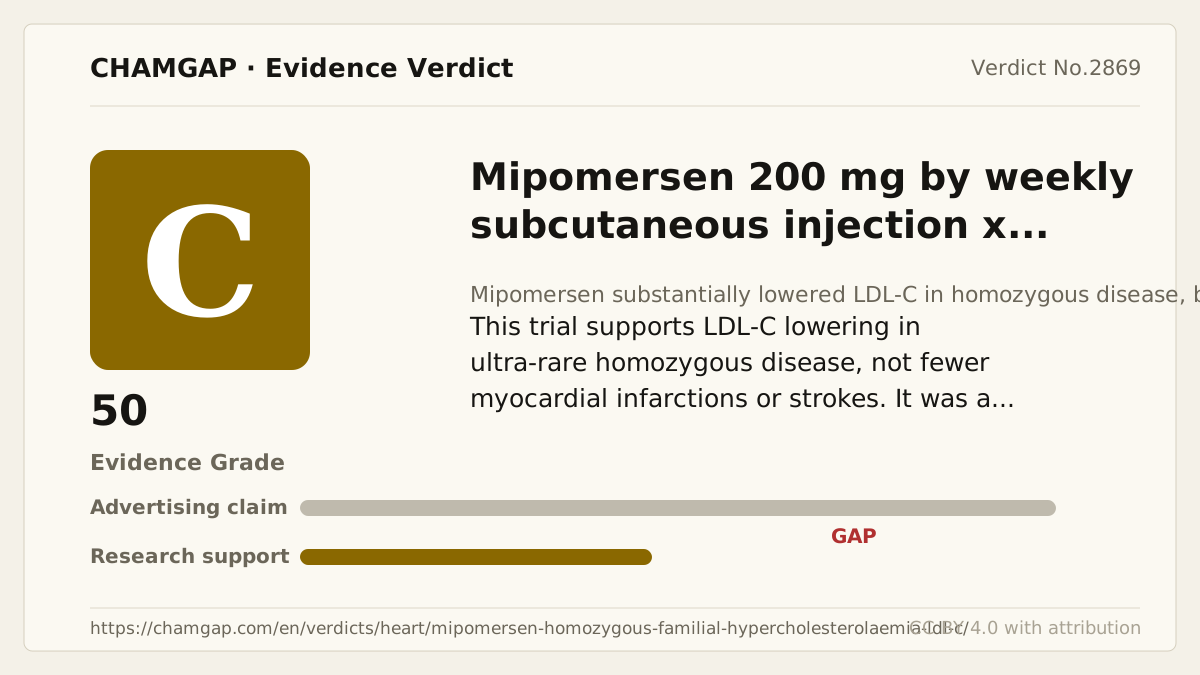
[Chamgap] Benefit: Mipomersen Lowers LDL-C in Homozygous Familial Hypercholesterolaemia — Evidence Grade C·50. 3 cited sources checked. Source: https://chamgap.com/en/verdicts/heart/mipomersen-homozygous-familial-hypercholesterolaemia-ldl-c/ · CC BY 4.0CC BY 4.0 — free to use with attribution; do not distort grades, numbers, or verdict meaning.
What this document does and does not do
Chamgap is an information source. It reports what research has and has not confirmed; it does not tell readers what to take or buy. That decision belongs to readers and, when needed, medical or legal professionals. This verdict reflects literature available up to the search date and may change as new research appears. Nothing here is medical advice.