
Skin-on microwaved purple potatoes,
does it really help with Lower blood pressure in overweight adults with hypertension?
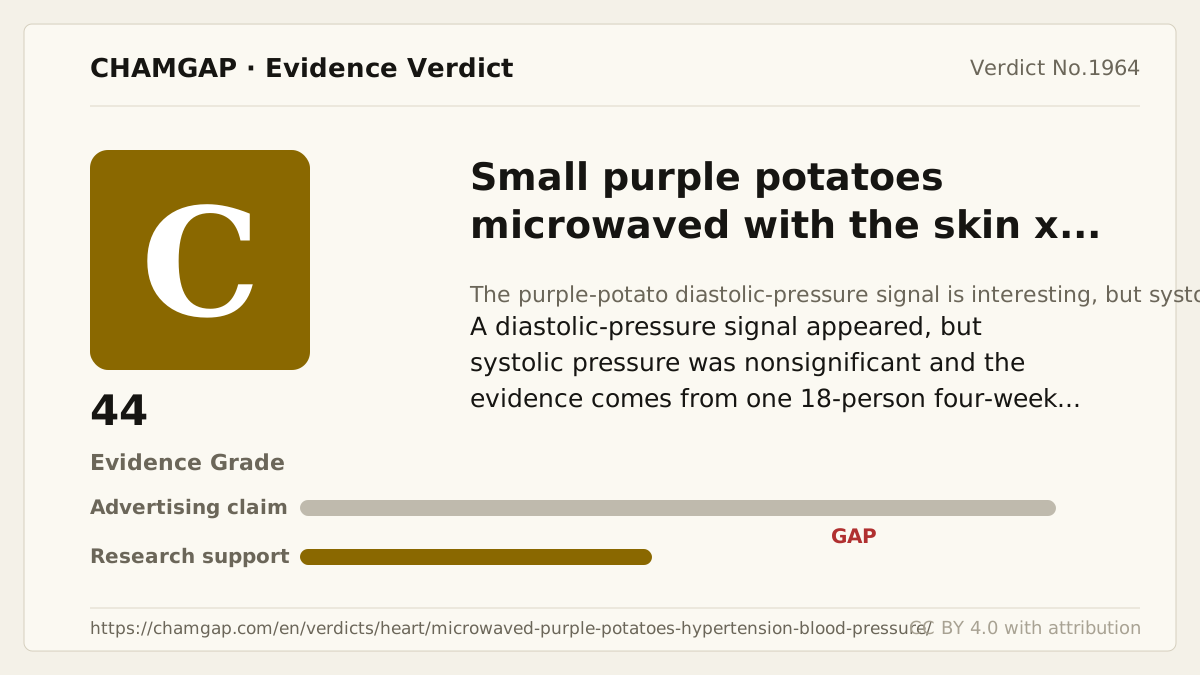
research showsThe grade is C with 54 points. In an 18-person crossover study, diastolic pressure fell significantly by about 4 mmHg, but the roughly 5 mmHg systolic reduction was not statistically significant. Blood pressure is a surrogate, and the experiment was very small, brief, and compared food with no treatment. Between-condition 95% confidence intervals and a prespecified primary outcome were not available.
ads claimMarketing can expand one 18-person test of specific small purple potatoes against no treatment into treatment of hypertension or prevention of stroke by potatoes generally. The trial measured neither cardiovascular events nor long-term medication reduction.
Useful facts when choosing a product
- The study food was six to eight small purple potatoes microwaved with their skins and eaten twice daily. The result cannot automatically be transferred to white, fried, or peeled potatoes.
- ClinicalTrials.gov, IRCT, UMIN-CTR, and ChiCTR reverse searches by title, author, DOI, purple potato, and hypertension on 2026-08-02 found no matching registration. Prominence in the title and conclusion does not prove that blood pressure was prespecified as primary.
- Potatoes originated in the Andes and entered Korea around 1824 to 1825. Their absence from Donguibogam and Sallim Gyeongje is expected, but later Korean records include the appendix 「(附)北藷」 under sweet potato in Imwon Gyeongjeji and 「北藷辨證說」 in Oju Yeonmun Jangjeon Sango.
- Gerard's 1597 Herball, 「Of Potatoes of Virginia」 on page 781, records cultivation in his own garden and cooking. The expanded 1633 edition reports a Burgundian ban based on a belief that frequent potato eating caused leprosy. Bencao Gangmu juan 27 「土芋」 is Dioscorea bulbifera, not potato.
- The baked-and-cooled potato verdict concerns post-meal insulin, a different cooking method and outcome from purple potatoes for blood pressure.
Chamgap Semantic Classification Code
Candidate index · review held
F.small-purple-potatoes-microwaved-with-the-skin.food.blood-pressure-with-hypertension.reduce.noneFoods and beverages > Small purple potatoes microwaved with the skin > Food consumption > blood pressure with hypertension > Reduction claim > No intervention
An automated migration candidate, not an issued permanent code; exact claim scope remains under review. This machine-generated migration candidate helps retrieval but is not a permanent assignment. The original verdict ID and URL remain authoritative.
What the research actually shows
Vinson and colleagues studied 18 hypertensive adults with an average BMI of 29; 14 of the 18 were taking antihypertensive medication. Participants ate six to eight small skin-on microwaved purple potatoes twice daily or ate no potatoes for four weeks, then crossed to the other condition. Diastolic pressure fell significantly by 4.3%, about 4 mmHg, while the 3.5%, about 5 mmHg, reduction in systolic pressure was not statistically significant. No 95% confidence interval for the between-condition effect was reported. Fasting glucose, HbA1c, lipids, and body weight showed no significant effect. Reverse searches of ClinicalTrials.gov, IRCT, UMIN-CTR, and ChiCTR by title, authors, and DOI found no prospective registration, so blood pressure cannot be verified as the prespecified primary outcome. The comparator was no treatment, and the washout period was unclear. No research-funding statement was identified in the original article. A coauthor's USDA-ARS affiliation is a separate fact and is not evidence of USDA funding.
Why this is classified as C (54)
The positive diastolic-pressure surrogate signal was accompanied by a nonsignificant systolic result and comes from one 18-person four-week no-treatment crossover study without confidence intervals, registration, or a clear washout, yielding C with 54 points.
Counterpoint. Purple potatoes should not be used to reduce or stop antihypertensive medication. Total calories, carbohydrate, potassium, and existing treatment still matter.
Rejudgment record. Cross-check applied — Diastolic pressure fell significantly by about 4 mmHg while the roughly 5 mmHg systolic reduction was nonsignificant in one 18-person four-week crossover study, with limits for a surrogate endpoint, small size, short duration, no-treatment comparator, and unavailable registration, washout detail, and 95% confidence intervals
| Endpoint | S | Surrogate marker - laboratory or imaging measures |
| Replication | R1 | Single confirmatory trial |
| Independence | I2 | Decisive evidence is publicly or non-profit funded |
| Effect size | E+ | Meets the clinically important threshold |
| Precision | CX | No pooled confidence interval could be confirmed |
Stored derived and displayed grades match; this is not a current recalculation or validity check (C).
Sub-claim grades by effect
This ingredient is marketed for several effects. A single overall grade blends strong and weak claims together, so each effect is graded separately here. The overall grade reflects the strongest disconfirming or core claim.
| Effect (sub-claim) | Grade | Basis |
|---|---|---|
| Four-week blood-pressure reduction with purple potatoes | C | A surrogate signal from one 18-person crossover study. |
| Prevention of myocardial infarction or stroke with purple potatoes | ? | No clinical event was measured. |
Cross-check — AI research and Codex final gate
Evidence Table
| Study | Design | Sample | Funding | Endpoint | Result | Weight |
|---|---|---|---|---|---|---|
| Vinson JA et al. 2012 | No-treatment-controlled crossover study, four weeks per condition | 18 overweight adults with hypertension; 14 taking antihypertensive medication | No research-funding statement identified in the original article; a USDA-ARS coauthor affiliation is not evidence of funding | Blood pressure, fasting glucose, HbA1c, lipids, and body weight | Diastolic pressure fell significantly by about 4 mmHg; the about 5 mmHg systolic reduction was nonsignificant; glucose, HbA1c, lipids, and weight were null; no between-condition 95% CI | Direct randomized signal limited to a surrogate, small sample, and short duration |
Receipt — 1 References
All 1 cited sources were verified for existence at the original page (as of 2026-08-02).
Final verification and publication gate: Codex · Evidence date: 2026-08-02 · Corrections: none
Cite this verdict
[Chamgap] Skin-on microwaved purple potatoes x lower blood pressure in hypertension — Evidence Grade C·54. 1 cited sources checked. Source: https://chamgap.com/en/verdicts/heart/microwaved-purple-potatoes-hypertension-blood-pressure/ · CC BY 4.0CC BY 4.0 — free to use with attribution; do not distort grades, numbers, or verdict meaning.
What this document does and does not do
Chamgap is an information source. It reports what research has and has not confirmed; it does not tell readers what to take or buy. That decision belongs to readers and, when needed, medical or legal professionals. This verdict reflects literature available up to the search date and may change as new research appears. Nothing here is medical advice.