
Magnesium,
does it really help with Reduced blood pressure in adults with hypertension or borderline hypertension?
research showsMagnesium supplementation is rated C because it lowers adult blood pressure by a small average amount. A 2016 meta-analysis of 34 double-blind randomized trials and 2,028 participants found reductions of 2.00 mmHg systolic and 1.78 mmHg diastolic, and a 2025 analysis of 38 trials and 2,709 participants reported reductions of 2.81 and 2.05 mmHg. The latest analysis found larger effects among people with hypertension taking blood-pressure medicine or with hypomagnesemia, but heterogeneity was high and the normotensive subgroup was not significant. Blood pressure is a surrogate, effects are small, and populations, formulations, and doses vary, so the evidence is C and does not support replacing antihypertensive drugs.
ads claimMarketing can expand lowers blood pressure into a natural replacement for prescription drugs or a large effect for everyone. The actual average reduction is only a few millimeters of mercury, and response varies with deficiency, baseline pressure, and concomitant treatment.
Useful facts when choosing a product
- Magnesium is an essential mineral, but blood-pressure trials used different salts and doses, so equivalent efficacy cannot be assumed for a specific marketed product.
- Dietary magnesium and therapeutic supplementation should be distinguished, and benefit from correcting deficiency cannot be generalized to everyone with adequate magnesium status.
- Common supplement adverse effects are diarrhea, nausea, and abdominal cramping, which can be more prominent with poorly absorbed or more laxative formulations such as magnesium oxide.
- Impaired kidney function can allow magnesium accumulation, causing hypotension, weakness, respiratory depression, and arrhythmia. Administration may need to be separated from some antibiotics and bisphosphonates.
Chamgap Semantic Classification Code
Candidate index · review held
S.magnesium.UNK.blood-pressure-with-hypertension-or-borderline-hypertension.reduce.MULTISupplements and nutraceuticals > Magnesium > Unknown > blood pressure with hypertension or borderline hypertension > Reduction claim > Multiple: primary unresolved
An automated migration candidate, not an issued permanent code; exact claim scope remains under review. This machine-generated migration candidate helps retrieval but is not a permanent assignment. The original verdict ID and URL remain authoritative.
What the research actually shows
Zhang and colleagues synthesized 34 randomized double-blind placebo-controlled trials with 2,028 participants. A median dose of 368 mg daily for a median of three months reduced systolic pressure by 2.00 mmHg and diastolic pressure by 1.78 mmHg, with I-squared of 61.8% for the systolic analysis. Argeros and colleagues reanalyzed 38 trials and 2,709 participants in 2025 and found overall reductions of 2.81 mmHg systolic and 2.05 mmHg diastolic. Systolic reductions were 7.68 mmHg among hypertensive participants taking blood-pressure medicines and 5.97 mmHg among those with hypomagnesemia, while normotensive groups were not significant and overall heterogeneity was high. An older six-month double-blind trial of 91 untreated women with mild-to-moderate hypertension also signaled benefit, but individual-trial results and formulations have not been uniform.
Why this is classified as C (58)
The 2016 meta-analysis of 34 double-blind trials and the 2025 meta-analysis of 38 trials repeatedly found a small average 2-to-3-mmHg reduction, so D is not appropriate. Blood pressure is a surrogate, heterogeneity is high, the normotensive subgroup was not significant, and effects concentrate in hypomagnesemia and treated hypertension. Rule ① therefore places the evidence at the upper end of C with 58 points; diarrhea and accumulation in kidney failure are separate safety issues.
Counterpoint. Correcting deficiency matters for people with inadequate status or intake. Hypertension management should prioritize accurate measurement, weight, sodium, exercise, alcohol management, and indicated prescription drugs, with supplements considered only as an adjunct with clinical review.
Rejudgment record. New verdict — Accepted the approximately 2-to-3-mmHg average reduction across a 2016 meta-analysis of 34 double-blind trials and a 2025 meta-analysis of 38 trials, while applying the rule ① ceiling of C for a surrogate endpoint, small effect, high heterogeneity, and concentration in deficient and treated hypertensive subgroups
Sub-claim grades by effect
This ingredient is marketed for several effects. A single overall grade blends strong and weak claims together, so each effect is graded separately here. The overall grade reflects the strongest disconfirming or core claim.
| Effect (sub-claim) | Grade | Basis |
|---|---|---|
| Reduced systolic blood pressure in adults with hypertension or borderline hypertension | C | The overall average is about 2 to 3 mmHg, with larger subgroup effects but high heterogeneity. |
| Reduced diastolic blood pressure in adults with hypertension or borderline hypertension | C | The average reduction is about 2 mmHg, which is small and not a direct cardiovascular-event outcome. |
| Reduced blood pressure in hypomagnesemia or treated-hypertension subgroups | C | The latest meta-analysis found larger effects, but these are subgroup results that cannot be generalized to magnesium-replete populations. |
Cross-check — AI research and Codex final gate
Evidence Table
| Study | Design | Sample | Funding | Endpoint | Result | Weight |
|---|---|---|---|---|---|---|
| Zhang X et al. 2016 | Meta-analysis of randomized double-blind placebo-controlled trials | 34 trials and 2,028 participants | Academic and public support including Indiana University and the NIH | Change in systolic and diastolic blood pressure | Systolic pressure fell 2.00 mmHg and diastolic pressure 1.78 mmHg, with I-squared of 61.8% for systolic pressure. | Core double-blind synthesis |
| Argeros Z et al. 2025 | Systematic review, meta-analysis, and dose-response analysis of randomized controlled trials | 38 trials and 2,709 participants | Academic research led by the University of New South Wales and George Institute | Systolic and diastolic blood pressure and subgroup response | Overall systolic pressure fell 2.81 mmHg and diastolic pressure 2.05 mmHg; effects were larger with treated hypertension and hypomagnesemia, but heterogeneity was high. | Latest independent synthesis |
| Witteman JCM et al. 1994 | Six-month randomized double-blind placebo-controlled trial | 91 untreated women with mild-to-moderate hypertension | Academic clinical research | Office systolic and diastolic blood pressure | Magnesium aspartate hydrochloride 20 mmol daily lowered diastolic pressure 3.4 mmHg more than placebo, while the systolic difference was not significant. | Supportive direct randomized evidence in hypertension |
Receipt — 3 References
All 3 cited sources were verified for existence at the original page (as of 2026-07-20).
Final verification and publication gate: Codex · Evidence date: 2026-07-20 · Corrections: none
Cite this verdict
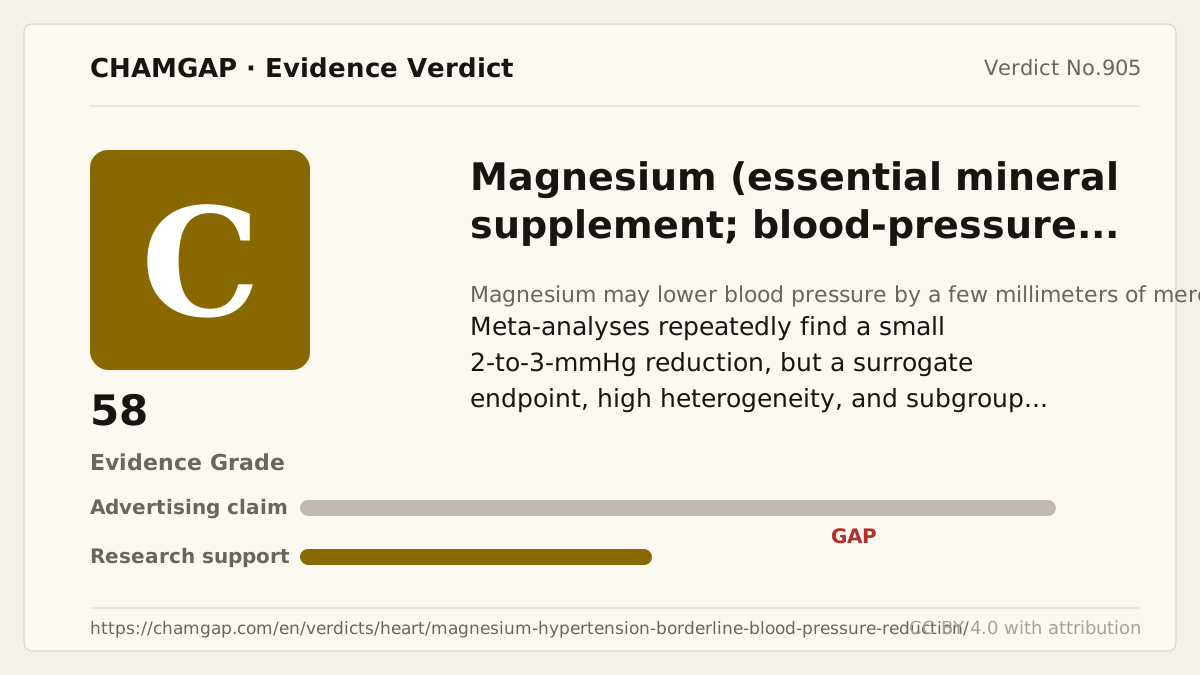
[Chamgap] Magnesium x reduced blood pressure in adults with hypertension or borderline hypertension — Evidence Grade C·58. 3 cited sources checked. Source: https://chamgap.com/en/verdicts/heart/magnesium-hypertension-borderline-blood-pressure-reduction/ · CC BY 4.0CC BY 4.0 — free to use with attribution; do not distort grades, numbers, or verdict meaning.
What this document does and does not do
Chamgap is an information source. It reports what research has and has not confirmed; it does not tell readers what to take or buy. That decision belongs to readers and, when needed, medical or legal professionals. This verdict reflects literature available up to the search date and may change as new research appears. Nothing here is medical advice.