
Low-dose rivaroxaban plus aspirin,
does it really help with Reduction in cardiovascular death, stroke, or myocardial infarction in stable coronary or peripheral artery disease?
research showsLow-dose rivaroxaban 2.5 mg twice daily plus aspirin is rated B because it reduces the composite of cardiovascular death, stroke, and myocardial infarction in selected patients with stable coronary or peripheral artery disease. The Bayer-sponsored COMPASS trial randomized 27,395 participants and stopped early for superiority after 22.5 months. The primary outcome occurred in 4.1% with combination therapy and 5.4% with aspirin alone (HR 0.76, 95% CI 0.66 to 0.86), and the net clinical composite favored combination therapy. Major bleeding increased from 1.9% to 3.1% (HR 1.70). Risk stratification used secondary analyses of the same dataset rather than independent replication, supporting upper B with 76 points.
ads claimPromotion can broaden vascular protection into a universally better treatment without bleeding burden for all cardiovascular patients. Evidence applies to patients with stable atherosclerotic vascular disease meeting COMPASS-like selection, compared with aspirin alone, and does not automatically extend to other anticoagulant indications, doses, or patients at high bleeding risk.
Useful facts when choosing a product
- The COMPASS vascular dose is rivaroxaban 2.5 mg twice daily together with low-dose aspirin and is different from the stroke-prevention dose used in atrial fibrillation.
- This combination is a clinician-selected prescription strategy for stable coronary or peripheral artery disease when ischemic risk is high and bleeding risk is acceptable.
- Active pathological bleeding, severe liver disease, certain kidney-function states, other anticoagulant or antiplatelet therapy, and the perioperative period require contraindication, timing, and interaction checks.
- Bruising, nosebleeds, gum bleeding, and gastrointestinal bleeding can occur; black stools, blood in urine, vomiting blood, or persistent severe headache or dizziness require urgent assessment.
Chamgap Semantic Classification Code
Candidate index · review held
M.rivaroxaban-plus-aspirin.UNK.cardiovascular-death-stroke-or-myocardial-infarction-in-stable-coronary-or-peripheral-artery-disease.reduce.activeMedicinal interventions > rivaroxaban plus aspirin > Unknown > cardiovascular death, stroke, or myocardial infarction in stable coronary or peripheral artery disease > Reduction claim > Active comparator
An automated migration candidate, not an issued permanent code; exact claim scope remains under review. This machine-generated migration candidate helps retrieval but is not a permanent assignment. The original verdict ID and URL remain authoritative.
What the research actually shows
Eikelboom and colleagues randomized patients with stable coronary or peripheral artery disease to rivaroxaban 2.5 mg twice daily plus aspirin 100 mg, rivaroxaban 5 mg twice daily alone, or aspirin 100 mg alone. Combination therapy reduced the primary composite with HR 0.76 and numerically reduced death, although the prespecified multiplicity threshold for mortality was not met. Major bleeding increased with HR 1.70, without a significant increase in intracranial or fatal bleeding. Subsequent risk-stratified analyses suggested larger absolute benefit in people with polyvascular disease, heart failure, kidney disease, or diabetes, but those remain secondary analyses of COMPASS.
Why this is classified as B (76)
The direct composite of cardiovascular death, stroke, and myocardial infarction fell with HR 0.76 in a 27,395-participant double-blind randomized trial, and the net clinical composite favored combination therapy, supporting upper B. Reliance on one Bayer-sponsored pivotal trial stopped at 22.5 months and secondary risk-stratification analyses of the same dataset rather than independent replication withhold A and place it at B with 76 points. Major bleeding with HR 1.70 remains a safety and benefit-harm axis.
Counterpoint. This result applies to the exact combination of rivaroxaban 2.5 mg twice daily and aspirin. The same benefit cannot be assumed for rivaroxaban alone, other doses, other antiplatelet combinations, or patients with a recent acute event.
Rejudgment record. New verdict — Applied B because the 27,395-participant COMPASS trial reduced the direct hard composite of cardiovascular death, stroke, and myocardial infarction and favored combination therapy on the net clinical composite, with deductions for one Bayer-sponsored pivotal trial, stopping at 22.5 months, and risk stratification based on secondary analyses of the same dataset rather than independent replication; increased major bleeding remained a safety and benefit-harm issue
Sub-claim grades by effect
This ingredient is marketed for several effects. A single overall grade blends strong and weak claims together, so each effect is graded separately here. The overall grade reflects the strongest disconfirming or core claim.
| Effect (sub-claim) | Grade | Basis |
|---|---|---|
| Reduction in MACE in selected patients with stable coronary or peripheral artery disease | B | A 27,395-participant hard-endpoint trial directly reduced the composite of cardiovascular death, stroke, and myocardial infarction. |
| Increase in major bleeding | B | Major bleeding significantly increased from 1.9% to 3.1% in COMPASS and belongs to the safety and benefit-harm axis. |
| Net benefit for every patient with stable coronary or peripheral artery disease | ? | Net benefit varies with individual ischemic and bleeding risk, and no literature establishes this universal claim. |
| Rivaroxaban alone provides the same MACE reduction | D | Rivaroxaban 5 mg twice daily alone did not significantly reduce the primary endpoint versus aspirin in COMPASS. |
Cross-check — AI research and Codex final gate
Evidence Table
| Study | Design | Sample | Funding | Endpoint | Result | Weight |
|---|---|---|---|---|---|---|
| Eikelboom JW et al. 2017 COMPASS | Multinational randomized double-blind rivaroxaban and aspirin active-controlled outcome trial | 27,395 participants with stable atherosclerotic vascular disease | Supported by Bayer | Composite of cardiovascular death, stroke, or myocardial infarction and major bleeding | Combination therapy reduced the primary outcome from 5.4% to 4.1% but increased major bleeding from 1.9% to 3.1%. | Pivotal large randomized trial with direct hard endpoints |
| Anand SS et al. 2019 COMPASS risk analysis | Prespecified secondary risk-stratification analysis | Full COMPASS cohort of 27,395 participants | Bayer-supported COMPASS dataset | Absolute risk differences in major vascular events, severe bleeding, and net clinical benefit | Absolute vascular benefit was larger with high-risk features such as polyvascular disease, heart failure, kidney disease, or diabetes. | Supportive evidence for patient selection and absolute benefit |
Receipt — 2 References
All 2 cited sources were verified for existence at the original page (as of 2026-07-19).
Final verification and publication gate: Codex · Evidence date: 2026-07-19 · Corrections: none
Cite this verdict
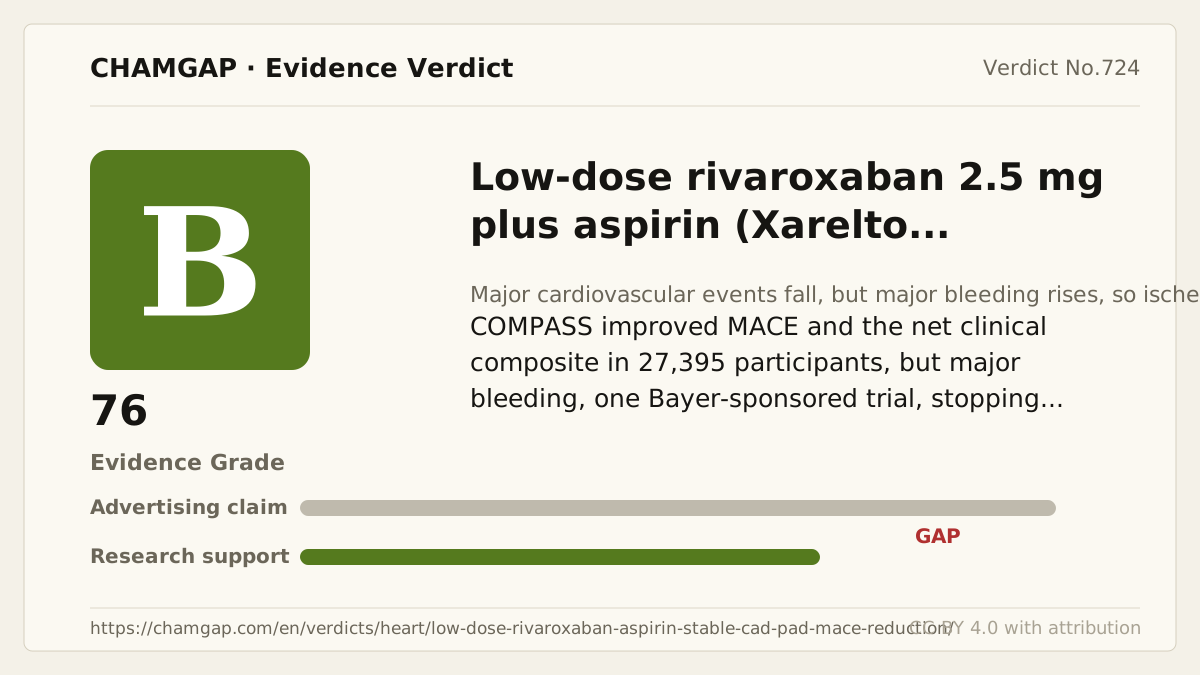
[Chamgap] Low-dose rivaroxaban plus aspirin x fewer major cardiovascular events in stable coronary or peripheral artery disease — Evidence Grade B·76. 2 cited sources checked. Source: https://chamgap.com/en/verdicts/heart/low-dose-rivaroxaban-aspirin-stable-cad-pad-mace-reduction/ · CC BY 4.0CC BY 4.0 — free to use with attribution; do not distort grades, numbers, or verdict meaning.
What this document does and does not do
Chamgap is an information source. It reports what research has and has not confirmed; it does not tell readers what to take or buy. That decision belongs to readers and, when needed, medical or legal professionals. This verdict reflects literature available up to the search date and may change as new research appears. Nothing here is medical advice.