
Ivabradine,
does it really help with Reduced combined risk of hospitalization for worsening heart failure and cardiovascular death in HFrEF with sinus rhythm and elevated heart rate?
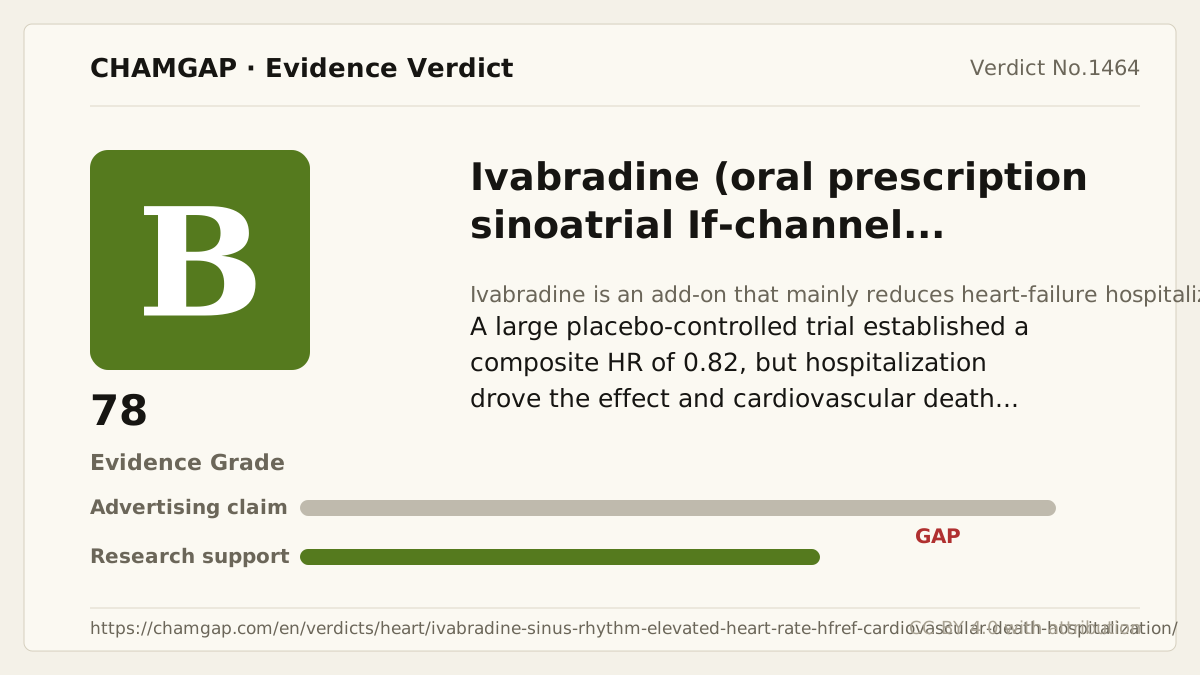
research showsIvabradine is rated B because it reduces the composite of cardiovascular death or hospitalization for worsening heart failure when added to standard therapy, particularly maximally tolerated beta-blockade, in symptomatic HFrEF with sinus rhythm and a resting heart rate of at least 70 beats per minute. SHIFT randomized 6,558 patients and reduced the primary composite with HR 0.82, but the effect was driven mainly by fewer heart-failure hospitalizations and cardiovascular death alone was not significant. The result does not generalize to atrial fibrillation or patients who do not meet the heart-rate criterion.
ads claimA claim that ivabradine reduces heart-failure mortality by 18% mistakes the composite hazard ratio for mortality alone. The accurate core benefit is an add-on reduction driven mainly by hospitalization in selected sinus-rhythm patients with elevated heart rate.
Useful facts when choosing a product
- Ivabradine inhibits sinoatrial If current to lower heart rate with little direct effect on blood pressure or myocardial contractility, and the intended mechanism requires sinus rhythm.
- For HFrEF it is an add-on after optimization of guideline therapy, including ACE inhibitor or ARNI, beta-blocker, MRA, and SGLT2 inhibitor as appropriate, rather than a routine replacement for beta-blockade.
- Bradycardia, dizziness, conduction disturbance, atrial fibrillation, and transient luminous visual phenomena called phosphenes can occur, requiring monitoring of pulse, rhythm, and symptoms.
- Strong CYP3A4 inhibitors should be avoided, and acute decompensated heart failure, very low blood pressure or heart rate, selected conduction disorders, and pregnancy are contraindications or require strict precautions.
Chamgap Semantic Classification Code
Candidate index · review held
M.ivabradine.oral.combined-risk-of-hospitalization-for-worsening-heart-failure-and-cardiovascular-death-in-hfref-with-sinus-rhythm-and-elevated-heart-rate.reduce.MULTIMedicinal interventions > Ivabradine > Oral > combined risk of hospitalization for worsening heart failure and cardiovascular death in HFrEF with sinus rhythm and elevated heart rate > Reduction claim > Multiple: primary unresolved
An automated migration candidate, not an issued permanent code; exact claim scope remains under review. This machine-generated migration candidate helps retrieval but is not a permanent assignment. The original verdict ID and URL remain authoritative.
What the research actually shows
Swedberg and colleagues' SHIFT trial randomized 6,558 symptomatic chronic heart-failure patients with sinus rhythm, left-ventricular ejection fraction of 35% or less, and resting heart rate of at least 70 beats per minute to ivabradine or placebo and followed them for a median 22.9 months. Cardiovascular death or hospitalization for worsening heart failure occurred in 24% versus 29%, with HR 0.82, and heart-failure hospitalization fell with HR 0.74. Cardiovascular death alone had a nonsignificant HR of 0.91. The 2022 AHA/ACC/HFSA guideline states that ivabradine can be beneficial to reduce heart-failure hospitalization and cardiovascular death in stable symptomatic HFrEF with LVEF 35% or less, sinus rhythm, heart rate at least 70, and guideline therapy including a maximally tolerated beta-blocker.
Why this is classified as B (78)
An ingredient-specific 6,558-patient placebo-controlled trial significantly reduced a clinical composite, but the benefit was driven mainly by heart-failure hospitalization and cardiovascular death alone was not significant. Eligibility was restricted to sinus rhythm, heart rate at least 70, and LVEF 35% or less, supporting B with 78 points.
Counterpoint. Benefit may be greater when baseline heart rate and achieved heart-rate reduction are greater, but this does not justify skipping eligibility assessment or optimization of established guideline therapy.
Rejudgment record. New verdict — Accepted the ingredient-specific placebo-controlled composite HR of 0.82 in SHIFT while reflecting that heart-failure hospitalization chiefly drove the result, cardiovascular death alone was nonsignificant, and eligibility was narrowly defined
Sub-claim grades by effect
This ingredient is marketed for several effects. A single overall grade blends strong and weak claims together, so each effect is graded separately here. The overall grade reflects the strongest disconfirming or core claim.
| Effect (sub-claim) | Grade | Basis |
|---|---|---|
| Reduced composite risk of cardiovascular death or hospitalization for worsening heart failure | B | The SHIFT result was 24% versus 29%, with HR 0.82, driven mainly by fewer hospitalizations. |
| Reduced hospitalization for worsening heart failure | B | Hospitalization for worsening heart failure was a direct clinical outcome and fell significantly with HR 0.74. |
| Reduced cardiovascular death | C | Cardiovascular death alone had a statistically nonsignificant HR of 0.91 and is not an established standalone benefit. |
Cross-check — AI research and Codex final gate
Evidence Table
| Study | Design | Sample | Funding | Endpoint | Result | Weight |
|---|---|---|---|---|---|---|
| Swedberg K et al. 2010 SHIFT | Multinational randomized double-blind placebo-controlled outcomes trial | 6,558 patients; 3,268 assigned to ivabradine and 3,290 to placebo | Servier | Composite of cardiovascular death or hospitalization for worsening heart failure | The composite was 24% versus 29%, with HR 0.82; heart-failure hospitalization had HR 0.74, while cardiovascular death alone had a nonsignificant HR of 0.91. | Pivotal ingredient-specific large placebo-controlled evidence |
| Heidenreich PA et al. 2022 AHA/ACC/HFSA guideline | Heart-failure clinical guideline based on systematic evidence review | Synthesis of randomized HFrEF trials and related evidence | AHA, ACC, and HFSA | Heart-failure hospitalization, cardiovascular death, and patient selection | Positioned ivabradine as a selective add-on for stable symptomatic HFrEF with LVEF 35% or less, sinus rhythm, heart rate at least 70, and guideline therapy including maximally tolerated beta-blockade. | Eligibility and standard-care positioning |
Receipt — 2 References
All 2 cited sources were verified for existence at the original page (as of 2026-07-23).
Final verification and publication gate: Codex · Evidence date: 2026-07-23 · Corrections: none
Cite this verdict
[Chamgap] Ivabradine x reduced heart-failure hospitalization and cardiovascular-death composite in sinus-rhythm tachycardic HFrEF — Evidence Grade B·78. 2 cited sources checked. Source: https://chamgap.com/en/verdicts/heart/ivabradine-sinus-rhythm-elevated-heart-rate-hfref-cardiovascular-death-hospitalization/ · CC BY 4.0CC BY 4.0 — free to use with attribution; do not distort grades, numbers, or verdict meaning.
What this document does and does not do
Chamgap is an information source. It reports what research has and has not confirmed; it does not tell readers what to take or buy. That decision belongs to readers and, when needed, medical or legal professionals. This verdict reflects literature available up to the search date and may change as new research appears. Nothing here is medical advice.