
Supervised isometric wall-squat or wall-sit training three times weekly,
does it really help with Lower resting systolic blood pressure in untreated adults with hypertension?
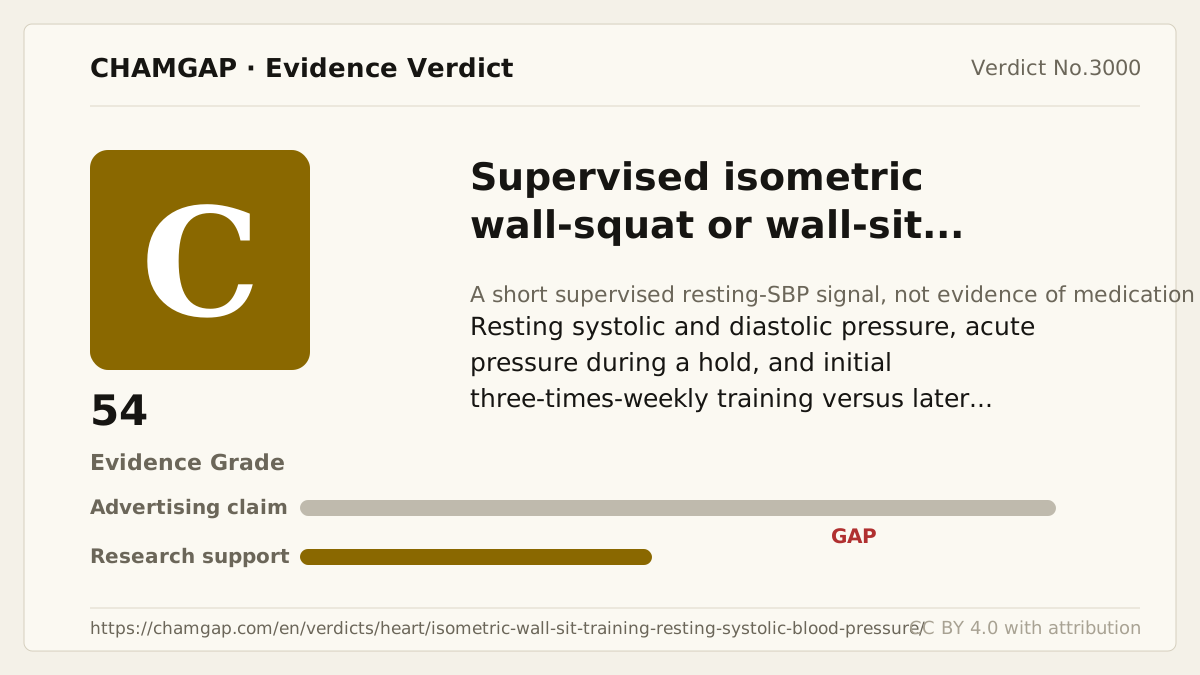
research showsGrade C with 54 points. In a 77-person RCT, resting systolic pressure changed from 141.2 to 128.3 mmHg after 12 weeks of wall sits, versus 138.9 to 138.5 mmHg with no exercise. The diastolic between-group result was null and events or medication replacement were not tested.
ads claimClaims that once weekly is an effective starting dose, that wall sits equal medication, or that they prevent heart attacks were not directly tested.
Useful facts when choosing a product
- The key prescription was four two-minute holds separated by two-minute seated rests.
- Initial training was three times weekly for 12 weeks; once weekly was a later maintenance phase.
- Knee angle, intensity calibration, and supervision are part of the intervention.
Chamgap Semantic Classification Code
Permanent code issued
X.isometric-wall-sit-training.behavioral.resting-systolic-blood-pressure.reduce.no-exerciseBehaviors, exposures and policies > Supervised isometric wall-squat or wall-sit training three times weekly > Behavioral delivery > Lower resting systolic blood pressure in untreated adults with hypertension > Reduction claim > No exercise
Codex retrospectively verified the principal intervention, delivery, population, endpoint, and comparator from the existing reviewed verdict and issued a permanent semantic code. Secondary outcomes on the page are not transferred as separate claims. The code identifies the intervention and claim; it never contains the evidence grade, score, or safety result.
Exact Claim Classification
These independent facets prevent evidence from different forms, routes, populations, effects, and comparators from being mixed.
| Intervention class | X · Behavior, exposure, or policy |
|---|---|
| Canonical ingredient or intervention | Supervised isometric wall-squat or wall-sit training three times weekly |
| Source or part used | Plant source not applicable; specified behavior or training |
| Formulation or processing | Supervised isometric wall-squat or wall-sit training three times weekly |
| Route | Behavioral delivery |
| Dose | Supervised isometric wall-squat or wall-sit training three times weekly |
| Duration | 12 weeks |
| Population | 77 participants, all completed |
| Effect or condition | Lower resting systolic blood pressure in untreated adults with hypertension |
| Primary endpoint | Twelve-week office resting pressure and maintenance |
| Comparator | No exercise |
| Duplicate-detection key | isometric-wall-sit-training|behavioral|77 participants, all completed|resting-systolic-blood-pressure|12 weeks |
What the research actually shows
Seventy-seven untreated adults aged 35-65 with hypertension were assigned to handgrip, wall sit, or no exercise. Wall sits used four two-minute holds with two-minute seated rests, three times weekly for 12 weeks, followed by once-weekly maintenance.
Why this is classified as C (54)
Public funding and a large controlled SBP signal are strengths, but resting pressure is a surrogate and the key trial had 77 participants, giving grade C with 54 points.
Counterpoint. All 77 completed and no adverse events were reported, but this was a limited supervised sample.
Rejudgment record. Codex cross-check of key and sham RCTs, funding, and acute safety evidence — Separated Cohen SBP from DBP, initial training from maintenance, and lower resting pressure from elevated pressure during a hold
| Endpoint | S | Surrogate marker - laboratory or imaging measures |
| Replication | R1 | Single confirmatory trial |
| Independence | I2 | Decisive evidence is publicly or non-profit funded |
| Effect size | E+ | Meets the clinically important threshold |
| Precision | CX | No pooled confidence interval could be confirmed |
Stored derived and displayed grades match; this is not a current recalculation or validity check (C).
Sub-claim grades by effect
This ingredient is marketed for several effects. A single overall grade blends strong and weak claims together, so each effect is graded separately here. The overall grade reflects the strongest disconfirming or core claim.
| Effect (sub-claim) | Grade | Basis |
|---|---|---|
| Lower resting SBP after 12 weeks of supervised wall sits | C | The key trial had a -12.9-mmHg within-group change. |
| Improved diastolic blood pressure | D | The key trial's between-group result was null. |
| Medication replacement or cardiovascular-event prevention | ? | Events and treatment replacement were not tested. |
Cross-check — AI research and Codex final gate
Evidence Table
| Study | Design | Sample | Funding | Endpoint | Result | Weight |
|---|---|---|---|---|---|---|
| Cohen DD et al. 2023 | Multicenter three-arm randomized trial | 77 participants, all completed | Colombian Ministry of Science/Colciencias; no conflicts declared | Twelve-week office resting pressure and maintenance | SBP 141.2 to 128.3 vs 138.9 to 138.5 mmHg; DBP between-group null | Key hypertension RCT |
| Decaux A et al. 2022 | Randomized wall-sit, low-intensity sham, and no-exercise trial | 30 participants | Funding information not provided | Four-week resting SBP and DBP | SBP -15.2±9.2 and DBP -4.6±5.0 mmHg; P<.05 vs controls | Small supportive trial |
Receipt — 2 References
Of 2 cited sources, 1 had limited original-page access (blocked or summary-only) and were verified via index/summary, marked partial; the rest were verified at the original page. As of 2026-09-07.
Final verification and publication gate: Codex · Evidence date: 2026-09-07 · Corrections: none
Cite this verdict
[Chamgap] Wall-Sit Training for Resting Systolic Pressure—Diastolic Benefit Remains Unconfirmed — Evidence Grade C·54. 2 cited sources checked. Source: https://chamgap.com/en/verdicts/heart/isometric-wall-sit-training-resting-systolic-blood-pressure/ · CC BY 4.0CC BY 4.0 — free to use with attribution; do not distort grades, numbers, or verdict meaning.
What this document does and does not do
Chamgap is an information source. It reports what research has and has not confirmed; it does not tell readers what to take or buy. That decision belongs to readers and, when needed, medical or legal professionals. This verdict reflects literature available up to the search date and may change as new research appears. Nothing here is medical advice.