
Intensive blood-pressure control,
does it really help with Reduction of major cardiovascular events and death in high-risk hypertension?
research showsIntensive blood-pressure control is rated A because it reduced the clinical composite of myocardial infarction, acute coronary syndrome, stroke, heart failure, and cardiovascular death in high-risk hypertensive adults without diabetes or prior stroke. SPRINT analyzed all 9,361 randomized participants by intention to treat, and the primary endpoint succeeded at 1.65% versus 2.19% per year, HR 0.75. An independent meta-analysis of 19 trials and 44,989 participants reproduced a reduction in major cardiovascular events.
ads claimMarketing can reduce the message to lower is always better. The evidence applies to carefully measured and monitored treatment in SPRINT-like high-risk patients without diabetes or prior stroke.
Useful facts when choosing a product
- Intensive control is a treatment strategy using antihypertensive medicines and lifestyle care, not a single product.
- The target below 120 mmHg in SPRINT used standardized automated office measurement and should not be equated mechanically with nonstandard readings.
- People with diabetes or prior stroke were outside the SPRINT population and require their own evidence and guidance.
- Monitoring is needed for hypotension, syncope, electrolyte abnormalities, and acute kidney injury.
Chamgap Semantic Classification Code
Candidate index · review held
UNK.intensive-blood-pressure-control.UNK.major-cardiovascular-events-and-death-in-high-risk-hypertension.reduce.UNKUnknown > Intensive blood-pressure control > Unknown > major cardiovascular events and death in high-risk hypertension > Reduction claim > Unknown
An automated migration candidate, not an issued permanent code; exact claim scope remains under review. This machine-generated migration candidate helps retrieval but is not a permanent assignment. The original verdict ID and URL remain authoritative.
What the research actually shows
SPRINT was an open strategy trial at 102 United States sites with blinded event adjudication. It randomized 9,361 participants to targets below 120 or 140 mmHg and included all 9,361 in the primary intention-to-treat analysis. At a median follow-up of 3.26 years, the primary cardiovascular composite was significantly reduced and the intervention was stopped early. Xie and colleagues synthesized 19 trials and 44,989 participants and confirmed reductions in major cardiovascular events and stroke. However, ACCORD-BP failed its primary endpoint with the same intensive strategy, and acute kidney injury, syncope, and other harms increased in SPRINT. SPRINT had public NIH/NHLBI funding, with some medicines and equipment supplied in kind.
Why this is classified as A (86)
A public trial analyzing all 9,361 randomized participants achieved its hard primary composite with HR 0.75, and an independent meta-analysis reproduced the benefit; early stopping, ACCORD-BP conflict, and increased harms temper this to A with 86 points.
Counterpoint. Absolute benefit and harm vary with baseline cardiovascular risk, age, orthostatic symptoms, kidney function, and measurement technique, so targets require clinical individualization.
Rejudgment record. Cross-check applied — Success of a hard primary composite in a large public multicenter trial and replication in an independent 19-trial meta-analysis, tempered because stopping at a median 3.26 years may overestimate benefit, ACCORD-BP failed its primary endpoint with the same intensive strategy, and acute kidney injury, syncope, and other harms increased
Sub-claim grades by effect
This ingredient is marketed for several effects. A single overall grade blends strong and weak claims together, so each effect is graded separately here. The overall grade reflects the strongest disconfirming or core claim.
| Effect (sub-claim) | Grade | Basis |
|---|---|---|
| Reduction of major cardiovascular events | A | A large hard-endpoint trial and an independent meta-analysis are consistently positive. |
| Reduction of heart-failure events | A | SPRINT found a substantial reduction in this prespecified component of the primary composite. |
| Reduction of all-cause mortality | A | SPRINT found a significant reduction with HR 0.73, a hard clinical outcome. |
Cross-check — AI research and Codex final gate
Evidence Table
| Study | Design | Sample | Funding | Endpoint | Result | Weight |
|---|---|---|---|---|---|---|
| SPRINT Research Group. 2015 | Multicenter randomized open treatment-strategy trial with blinded event adjudication | 9,361 randomized; 9,361 in the actual primary intention-to-treat analysis | Public NIH funding led by NHLBI with NIDDK, NINDS, and NIA cosponsorship; some medicines and equipment supplied in kind | Prespecified primary composite of myocardial infarction, non-infarction acute coronary syndrome, stroke, heart failure, or cardiovascular death | Primary endpoint succeeded: 1.65% versus 2.19% per year, 243 versus 319 events, HR 0.75 (95% CI 0.64 to 0.89; P<.001). | Key large hard-endpoint evidence |
| Xie X et al. 2016 | Systematic review and meta-analysis of randomized trials | 19 trials and 44,989 participants | Public funding from the Australian National Health and Medical Research Council | Major cardiovascular events, myocardial infarction, stroke, heart failure, and death | Major cardiovascular events were reduced, RR 0.86 (95% CI 0.78 to 0.96). | Independent multi-trial replication |
| Zhang W et al. 2021 (STEP) | Multicenter randomized controlled treatment-strategy trial in Chinese patients 60 to 80 years of age with hypertension (systolic target 110 to <130 versus 130 to <150 mmHg) | 8,511 randomized (4,243 intensive and 4,268 standard) | Public funding led by the Chinese Academy of Medical Sciences and others per the article, with CAMS Innovation Fund and National Natural Science Foundation of China grants | Prespecified primary composite of stroke, acute coronary syndrome, acute decompensated heart failure, coronary revascularization, atrial fibrillation, or death from cardiovascular causes | Primary endpoint succeeded: at a median follow-up of 3.34 years, 147 events (3.5%) versus 196 (4.6%), HR 0.74 (95% CI 0.60 to 0.92; P=0.007); hypotension was more frequent with intensive treatment. | Large independent replication by a different research group with separate public funding |
Receipt — 3 References
All 3 cited sources were verified for existence at the original page (as of 2026-08-11).
Final verification and publication gate: Codex · Evidence date: 2026-08-11 · Corrections: none
Cite this verdict
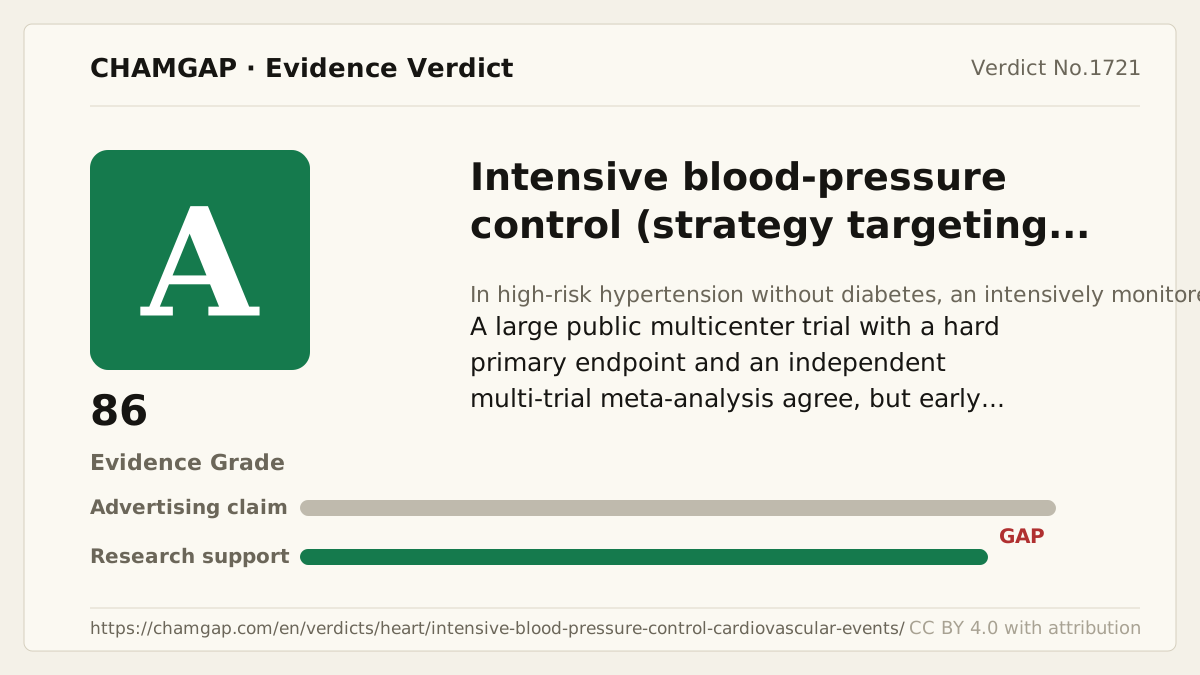
[Chamgap] Intensive blood-pressure control x fewer cardiovascular events in high-risk hypertension — Evidence Grade A·86. 3 cited sources checked. Source: https://chamgap.com/en/verdicts/heart/intensive-blood-pressure-control-cardiovascular-events/ · CC BY 4.0CC BY 4.0 — free to use with attribution; do not distort grades, numbers, or verdict meaning.
What this document does and does not do
Chamgap is an information source. It reports what research has and has not confirmed; it does not tell readers what to take or buy. That decision belongs to readers and, when needed, medical or legal professionals. This verdict reflects literature available up to the search date and may change as new research appears. Nothing here is medical advice.