
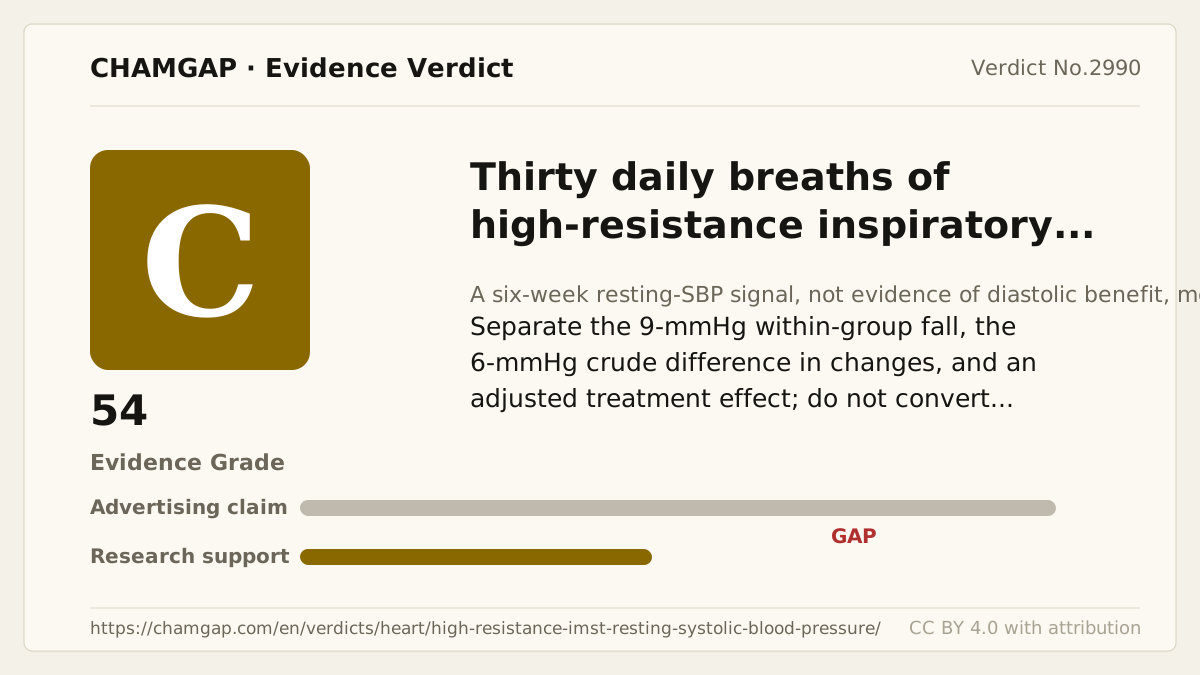
Thirty daily breaths of high-resistance inspiratory muscle strength training,
does it really help with Lower resting systolic pressure in middle-aged and older adults?
research showsGrade C with 54 points. In a trial with 38 randomized and 36 analyzed, resting systolic pressure changed from 135±2 to 126±3 mmHg after six weeks of high-resistance IMST and from 134±2 to 131±3 with low-resistance sham; the group-by-time P value was .02. The diastolic interaction was P=.17, and cardiovascular events were not tested.
ads claimClaims that five minutes daily replaces medication or prevents vascular events exceed these short-term resting surrogate results.
Useful facts when choosing a product
- The protocol was 30 breaths daily, six days weekly, for six weeks.
- Resistance progressed to 75% of maximal inspiratory pressure; sham used 15%.
- The approximately 45% FMD figure was a relative change, not a 45-percentage-point gain.
Chamgap Semantic Classification Code
Permanent code issued
X.high-resistance-inspiratory-muscle-training.behavioral.resting-systolic-blood-pressure.reduce.shamBehaviors, exposures and policies > Thirty daily breaths of high-resistance inspiratory muscle strength training > Behavioral delivery > Lower resting systolic pressure in middle-aged and older adults > Reduction claim > Sham
Codex retrospectively verified the principal intervention, delivery, population, endpoint, and comparator from the existing reviewed verdict and issued a permanent semantic code. Secondary outcomes on the page are not transferred as separate claims. The code identifies the intervention and claim; it never contains the evidence grade, score, or safety result.
Exact Claim Classification
These independent facets prevent evidence from different forms, routes, populations, effects, and comparators from being mixed.
| Intervention class | X · Behavior, exposure, or policy |
|---|---|
| Canonical ingredient or intervention | Thirty daily breaths of high-resistance inspiratory muscle strength training |
| Source or part used | Plant source not applicable; specified behavior or training |
| Formulation or processing | Thirty daily breaths of high-resistance inspiratory muscle strength training |
| Route | Behavioral delivery |
| Dose | Thirty daily breaths of high-resistance inspiratory muscle strength training |
| Duration | Six weeks |
| Population | 38 randomized, 36 analyzed |
| Effect or condition | Lower resting systolic pressure in middle-aged and older adults |
| Primary endpoint | Six-week resting SBP; DBP, ambulatory pressure, and FMD separate |
| Comparator | Sham |
| Duplicate-detection key | high-resistance-inspiratory-muscle-training|behavioral|38 randomized, 36 analyzed|resting-systolic-blood-pressure|Six weeks |
What the research actually shows
The preregistered low-resistance-sham trial compared 15% resistance with progression from 55% to 65% and then 75%, five sets of six breaths. Eighteen participants per arm were analyzed.
Why this is classified as C (54)
Public funding and a positive SBP signal are strengths, but a surrogate endpoint, 36-person analysis, and six-week duration yield C with 54 points.
Counterpoint. Ambulatory SBP had P=.07 and DBP P=.17, so the resting-SBP finding was not transferred to those outcomes.
Rejudgment record. Cross-check applied — Cross-checked the ChatGPT dossier, primary trial, and registry while separating SBP, DBP, ambulatory pressure, FMD, denominators, and funding
| Endpoint | S | Surrogate marker - laboratory or imaging measures |
| Replication | R1 | Single confirmatory trial |
| Independence | I2 | Decisive evidence is publicly or non-profit funded |
| Effect size | E+ | Meets the clinically important threshold |
Stored derived and displayed grades match; this is not a current recalculation or validity check (C).
Sub-claim grades by effect
This ingredient is marketed for several effects. A single overall grade blends strong and weak claims together, so each effect is graded separately here. The overall grade reflects the strongest disconfirming or core claim.
| Effect (sub-claim) | Grade | Basis |
|---|---|---|
| Lower resting systolic pressure | C | Group-by-time P was .02; an adjusted between-group CI was unavailable. |
| Diastolic or cardiovascular-event benefit | D | The DBP interaction was null and events were not measured. |
Cross-check — AI research and Codex final gate
Evidence Table
| Study | Design | Sample | Funding | Endpoint | Result | Weight |
|---|---|---|---|---|---|---|
| Craighead DH et al. 2021 | Low-resistance sham-controlled randomized trial | 38 randomized, 36 analyzed | Public/nonprofit support including NIH and American Heart Association | Six-week resting SBP; DBP, ambulatory pressure, and FMD separate | SBP 135±2 to 126±3 vs 134±2 to 131±3 mmHg; group-by-time P=.02 | Key short-term RCT |
Receipt — 1 References
All 1 cited sources were verified for existence at the original page (as of 2026-09-07).
Final verification and publication gate: Codex · Evidence date: 2026-09-07 · Corrections: none
Cite this verdict
[Chamgap] High-Resistance IMST for Resting Systolic Pressure—Diastolic and Event Benefits Remain Unconfirmed — Evidence Grade C·54. 1 cited sources checked. Source: https://chamgap.com/en/verdicts/heart/high-resistance-imst-resting-systolic-blood-pressure/ · CC BY 4.0CC BY 4.0 — free to use with attribution; do not distort grades, numbers, or verdict meaning.
What this document does and does not do
Chamgap is an information source. It reports what research has and has not confirmed; it does not tell readers what to take or buy. That decision belongs to readers and, when needed, medical or legal professionals. This verdict reflects literature available up to the search date and may change as new research appears. Nothing here is medical advice.