
Grape-seed oil versus refined olive oil or no added oil,
does it really help with Lower blood pressure versus refined olive oil or no added oil?
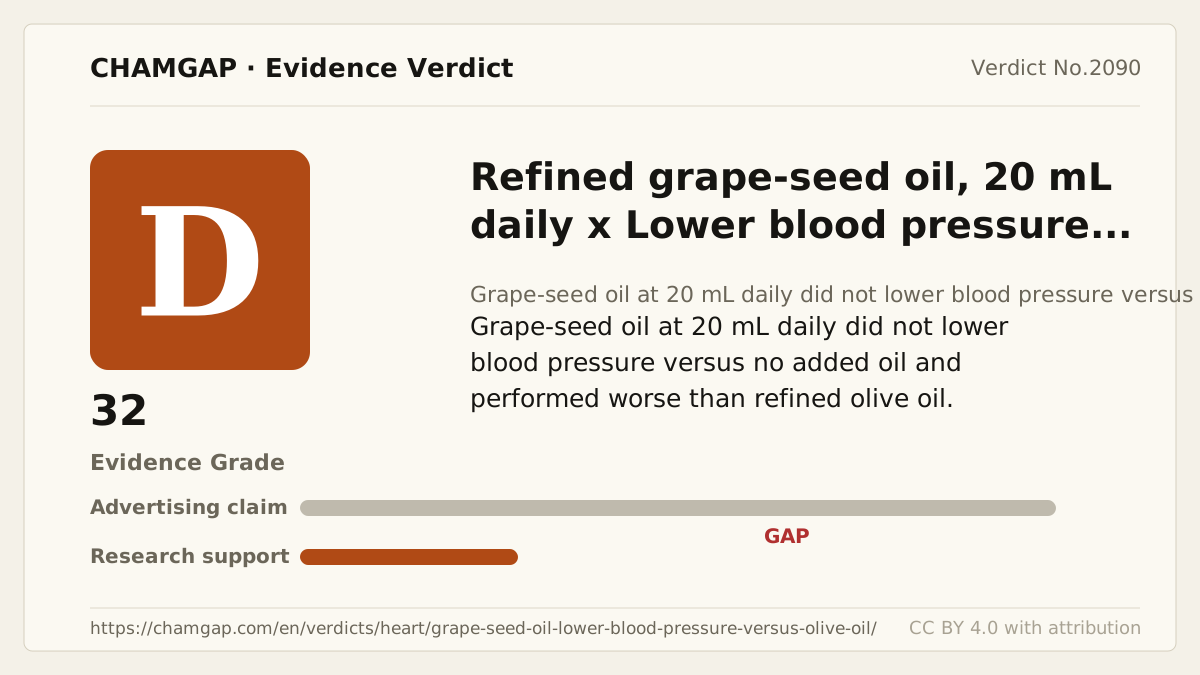
research showsThe grade is D with 30 points. In a six-week trial assigning 60 patients with hyperlipidemia equally to three groups, systolic-pressure change was +5.40 mmHg with grape-seed oil, -10.95 with refined olive oil, and -0.30 with no added oil. Grape-seed oil did not lower pressure versus no oil and was significantly worse than olive oil, P=0.01.
ads claimLinoleic acid and a high smoke point are genuine properties, not proof of lower blood pressure. Verdict 1449 is D with 29 points for extra-virgin olive oil and all-cause mortality; the current verdict is a six-week blood-pressure comparison of refined grape-seed oil with refined olive oil and no added oil.
Useful facts when choosing a product
- Typical grape-seed oil is about 90% unsaturated fat, with roughly 65% to 75% linoleic acid, 20% to 40% oleic acid, and around 10% saturated fat. Product and extraction method matter, and the trial oil was not directly assayed.
- Alpha-linolenic acid is very low, so the omega-6:omega-3 ratio can be very high, but the exact ratio of the trial product was not measured.
- Published grape-seed-oil smoke points vary, including a cold-pressed mean near 214.9 degrees Celsius and 235 degrees Celsius in another study. Refining and free-fatty-acid content matter, and smoke point is not a blood-pressure outcome.
- All groups followed a Step I diet; the oil groups received 20 mL daily of grape-seed or refined olive oil, while the control received no added oil.
Chamgap Semantic Classification Code
Candidate index · review held
F.refined-grape-seed-oil.food.blood-pressure.reduce.UNKFoods and beverages > Refined grape-seed oil > Food consumption > Blood pressure > Reduction claim > Unknown
An automated migration candidate, not an issued permanent code; exact claim scope remains under review. This machine-generated migration candidate helps retrieval but is not a permanent assignment. The original verdict ID and URL remain authoritative.
What the research actually shows
Kaseb and Biregani assigned 60 patients with hyperlipidemia by random-number table to refined olive oil 20 mL daily, refined grape-seed oil 20 mL daily, or no added oil, 20 per group. All 60 entered the six-week analysis. Investigators and analysts were blinded to the two coded oils, but the no-oil group could not be blinded identically. Baseline systolic pressure differed among groups, and the article used change-score ANOVA with LSD post hoc tests. The Shahid Sadoughi University Diabetes Research Center funded the work, and the authors declared no conflicts.
Why this is classified as D (30)
The direct randomized trial found no reduction versus no added oil and an unfavorable result versus olive oil, but it was one 60-person, six-week study without an adjusted interval, giving D with 30 points.
Counterpoint. D does not establish that grape-seed oil necessarily raises blood pressure. It means the trial did not support a lowering claim.
Rejudgment record. Cross-check applied — Checked allocation, complete analysis, comparators, baseline imbalance, blood-pressure change table, post hoc comparison, funding, and conflicts directly in the original PDF
| Endpoint | S | Surrogate marker - laboratory or imaging measures |
| Replication | R1 | Single confirmatory trial |
| Independence | I2 | Decisive evidence is publicly or non-profit funded |
| Effect size | E0 | Null |
| Precision | CX | No pooled confidence interval could be confirmed |
Stored derived and displayed grades match; this is not a current recalculation or validity check (D).
Sub-claim grades by effect
This ingredient is marketed for several effects. A single overall grade blends strong and weak claims together, so each effect is graded separately here. The overall grade reflects the strongest disconfirming or core claim.
| Effect (sub-claim) | Grade | Basis |
|---|---|---|
| Grape-seed oil at 20 mL daily lowers blood pressure versus no added oil | D | Systolic pressure did not decline in the grape-seed-oil group. |
| Grape-seed oil is better for blood pressure than refined olive oil | D | The direct comparison favored refined olive oil, P=0.01. |
Cross-check — AI research and Codex final gate
Evidence Table
| Study | Design | Sample | Funding | Endpoint | Result | Weight |
|---|---|---|---|---|---|---|
| Kaseb and Biregani 2016 | Three-arm six-week trial allocated by random-number table | 60 randomized, 20 per arm, all analyzed | Shahid Sadoughi University Diabetes Research Center | Change in systolic blood pressure from baseline | Grape-seed oil +5.40 plus or minus 11.36, olive oil -10.95 plus or minus 15.73, no added oil -0.30 plus or minus 29.85 mmHg; overall P=0.04, olive versus grape P=0.01 | Direct null and unfavorable comparative evidence |
Receipt — 3 References
All 3 cited sources were verified for existence at the original page (as of 2026-08-03).
Final verification and publication gate: Codex · Evidence date: 2026-08-03 · Corrections: none
Cite this verdict
[Chamgap] Grape-seed oil versus refined olive oil or no added oil x lower blood pressure — Evidence Grade D·30. 3 cited sources checked. Source: https://chamgap.com/en/verdicts/heart/grape-seed-oil-lower-blood-pressure-versus-olive-oil/ · CC BY 4.0CC BY 4.0 — free to use with attribution; do not distort grades, numbers, or verdict meaning.
What this document does and does not do
Chamgap is an information source. It reports what research has and has not confirmed; it does not tell readers what to take or buy. That decision belongs to readers and, when needed, medical or legal professionals. This verdict reflects literature available up to the search date and may change as new research appears. Nothing here is medical advice.