
Ezetimibe,
does it really help with Reduced recurrent cardiovascular events when added to a statin after acute coronary syndrome?
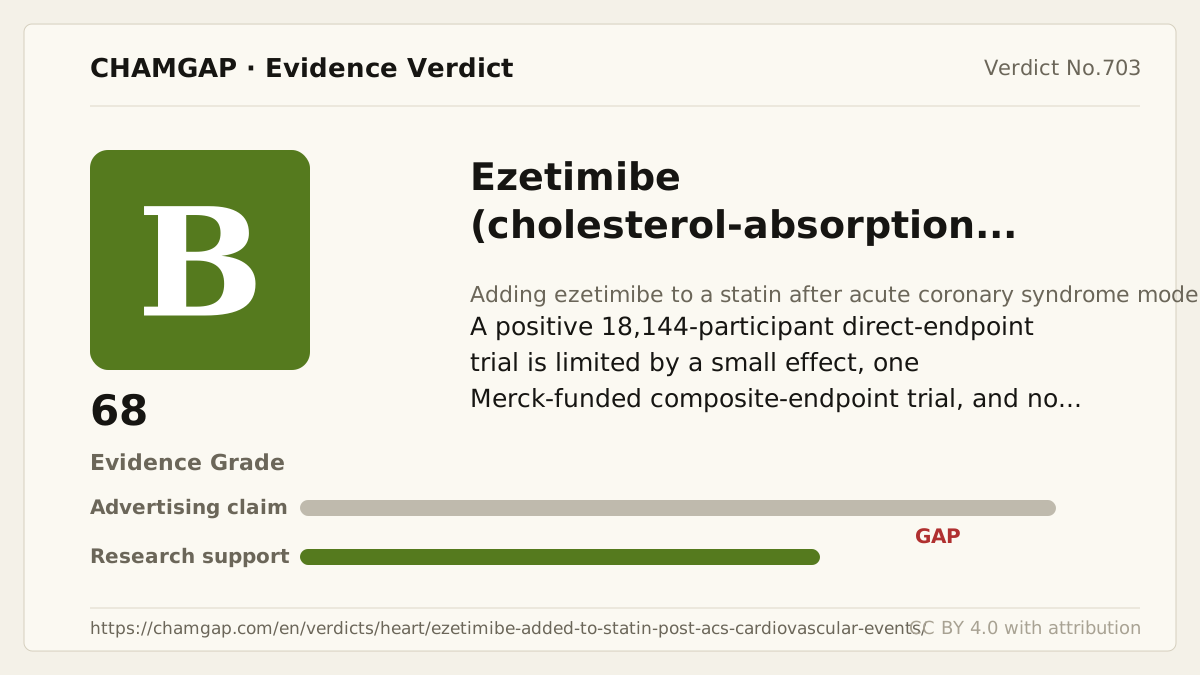
research showsEzetimibe is rated B because adding it to a statin after acute coronary syndrome modestly reduces cardiovascular events. IMPROVE-IT followed 18,144 participants for a median of six years and reduced the seven-year primary composite endpoint from 34.7% to 32.7% (HR 0.936, 95% CI 0.89 to 0.99). This was a direct clinical outcome including myocardial infarction and stroke rather than LDL change alone, but the absolute difference was only 2.0 percentage points and evidence relies largely on one manufacturer-funded large composite-endpoint trial. Equivalent event reduction with monotherapy or primary prevention is not established in this file.
ads claimMarketing may imply that a large LDL reduction produces the same proportional reduction in heart attacks or death. Actual event reduction after acute coronary syndrome was about 6% relative and 2 percentage points absolute, and a clear cardiovascular-mortality reduction was not demonstrated.
Useful facts when choosing a product
- Ezetimibe is commonly prescribed at 10 mg once daily, and the post-acute-coronary-syndrome event evidence comes from adding it to statin therapy.
- For patients who can tolerate a statin, ezetimibe is an additional LDL-lowering option rather than an arbitrary replacement for the statin.
- Lipids, liver disease, and co-medications should be reviewed, and unexplained muscle pain or weakness should be reported to a clinician.
- Even when brand or LDL lowering is similar, the clinical-outcome result applies most directly when the patient population and combination regimen match IMPROVE-IT.
Chamgap Semantic Classification Code
Candidate index · review held
M.ezetimibe.UNK.recurrent-cardiovascular-events-when-added-to-a-statin-after-acute-coronary-syndrome.reduce.MULTIMedicinal interventions > Ezetimibe > Unknown > recurrent cardiovascular events when added to a statin after acute coronary syndrome > Reduction claim > Multiple: primary unresolved
An automated migration candidate, not an issued permanent code; exact claim scope remains under review. This machine-generated migration candidate helps retrieval but is not a permanent assignment. The original verdict ID and URL remain authoritative.
What the research actually shows
IMPROVE-IT double-blind-randomized 18,144 patients meeting LDL criteria within ten days after acute coronary syndrome and followed them for a median of six years. Average LDL was 53.7 mg/dL with ezetimibe and 69.5 mg/dL with control. The composite of cardiovascular death, nonfatal myocardial infarction, rehospitalization for unstable angina, revascularization after 30 days, or nonfatal stroke was 32.7% versus 34.7% at seven years. A subsequent total-events analysis also reported a reduction in the combined burden of first and recurrent events. Most clinical-outcome evidence, however, comes from the same IMPROVE-IT cohort.
Why this is classified as B (68)
A double-blind trial of 18,144 participants followed for a median of six years reduced the seven-year composite cardiovascular event rate from 34.7% to 32.7%. This large prescription-drug hard-endpoint trial supports B, but the small effect, composite outcome, one Merck-funded trial, and absence of independent replication lower it to 68 points. LDL lowering and muscle or liver safety remain separate from clinical-event efficacy.
Counterpoint. A small relative effect can matter over time for patients at high recurrent risk after acute coronary syndrome. Absolute benefit and drug choice should consider current LDL, tolerated statin intensity, comorbidities, and patient preferences.
Rejudgment record. New verdict — Credited the significant direct composite cardiovascular outcome in a long-term 18,144-participant post-acute-coronary-syndrome trial, but applied B for the small absolute effect, reliance on one manufacturer-funded large trial, and composite-endpoint dependence
Sub-claim grades by effect
This ingredient is marketed for several effects. A single overall grade blends strong and weak claims together, so each effect is graded separately here. The overall grade reflects the strongest disconfirming or core claim.
| Effect (sub-claim) | Grade | Basis |
|---|---|---|
| Reduced composite cardiovascular events when added to a statin after acute coronary syndrome | B | A large direct-endpoint trial was positive, but the absolute effect was small and evidence depends heavily on one manufacturer-funded trial. |
| Equivalent event reduction with ezetimibe monotherapy | ? | IMPROVE-IT tested combination therapy with a statin and cannot directly establish monotherapy outcomes. |
| Extension of the same event reduction to primary prevention | ? | The population differs from the post-acute-coronary-syndrome secondary-prevention evidence assessed here. |
| Inferring clinical-event reduction from LDL lowering alone | C | LDL is a surrogate and clinical benefit must be confirmed separately in outcome trials. |
Cross-check — AI research and Codex final gate
Evidence Table
| Study | Design | Sample | Funding | Endpoint | Result | Weight |
|---|---|---|---|---|---|---|
| Cannon CP et al. 2015 IMPROVE-IT | Multicenter double-blind randomized placebo-controlled trial | 18,144 patients after recent acute coronary syndrome; median follow-up six years | Merck | Composite cardiovascular death, nonfatal myocardial infarction, unstable-angina rehospitalization, revascularization, or nonfatal stroke | Seven-year event rates were 32.7% versus 34.7%; absolute difference -2.0 percentage points, HR 0.936 (95% CI 0.89 to 0.99; P=0.016). | Key large randomized trial on direct clinical outcomes |
| Murphy SA et al. 2016 IMPROVE-IT total-events analysis | Prespecified analysis of total cardiovascular events | The same 18,144 IMPROVE-IT participants; 9,545 total primary-endpoint events | IMPROVE-IT data from a Merck-supported trial | Total primary-endpoint events including first and subsequent recurrences | The ezetimibe combination significantly reduced the total burden of first and recurrent events. | Supports recurrent-event consistency but is not an independent cohort |
Receipt — 2 References
All 2 cited sources were verified for existence at the original page (as of 2026-07-19).
Final verification and publication gate: Codex · Evidence date: 2026-07-19 · Corrections: none
Cite this verdict
[Chamgap] Ezetimibe x reduced recurrent cardiovascular events after acute coronary syndrome — Evidence Grade B·68. 2 cited sources checked. Source: https://chamgap.com/en/verdicts/heart/ezetimibe-added-to-statin-post-acs-cardiovascular-events/ · CC BY 4.0CC BY 4.0 — free to use with attribution; do not distort grades, numbers, or verdict meaning.
What this document does and does not do
Chamgap is an information source. It reports what research has and has not confirmed; it does not tell readers what to take or buy. That decision belongs to readers and, when needed, medical or legal professionals. This verdict reflects literature available up to the search date and may change as new research appears. Nothing here is medical advice.