
Edoxaban,
does it really help with Prevention of stroke and systemic embolism in nonvalvular atrial fibrillation?
research showsEdoxaban is rated B because the 21,105-participant ENGAGE AF-TIMI 48 trial showed noninferior prevention of stroke or systemic embolism versus warfarin with less major bleeding. This was a very large direct-event trial, but the pivotal efficacy conclusion was noninferiority rather than superiority and decisive evidence is concentrated in one manufacturer-funded trial. The higher-dose strategy balanced efficacy and bleeding well, whereas the lower-dose strategy reduced bleeding further but produced more ischemic stroke. Bleeding risk, dose reduction for renal function, weight, and interactions, and limited evidence in specific valvular disease are separated as safety and eligibility conditions.
ads claimPromotion can turn less monitoring into a claim of no bleeding or uniformly greater protection than warfarin. Serious bleeding still occurs, and missed doses, abrupt discontinuation, or inappropriate dose reduction can reduce protection.
Useful facts when choosing a product
- Edoxaban is a once-daily prescription direct oral anticoagulant used to prevent stroke and systemic embolism in nonvalvular atrial fibrillation. The prescribed dose should not be reduced or skipped without direction.
- Dose reduction may be required according to renal function, body weight, interacting P-glycoprotein inhibitors, and regional labeling. Renal function is assessed before and during therapy.
- Bleeding is the most important harm. Black stools, blood in urine, persistent bleeding, severe headache, or neurologic symptoms require prompt assessment, and concomitant anticoagulants, antiplatelets, and nonsteroidal anti-inflammatory drugs should be reviewed.
- Pivotal evidence does not cover mechanical heart valves or atrial fibrillation with moderate-to-severe mitral stenosis. Interruption and resumption around procedures should be clinician-directed.
Chamgap Semantic Classification Code
Candidate index · review held
M.edoxaban.oral.stroke-and-systemic-embolism-in-nonvalvular-atrial-fibrillation.prevent.placeboMedicinal interventions > Edoxaban > Oral > stroke and systemic embolism in nonvalvular atrial fibrillation > Occurrence-prevention claim > Placebo
An automated migration candidate, not an issued permanent code; exact claim scope remains under review. This machine-generated migration candidate helps retrieval but is not a permanent assignment. The original verdict ID and URL remain authoritative.
What the research actually shows
ENGAGE AF-TIMI 48 randomized 21,105 patients with moderate-to-high-risk atrial fibrillation under double blinding to warfarin, high-dose edoxaban, or low-dose edoxaban. On-treatment annual primary-event rates were 1.50%, 1.18%, and 1.61%, respectively, and both edoxaban strategies were noninferior. Major-bleeding rates were 3.43%, 2.75%, and 1.61%. A 2015 meta-analysis of four randomized trials and 23,001 participants also found noninferior efficacy and less bleeding overall, but 30 mg per day carried more stroke or systemic embolism than 60 mg per day. Prescribed dosing depends on renal function, body weight, and P-glycoprotein interactions.
Why this is classified as B (77)
A 21,105-participant double-blind trial confirmed noninferiority to warfarin for the direct endpoint of stroke or systemic embolism and less major bleeding. The non-superiority conclusion, concentration in one manufacturer-funded pivotal trial, and inferior ischemic-stroke prevention with the low-dose strategy yield B with 77 points. Bleeding and renal dose adjustment remain independent safety issues.
Counterpoint. This does not make warfarin inappropriate. Anticoagulant choice depends on renal function, adherence, cost, interactions, bleeding risk, and valvular disease, and treatment should not be stopped without guidance.
Rejudgment record. New verdict — Prioritized the direct stroke and systemic-embolism endpoint and lower major bleeding in the 21,105-participant ENGAGE AF-TIMI 48 trial, while deducting for noninferiority design, concentration in one manufacturer-funded pivotal trial, and inferior ischemic-stroke prevention with the low-dose strategy
Sub-claim grades by effect
This ingredient is marketed for several effects. A single overall grade blends strong and weak claims together, so each effect is graded separately here. The overall grade reflects the strongest disconfirming or core claim.
| Effect (sub-claim) | Grade | Basis |
|---|---|---|
| Prevention of stroke and systemic embolism in nonvalvular atrial fibrillation | B | A large direct-event trial established noninferiority to warfarin, but not superiority, and evidence depends heavily on one pivotal trial. |
| Superior event prevention with the higher-dose strategy versus warfarin | C | Intention-to-treat superiority was not statistically significant. |
| Prevention of ischemic stroke with the lower-dose strategy | C | Bleeding was reduced, but ischemic stroke was more frequent than with warfarin, creating an efficacy tradeoff. |
Cross-check — AI research and Codex final gate
Evidence Table
| Study | Design | Sample | Funding | Endpoint | Result | Weight |
|---|---|---|---|---|---|---|
| Giugliano RP et al. 2013 ENGAGE AF-TIMI 48 | Randomized double-blind double-dummy warfarin-controlled noninferiority trial | 21,105 patients with moderate-to-high-risk atrial fibrillation | Daiichi Sankyo Pharma Development | Stroke or systemic embolism and major bleeding | Both dose strategies were noninferior to warfarin and caused less major bleeding, but the lower-dose strategy produced more ischemic stroke. | Decisive large randomized trial with direct events |
| Chen J et al. 2015 meta-analysis | Meta-analysis of randomized trials versus warfarin | Four trials and 23,001 participants | Funding not stated in the abstract | Stroke, systemic embolism, and bleeding | Edoxaban was noninferior with less bleeding overall, but 30 mg per day had more stroke or systemic embolism than 60 mg per day. | Synthesis confirming the dose tradeoff |
Receipt — 2 References
All 2 cited sources were verified for existence at the original page (as of 2026-07-20).
Final verification and publication gate: Codex · Evidence date: 2026-07-20 · Corrections: none
Cite this verdict
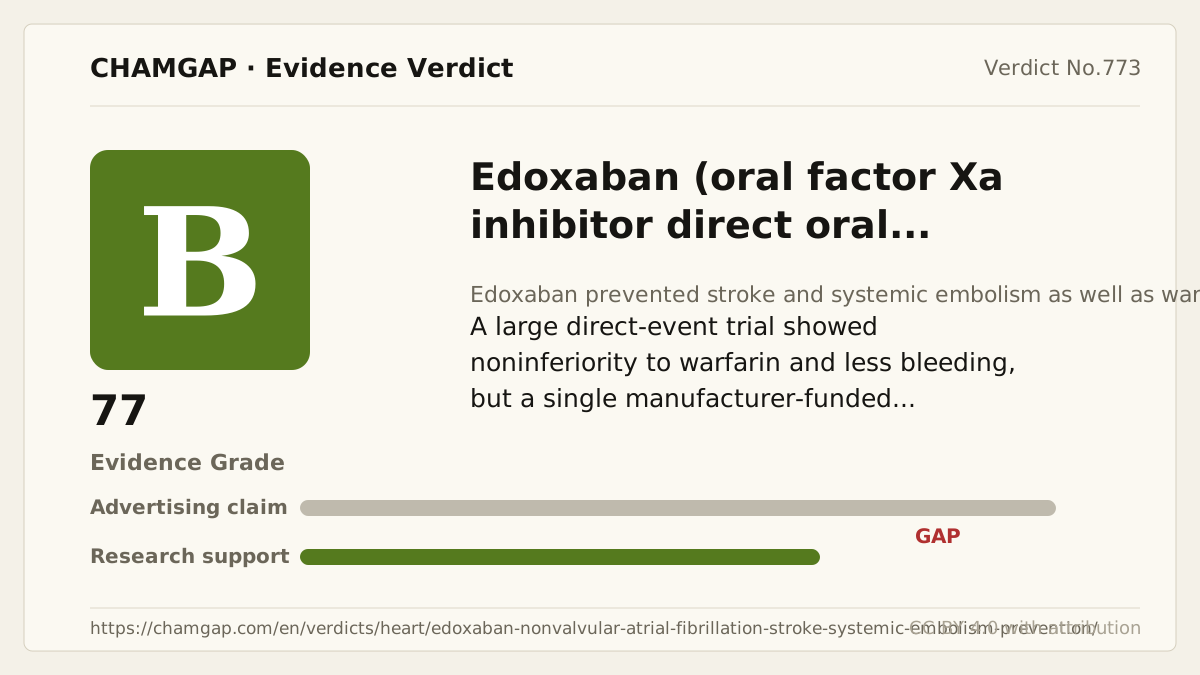
[Chamgap] Edoxaban x prevention of stroke and systemic embolism in nonvalvular atrial fibrillation — Evidence Grade B·77. 2 cited sources checked. Source: https://chamgap.com/en/verdicts/heart/edoxaban-nonvalvular-atrial-fibrillation-stroke-systemic-embolism-prevention/ · CC BY 4.0CC BY 4.0 — free to use with attribution; do not distort grades, numbers, or verdict meaning.
What this document does and does not do
Chamgap is an information source. It reports what research has and has not confirmed; it does not tell readers what to take or buy. That decision belongs to readers and, when needed, medical or legal professionals. This verdict reflects literature available up to the search date and may change as new research appears. Nothing here is medical advice.