
Digoxin,
does it really help with Reduced hospitalization for worsening heart failure in patients with HFrEF and normal sinus rhythm?
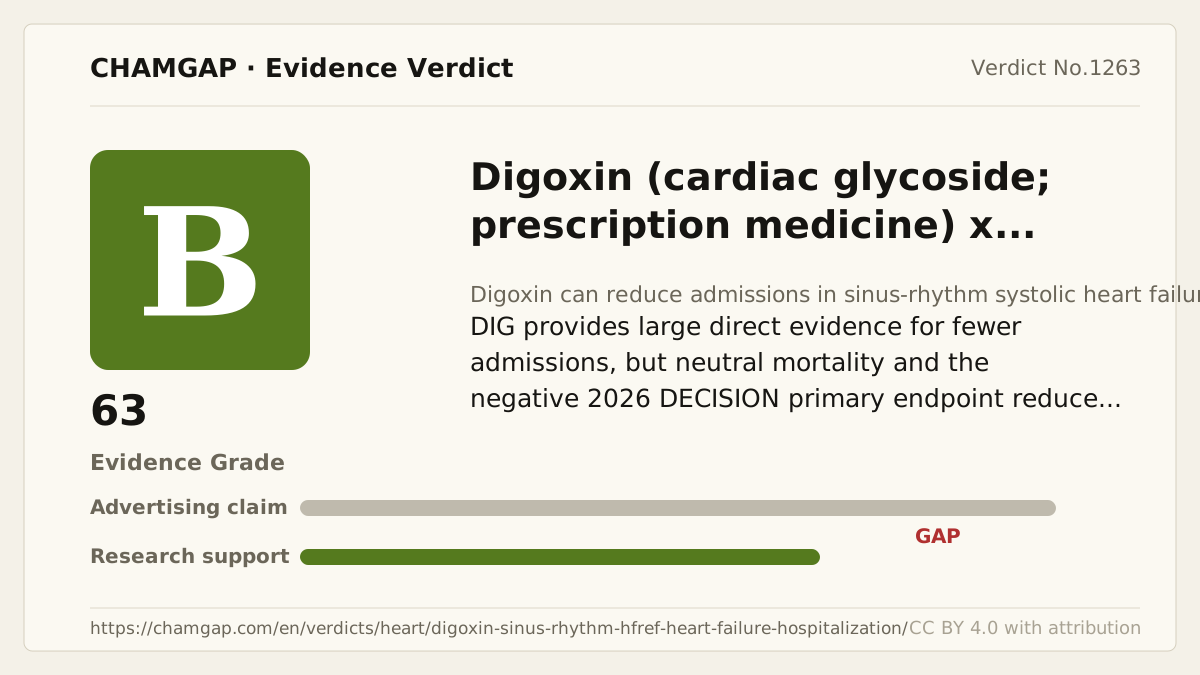
research showsDigoxin is rated B because a large randomized trial showed fewer hospitalizations for worsening heart failure in patients with systolic heart failure and normal sinus rhythm. In the publicly led 6,800-patient DIG main trial, heart-failure hospitalization occurred in 26.8% versus 34.7%, with a risk ratio of 0.72, while all-cause mortality was neutral at a risk ratio of 0.99. In the 2026 DECISION trial of 1,001 patients on contemporary background therapy, worsening-heart-failure events had a rate ratio of 0.76 but a 95% CI of 0.54 to 1.05, and the cardiovascular-death-inclusive primary endpoint was nonsignificant at P=0.133. The classic direct evidence for fewer admissions is therefore accepted, but uncertainty about contemporary incremental benefit, no mortality benefit, and a narrow therapeutic index place the verdict near the bottom of B at 63 points.
ads claimPromotion may imply that strengthening cardiac contraction prolongs life or may present DIG's admission reduction as a confirmed incremental effect on top of current foundational therapy. No all-cause mortality benefit was demonstrated, and the 2026 contemporary trial did not meet its primary endpoint.
Useful facts when choosing a product
- Digoxin is a prescription cardiac glycoside that inhibits myocardial sodium-potassium ATPase. Dose selection is individualized for kidney function, age, body size, and interacting medicines.
- The core DIG evidence concerns chronic heart failure with reduced ejection fraction and normal sinus rhythm. This verdict is separate from digoxin use for ventricular-rate control in atrial fibrillation.
- The 2026 DECISION trial used low dosing and a target serum digoxin concentration of 0.5 to 0.9 ng/mL. Clinical use monitors kidney function, potassium, magnesium, and serum concentration when indicated.
- Digoxin has a narrow therapeutic index and can cause nausea, anorexia, confusion, visual disturbances, bradycardia, atrioventricular block, and ventricular arrhythmias. Kidney impairment, hypokalemia, and multiple drug interactions increase toxicity risk.
Chamgap Semantic Classification Code
Candidate index · review held
M.digoxin.UNK.hospitalization-for-worsening-heart-failure-with-hfref-and-normal-sinus-rhythm.reduce.MULTIMedicinal interventions > Digoxin > Unknown > hospitalization for worsening heart failure with HFrEF and normal sinus rhythm > Reduction claim > Multiple: primary unresolved
An automated migration candidate, not an issued permanent code; exact claim scope remains under review. This machine-generated migration candidate helps retrieval but is not a permanent assignment. The original verdict ID and URL remain authoritative.
What the research actually shows
The DIG main trial compared digoxin with placebo in 6,800 patients with normal sinus rhythm and left ventricular ejection fraction of 45% or less. Hospitalization for worsening heart failure occurred in 910 versus 1,180 patients, risk ratio 0.72, while deaths numbered 1,181 versus 1,194, risk ratio 0.99. The 2026 DECISION trial added low-dose digoxin targeting 0.5 to 0.9 ng/mL to contemporary therapy; 71% of its 1,001 patients were in sinus rhythm. Its recurrent-event primary composite was nonsignificant at a rate ratio of 0.81, worsening-heart-failure events were nonsignificant at 0.76, and the primary-endpoint rate ratio in the sinus-rhythm subgroup was 0.82 without heterogeneity versus atrial fibrillation. The small 12-week RADIANCE withdrawal trial found more clinical deterioration and worse exercise capacity after stopping digoxin in stable sinus-rhythm systolic-heart-failure patients, but its withdrawal design and short follow-up carry less weight than the long-term hospitalization trials.
Why this is classified as B (63)
DIG's 6,800-patient risk ratio of 0.72 for heart-failure hospitalization is a large direct clinical-endpoint benefit. All-cause mortality was neutral at 0.99, however, and the 2026 DECISION trial on contemporary therapy was nonsignificant for both its primary endpoint at 0.81 and worsening-heart-failure events at 0.76. The classic large-trial admission evidence is retained, but failed contemporary reconfirmation warrants a substantial deduction to B with 63 points.
Counterpoint. Low-dose digoxin may still be considered selectively after contemporary foundational HFrEF therapy in patients with persistent symptoms or repeated admissions, but it should not be interpreted as a survival drug and requires serum-level, renal, and electrolyte monitoring.
Rejudgment record. Cross-check applied — The 6,800-patient DIG randomized trial directly reduced heart-failure hospitalization in sinus-rhythm HFrEF with a risk ratio of 0.72, but all-cause mortality was neutral and the 2026 DECISION primary endpoint and worsening events on contemporary therapy were nonsignificant, placing the verdict at the lower end of B
Sub-claim grades by effect
This ingredient is marketed for several effects. A single overall grade blends strong and weak claims together, so each effect is graded separately here. The overall grade reflects the strongest disconfirming or core claim.
| Effect (sub-claim) | Grade | Basis |
|---|---|---|
| Reduced hospitalization for worsening heart failure | B | DIG reported 26.8% versus 34.7%, risk ratio 0.72, but DECISION's contemporary worsening-event rate ratio of 0.76 was nonsignificant. |
| Reduced all-cause mortality | F | DIG's risk ratio of 0.99 (95% CI 0.91–1.07), DECISION, and meta-analyses repeatedly failed to confirm lower all-cause mortality, making the claim null; observational studies instead signal possible harm. This is separate from the hospitalization benefit in subclaim 0. |
| Maintained or improved symptoms and exercise capacity | C | RADIANCE and PROVED withdrawal trials prevented deterioration, but their small size, short duration, and withdrawal designs are limiting. |
Cross-check — AI research and Codex final gate
Evidence Table
| Study | Design | Sample | Funding | Endpoint | Result | Weight |
|---|---|---|---|---|---|---|
| Digitalis Investigation Group 1997 DIG | Multicenter double-blind placebo-controlled randomized trial | 6,800 heart-failure patients in normal sinus rhythm with LVEF of 45% or less | Public collaboration led by the US NHLBI and Department of Veterans Affairs | All-cause mortality primary endpoint; secondary endpoints including hospitalization for worsening heart failure | Hospitalization for worsening heart failure was 26.8% versus 34.7%, risk ratio 0.72 (95% CI 0.66 to 0.79); all-cause mortality risk ratio was 0.99 (95% CI 0.91 to 1.07). | Pivotal very large direct hospitalization evidence |
| van Veldhuisen DJ et al. 2026 DECISION | Investigator-initiated multicenter double-blind placebo-controlled randomized trial | 1,001 patients with LVEF of 50% or less; 71% in sinus rhythm | Support from the Dutch Heart Foundation and UMCG foundation, with product and financial support from Disphar, Tiofarma, and TEVA | Primary recurrent-event composite of total worsening-heart-failure events and cardiovascular death | Primary endpoint rate ratio was 0.81 (95% CI 0.61 to 1.07; P=0.133), worsening-heart-failure event rate ratio 0.76 (95% CI 0.54 to 1.05), and all-cause mortality hazard ratio 0.93. | Negative contemporary-background reconfirmation trial |
| Packer M et al. 1993 RADIANCE | Multicenter double-blind randomized digoxin-withdrawal trial | 178 stable heart-failure patients in normal sinus rhythm with LVEF of 35% or less | Funding details were not reported in the PubMed abstract | Worsening heart failure, exercise capacity, functional class, and quality of life over 12 weeks | Worsening heart failure requiring withdrawal occurred in 23 patients switched off digoxin versus 4 continuing it, with deterioration in exercise capacity and functional class. | Supportive symptom and function evidence with withdrawal-design and short-term limitations |
Receipt — 3 References
All 3 cited sources were verified for existence at the original page (as of 2026-07-24).
Final verification and publication gate: Codex · Evidence date: 2026-07-24 · Corrections: none
Cite this verdict
[Chamgap] Digoxin x reduced heart-failure hospitalization in sinus-rhythm HFrEF — Evidence Grade B·63. 3 cited sources checked. Source: https://chamgap.com/en/verdicts/heart/digoxin-sinus-rhythm-hfref-heart-failure-hospitalization/ · CC BY 4.0CC BY 4.0 — free to use with attribution; do not distort grades, numbers, or verdict meaning.
What this document does and does not do
Chamgap is an information source. It reports what research has and has not confirmed; it does not tell readers what to take or buy. That decision belongs to readers and, when needed, medical or legal professionals. This verdict reflects literature available up to the search date and may change as new research appears. Nothing here is medical advice.