
DASH diet,
does it really help with Reduced systolic and diastolic blood pressure?
research showsThe DASH diet consistently lowers blood pressure but earns a C. DASH-Sodium randomized 412 participants, and 390 completed the 12-week intervention and entered the completed endpoint analysis. The primary systolic blood pressure endpoint succeeded; low-sodium DASH lowered pressure by 7.1 mm Hg in participants without hypertension and 11.5 mm Hg in those with hypertension versus high-sodium control. A meta-analysis of 30 trials and 5,545 participants confirmed reductions of 3.2 mm Hg systolic and 2.5 mm Hg diastolic. Rule ①-ⓐ applies: improvement limited to surrogate biomarkers, including blood pressure, has a maximum grade of C.
ads claimMarketing can portray lower blood pressure as direct proof that the diet prevents myocardial infarction or stroke, but hard outcomes were not tested here.
Useful facts when choosing a product
- DASH emphasizes vegetables, fruit, and low-fat dairy while reducing saturated fat.
- DASH-Sodium provided all food and held body weight stable.
Chamgap Semantic Classification Code
Candidate index · review held
D.dietary-approaches-to-stop-hypertension-diet.dietary.systolic-and-diastolic-blood-pressure.reduce.UNKDietary patterns and eating practices > Dietary Approaches to Stop Hypertension diet > Dietary regimen > systolic and diastolic blood pressure > Reduction claim > Unknown
An automated migration candidate, not an issued permanent code; exact claim scope remains under review. This machine-generated migration candidate helps retrieval but is not a permanent assignment. The original verdict ID and URL remain authoritative.
What the research actually shows
Sacks et al. 2001 randomized 412 people to DASH or control diets and crossed each participant through sodium levels. A total of 390 completed 12 weeks, and the primary systolic endpoint succeeded. Filippou et al. 2020 found reductions of 3.2 mm Hg systolic and 2.5 mm Hg diastolic, both P<0.001, across 30 trials and 5,545 participants.
Why this is classified as C (58)
Despite a successful primary endpoint in 390 completers after 412 were randomized and replication across 30 trials, blood pressure is a surrogate, so the grade is C with 58 points.
Counterpoint. Evidence for blood pressure management is strong, but it does not justify stopping medicines or guarantee event prevention.
Rejudgment record. Cross-check applied — Rule ①-ⓐ: improvement limited to surrogate biomarkers, including blood pressure, has a maximum grade of C.
Sub-claim grades by effect
This ingredient is marketed for several effects. A single overall grade blends strong and weak claims together, so each effect is graded separately here. The overall grade reflects the strongest disconfirming or core claim.
| Effect (sub-claim) | Grade | Basis |
|---|---|---|
| Reduced systolic blood pressure | C | Repeatedly positive but surrogate. |
| Reduced diastolic blood pressure | C | Positive in meta-analysis but surrogate. |
| Reduced blood pressure in hypertension | C | The effect was larger but not a hard outcome. |
Cross-check — AI research and Codex final gate
Evidence Table
| Study | Design | Sample | Funding | Endpoint | Result | Weight |
|---|---|---|---|---|---|---|
| Sacks FM et al. 2001 | Multicenter randomized controlled-feeding trial with crossover sodium levels | 412 randomized; 390 completed 12 weeks and entered the completed analysis | Public funding from the United States NIH NHLBI and related institutes | Primary endpoint: systolic blood pressure | Succeeded: major diet and sodium comparisons had P values at or below 0.001. | Pivotal surrogate-endpoint trial |
| Filippou CD et al. 2020 | Systematic review and meta-analysis of randomized trials | 30 randomized trials and 5,545 participants | No funding received | Systolic and diastolic blood pressure | Systolic -3.2 and diastolic -2.5 mm Hg, both P<0.001. | Replication of surrogate effects |
Receipt — 2 References
All 2 cited sources were verified for existence at the original page (as of 2026-07-24).
Final verification and publication gate: Codex · Evidence date: 2026-07-24 · Corrections: none
Cite this verdict
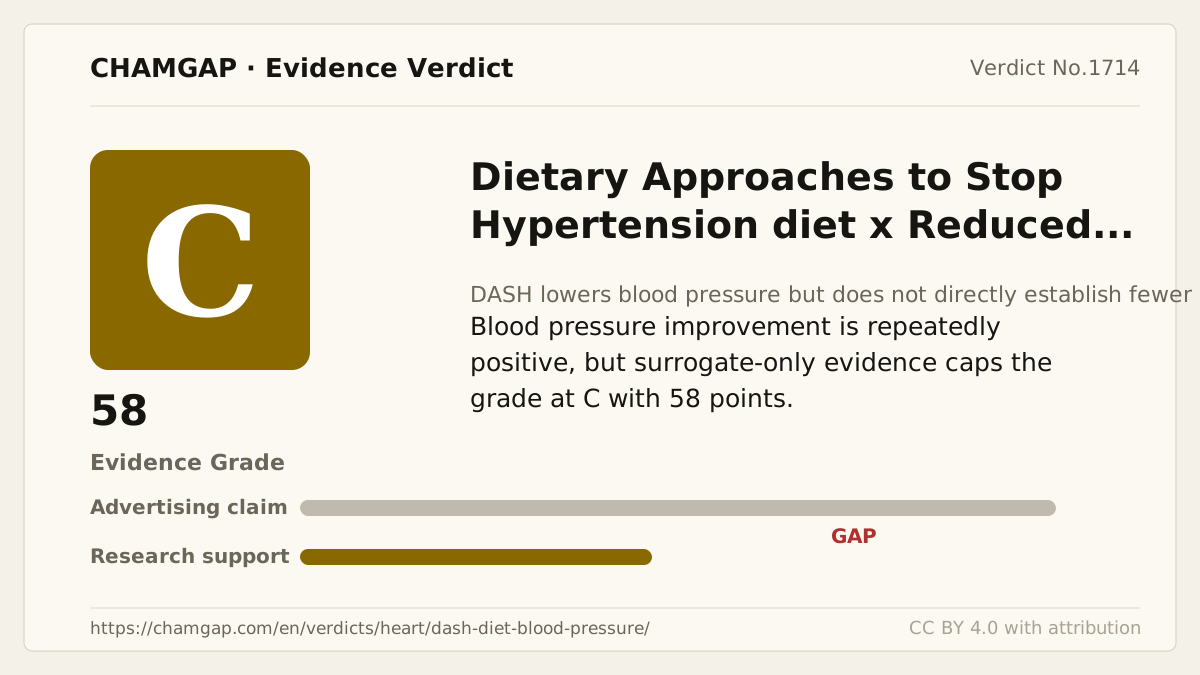
[Chamgap] DASH diet x lower blood pressure — Evidence Grade C·58. 2 cited sources checked. Source: https://chamgap.com/en/verdicts/heart/dash-diet-blood-pressure/ · CC BY 4.0CC BY 4.0 — free to use with attribution; do not distort grades, numbers, or verdict meaning.
What this document does and does not do
Chamgap is an information source. It reports what research has and has not confirmed; it does not tell readers what to take or buy. That decision belongs to readers and, when needed, medical or legal professionals. This verdict reflects literature available up to the search date and may change as new research appears. Nothing here is medical advice.