
CPAP,
does it really help with Prevention of atrial-fibrillation recurrence after pulmonary-vein isolation?
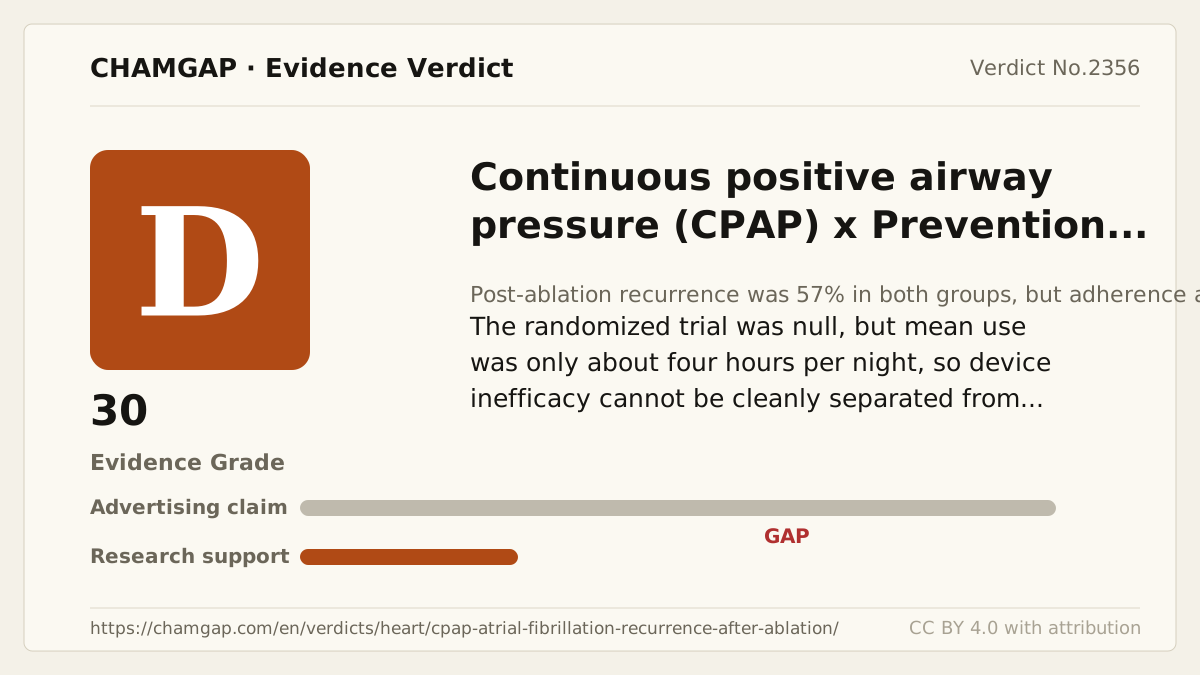
research showsThe grade is D with 30 points. Among patients with paroxysmal atrial fibrillation and obstructive sleep apnea, recurrence after pulmonary-vein isolation was 57% in both the CPAP and standard-care groups. The reported odds ratio was 1.0 (95% CI 0.4 to 2.4), P=1.00, over 12 months after ablation. This was an ablation study, not a post-cardioversion study.
ads claimThe study does not prove benefit with fully sustained use, but it also does not justify saying the device itself can never prevent recurrence.
Useful facts when choosing a product
- The population had pulmonary-vein isolation, not merely cardioversion.
- Mean nightly use was 3.9±1.5 hours before and 4.3±1.9 hours after ablation.
- Verdict 1179 is F with 9 points for recurrent cardiovascular events, verdict 1212 is B with 72 points for sleepiness and quality of life, and verdict 1764 is C with 56 points for blood pressure in resistant hypertension. This verdict has a different endpoint.
Chamgap Semantic Classification Code
Candidate index · review held
P.continuous-positive-airway-pressure.UNK.atrial-fibrillation-recurrence-after-pulmonary-vein-isolation.prevent.usual-careProcedures, devices and tests > Continuous positive airway pressure > Unknown > atrial-fibrillation recurrence after pulmonary-vein isolation > Occurrence-prevention claim > Usual care
An automated migration candidate, not an issued permanent code; exact claim scope remains under review. This machine-generated migration candidate helps retrieval but is not a permanent assignment. The original verdict ID and URL remain authoritative.
What the research actually shows
Hunt and colleagues randomized 109 CPAP-tolerant patients with paroxysmal atrial fibrillation and sleep apnea to CPAP or standard care. After pre-ablation exclusions, 83 underwent pulmonary-vein isolation: 37 versus 46. An implanted loop recorder identified episodes longer than two minutes after a three-month blanking period. Twelve-month recurrence was 57% in each group; the paper reported an odds ratio, not a risk ratio. Rhythm assessment was blinded, although participant blinding was impossible. The Caples cardioversion trial addressed a different treatment stage and was not counted as replication of the post-ablation question.
Why this is classified as D (30)
A small trial with substantial post-randomization exclusion was null but imprecise, giving D with 30 points.
Counterpoint. CPAP may still be indicated for sleep-apnea symptom treatment independently of the atrial-fibrillation endpoint.
Rejudgment record. Cross-check applied — Null single small randomized post-ablation trial with wide confidence interval, substantial post-randomization exclusion, and limited nightly exposure
| Endpoint | H | Hard endpoint - actual events such as death |
| Replication | R1 | Single confirmatory trial |
| Independence | I1 | Mixed funding sources |
| Effect size | E0 | Null |
| Precision | C0 | The confidence interval leaves room for benefit |
Stored derived and displayed grades match; this is not a current recalculation or validity check (D).
Sub-claim grades by effect
This ingredient is marketed for several effects. A single overall grade blends strong and weak claims together, so each effect is graded separately here. The overall grade reflects the strongest disconfirming or core claim.
| Effect (sub-claim) | Grade | Basis |
|---|---|---|
| Prevention of AF recurrence after ablation | D | Twelve-month recurrence was 57% in both groups. |
Cross-check — AI research and Codex final gate
Evidence Table
| Study | Design | Sample | Funding | Endpoint | Result | Weight |
|---|---|---|---|---|---|---|
| Hunt TE et al., 2022 | Open-label randomized trial with blinded rhythm assessment | 109 randomized; 83 underwent ablation and were analyzed (37/46) | South-Eastern Norway Regional Health Authority, Research Council of Norway, and an unrestricted ResMed grant; device support from ResMed and Medtronic | AF recurrence longer than two minutes after a three-month blanking period | At 12 months, 57% versus 57%; OR 1.0 (95% CI 0.4 to 2.4), P=1.00. | Pivotal direct trial |
| Caples SM et al., 2019 | Randomized post-cardioversion trial | 25 participants | Manufacturer funding not confirmed in the accessible report | AF recurrence within one year after cardioversion | 25% in both groups; population and treatment stage differed from post-ablation care. | Indirect evidence from a different treatment stage |
Receipt — 2 References
All 2 cited sources were verified for existence at the original page (as of 2026-08-07).
Final verification and publication gate: Codex · Evidence date: 2026-08-07 · Corrections: none
Cite this verdict
[Chamgap] CPAP x atrial-fibrillation recurrence after ablation — Evidence Grade D·30. 2 cited sources checked. Source: https://chamgap.com/en/verdicts/heart/cpap-atrial-fibrillation-recurrence-after-ablation/ · CC BY 4.0CC BY 4.0 — free to use with attribution; do not distort grades, numbers, or verdict meaning.
What this document does and does not do
Chamgap is an information source. It reports what research has and has not confirmed; it does not tell readers what to take or buy. That decision belongs to readers and, when needed, medical or legal professionals. This verdict reflects literature available up to the search date and may change as new research appears. Nothing here is medical advice.