
Coenzyme Q10,
does it really help with Reduced all-cause mortality and heart-failure hospitalization in patients with chronic heart failure receiving standard therapy?
research showsCoenzyme Q10 is rated C despite signals of lower all-cause mortality and heart-failure hospitalization when added to standard treatment for chronic heart failure. Q-SYMBIO followed 420 participants for two years and reported reductions in major cardiovascular events, all-cause mortality, and heart-failure hospitalization. The 2021 Cochrane review rated the mortality and hospitalization findings as moderate-certainty evidence, but mortality depended on Q-SYMBIO alone and the review called for confirmation because trials were small or had risk-of-bias concerns. A hard-endpoint signal dependent on one medium-sized trial receives C with 52 points.
ads claimMarketing extends mitochondrial-energy and antioxidant mechanisms into a claim of definitively replicated survival benefit in heart failure. The hard-endpoint evidence is centered on Q-SYMBIO and a small number of trials using a particular formulation and 300 mg per day.
Useful facts when choosing a product
- Coenzyme Q10 is a fat-soluble supplement sold as oxidized ubiquinone or reduced ubiquinol, and absorption and content are not identical across products.
- Q-SYMBIO administered 100 mg three times daily while standard heart-failure therapy continued; it did not test the supplement as a replacement for standard treatment.
- Overall tolerability in trials and reviews was acceptable, although gastrointestinal symptoms, insomnia, and rash can occur.
- Coenzyme Q10 may reduce the anticoagulant effect of warfarin and may interact with blood-pressure-lowering or glucose-lowering medicines.
Chamgap Semantic Classification Code
Candidate index · review held
S.coenzyme-q10.UNK.all-cause-mortality-and-heart-failure-hospitalization-with-chronic-heart-failure-receiving-standard-therapy.reduce.MULTISupplements and nutraceuticals > Coenzyme Q10 > Unknown > all-cause mortality and heart-failure hospitalization with chronic heart failure receiving standard therapy > Reduction claim > Multiple: primary unresolved
An automated migration candidate, not an issued permanent code; exact claim scope remains under review. This machine-generated migration candidate helps retrieval but is not a permanent assignment. The original verdict ID and URL remain authoritative.
What the research actually shows
Mortensen and colleagues randomized 420 patients with moderate to severe chronic heart failure to coenzyme Q10 at 300 mg per day or placebo while standard treatment continued. Major cardiovascular events, all-cause mortality, and heart-failure hospitalization were less frequent with coenzyme Q10 at two years. The 2021 Cochrane review by Al Saadi and colleagues assessed 11 randomized trials with 1,573 participants and rated reductions in mortality and hospitalization as moderate-certainty evidence, but mortality came from one study and risk of bias and imprecision limited the overall evidence. This is a hard-endpoint heart-failure claim distinct from prior blood-pressure, antioxidant, male-reproductive, and infertility claims.
Why this is classified as C (52)
The mortality and heart-failure hospitalization signals are positive, and Cochrane rated these outcomes as moderate-certainty evidence. Mortality nevertheless depends on the single 420-person Q-SYMBIO trial without a large independent confirmatory trial, so boundary rule ③ yields C with 52 points.
Counterpoint. The 2021 Cochrane hospitalization analysis showed a significant reduction across two trials and 1,061 participants, distinguishing this positive but unconfirmed signal from a null grade of D.
Rejudgment record. New verdict — Accepted the positive hard endpoints in Q-SYMBIO and the 2021 Cochrane moderate-certainty assessment, while applying boundary rule ③ because all-cause mortality depends on one medium-sized 420-person trial and lacks large independent confirmation
Sub-claim grades by effect
This ingredient is marketed for several effects. A single overall grade blends strong and weak claims together, so each effect is graded separately here. The overall grade reflects the strongest disconfirming or core claim.
| Effect (sub-claim) | Grade | Basis |
|---|---|---|
| Reduced all-cause mortality | C | A positive Q-SYMBIO signal exists but depends on a single 420-person trial. |
| Reduced heart-failure hospitalization | C | The Cochrane analysis of two trials and 1,061 participants reported an RR of 0.62, but large independent confirmation is absent. |
| Reduced major cardiovascular events | C | The positive two-year result is concentrated in Q-SYMBIO. |
Cross-check — AI research and Codex final gate
Evidence Table
| Study | Design | Sample | Funding | Endpoint | Result | Weight |
|---|---|---|---|---|---|---|
| Mortensen SA et al. Q-SYMBIO 2014 | Multinational randomized double-blind placebo-controlled trial | 420 patients with chronic heart failure | Manufacturer involvement in study product and financial support | Two-year major cardiovascular events, all-cause mortality, and heart-failure hospitalization | Coenzyme Q10 favored major cardiovascular events at 15% versus 26%, all-cause mortality at 10% versus 18%, and heart-failure hospitalization at 14% versus 25%. | Pivotal hard-endpoint trial of medium size |
| Al Saadi T et al. Cochrane 2021 | Systematic review and meta-analysis of randomized trials | 11 trials and 1,573 participants | Academic Cochrane review with author disclosures | All-cause mortality, cardiovascular mortality, heart-failure hospitalization, cardiac function, and adverse events | Mortality and heart-failure hospitalization reductions were rated moderate certainty, but mortality depended on one study and required confirmation. | Key synthesis requiring confirmation |
Receipt — 2 References
All 2 cited sources were verified for existence at the original page (as of 2026-07-23).
Final verification and publication gate: Codex · Evidence date: 2026-07-23 · Corrections: none
Cite this verdict
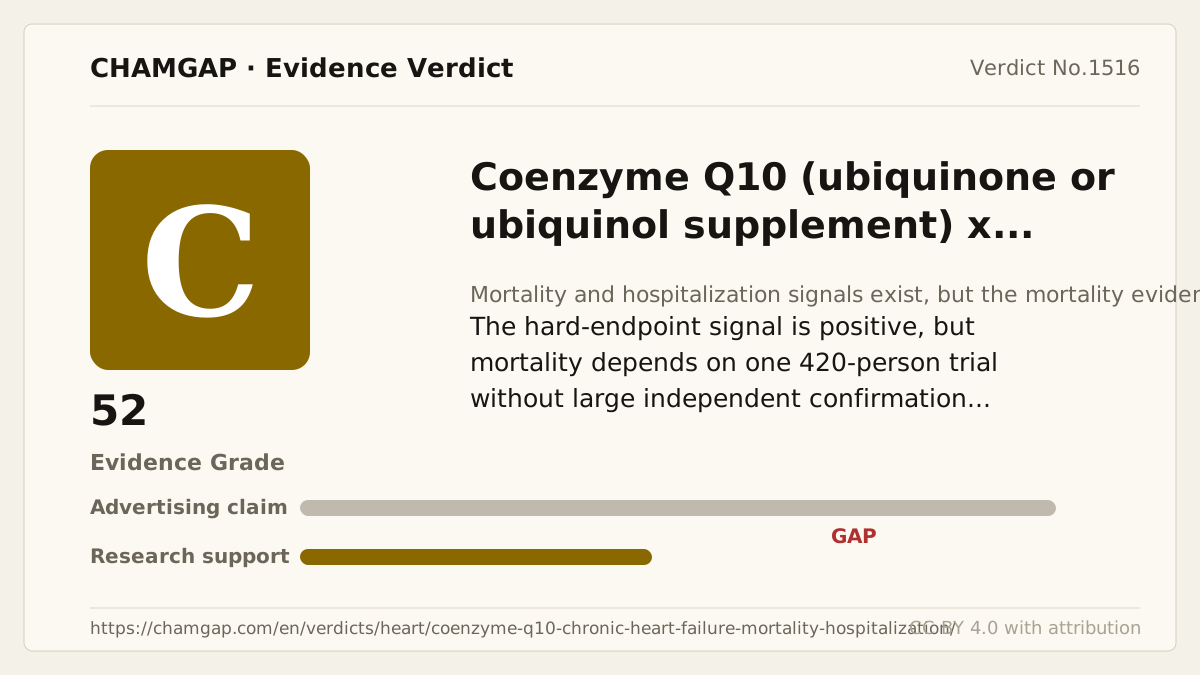
[Chamgap] Coenzyme Q10 x reduced mortality and heart-failure hospitalization in chronic heart failure — Evidence Grade C·52. 2 cited sources checked. Source: https://chamgap.com/en/verdicts/heart/coenzyme-q10-chronic-heart-failure-mortality-hospitalization/ · CC BY 4.0CC BY 4.0 — free to use with attribution; do not distort grades, numbers, or verdict meaning.
What this document does and does not do
Chamgap is an information source. It reports what research has and has not confirmed; it does not tell readers what to take or buy. That decision belongs to readers and, when needed, medical or legal professionals. This verdict reflects literature available up to the search date and may change as new research appears. Nothing here is medical advice.