
Baxdrostat,
does it really help with Reduced systolic blood pressure in uncontrolled or resistant hypertension?
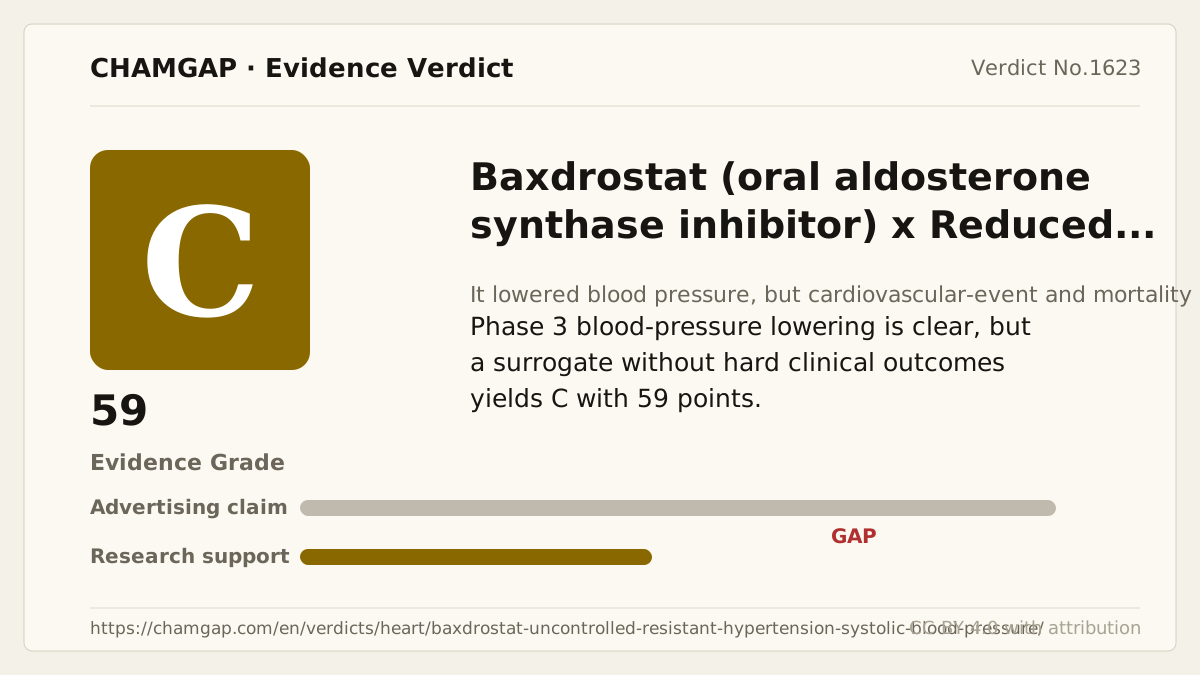
research showsIn the peer-reviewed BaxHTN phase 3 trial (n=796), baxdrostat lowered placebo-corrected seated systolic pressure by −8.7 mm Hg with 1 mg and −9.8 mm Hg with 2 mg at 12 weeks. The large, clear effect is limited to a blood-pressure surrogate, yielding high-end C with 59 points.
ads claimEvidence that a blood-pressure number falls must not be rewritten as existing proof that myocardial infarction, stroke, or death is reduced.
Useful facts when choosing a product
- Baxdrostat is a once-daily oral drug designed to selectively inhibit CYP11B2 and reduce aldosterone synthesis.
- BaxHTN tested 1 mg and 2 mg for 12 weeks as add-on therapy to at least two background antihypertensive drugs.
- Hyperkalemia and hyponatremia require attention, with electrolyte and kidney-function monitoring.
- Its intended selectivity spares cortisol synthesis, but adrenal and cortisol safety still require longer follow-up.
Chamgap Semantic Classification Code
Candidate index · review held
UNK.baxdrostat.oral.systolic-blood-pressure-in-uncontrolled-or-resistant-hypertension.reduce.placeboUnknown > Baxdrostat > Oral > systolic blood pressure in uncontrolled or resistant hypertension > Reduction claim > Placebo
An automated migration candidate, not an issued permanent code; exact claim scope remains under review. This machine-generated migration candidate helps retrieval but is not a permanent assignment. The original verdict ID and URL remain authoritative.
What the research actually shows
BaxHTN assigned 796 patients with uncontrolled or resistant hypertension to baxdrostat 1 mg, 2 mg, or placebo for 12 weeks. The peer-reviewed phase 3 original report stated that both doses met the seated systolic blood pressure primary endpoint (p<0.001). The resistant-hypertension subgroup is contextual rather than the basis for upgrading; the overall randomized population drives the verdict. No long-term myocardial infarction, stroke, or cardiovascular-mortality outcome trial is available.
Why this is classified as C (59)
A large, clear −8.7 to −9.8 mm Hg effect in a peer-reviewed phase 3 trial of about 800 patients, limited to a blood-pressure surrogate, yields high-end C with 59 points.
Counterpoint. Lack of hard-outcome proof limits the claim and does not mean the blood-pressure effect is null.
Rejudgment record. Cross-check applied — Accepted success of the large phase 3 blood-pressure primary endpoint while applying the surrogate ceiling under rule ①-ⓐ
Sub-claim grades by effect
This ingredient is marketed for several effects. A single overall grade blends strong and weak claims together, so each effect is graded separately here. The overall grade reflects the strongest disconfirming or core claim.
| Effect (sub-claim) | Grade | Basis |
|---|---|---|
| Reduced systolic blood pressure | C | The phase 3 primary endpoint succeeded, but blood pressure is a surrogate. |
| Reduced blood pressure in resistant hypertension | C | The subgroup direction was consistent, but no upgrade rests on a subgroup. |
| Reduced cardiovascular events or mortality | ? | No long-term hard-outcome trial is available. |
Cross-check — AI research and Codex final gate
Evidence Table
| Study | Design | Sample | Funding | Endpoint | Result | Weight |
|---|---|---|---|---|---|---|
| Flack JM et al.; BaxHTN Investigators. 2025 | Peer-reviewed original phase 3 double-blind randomized placebo-controlled trial | 796 randomized; 794 treated | AstraZeneca and others | Primary: change in seated systolic blood pressure at week 12 | Primary endpoint met; placebo-corrected −8.7 and −9.8 mm Hg, both p<0.001. | Pivotal phase 3 surrogate-endpoint evidence |
| Freeman MW et al.; BrigHTN Investigators. 2023 | Peer-reviewed original phase 2 double-blind randomized trial | 248 patients | CinCor Pharma | Seated systolic blood pressure at 12 weeks | Showed a dose-related blood-pressure signal consistent with phase 3. | Supporting blood-pressure efficacy evidence |
Receipt — 2 References
All 2 cited sources were verified for existence at the original page (as of 2026-07-24).
Final verification and publication gate: Codex · Evidence date: 2026-07-24 · Corrections: none
Cite this verdict
[Chamgap] Baxdrostat x reduced systolic blood pressure in uncontrolled or resistant hypertension — Evidence Grade C·59. 2 cited sources checked. Source: https://chamgap.com/en/verdicts/heart/baxdrostat-uncontrolled-resistant-hypertension-systolic-blood-pressure/ · CC BY 4.0CC BY 4.0 — free to use with attribution; do not distort grades, numbers, or verdict meaning.
What this document does and does not do
Chamgap is an information source. It reports what research has and has not confirmed; it does not tell readers what to take or buy. That decision belongs to readers and, when needed, medical or legal professionals. This verdict reflects literature available up to the search date and may change as new research appears. Nothing here is medical advice.