
Alcohol reduction in heavier drinkers,
does it really help with Lower blood pressure?
research showsThe grade is C. PATHS failed its six-month primary blood-pressure endpoint, with differences of -1.2/-0.7 mm Hg. Approximate standardized effects back-calculated from P values and sample sizes were about 0.11 for both pressures. Yet 15 randomized trials and 2,234 participants pooled to -3.31 mm Hg (95% CI -4.10 to -2.52) systolic and -2.04 (-2.58 to -1.49) diastolic.
ads claimThe intake reduction can be measured in grams. PATHS achieved a 17.7 g/day net difference, about 1.3 U.S. standard drinks daily. Measuring that reduction and determining how much it lowers pressure are different questions.
Useful facts when choosing a product
- Pure-alcohol intake in PATHS was about 61.7 versus 63.6 g/day at baseline.
- The net six-month reduction difference was about 17.7 g/day.
- Controls were randomized continuing drinkers, and 622 participants had on-treatment blood-pressure data.
Chamgap Semantic Classification Code
Candidate index · review held
UNK.alcohol-reduction-from-a-baseline-of-about.UNK.blood-pressure.reduce.UNKUnknown > Alcohol reduction from a baseline of about > Unknown > Blood pressure > Reduction claim > Unknown
An automated migration candidate, not an issued permanent code; exact claim scope remains under review. This machine-generated migration candidate helps retrieval but is not a permanent assignment. The original verdict ID and URL remain authoritative.
What the research actually shows
PATHS randomized 641 outpatient veterans, 320 to intervention and 321 to control, with on-treatment blood-pressure data for 622. Its primary endpoint was six-month blood pressure and it failed. The trial began in 1989 and was registered retrospectively; NHLBI, NIAAA, and VA supported it. Xin pooled 15 randomized trials and 2,234 participants in which alcohol reduction was the only intervention difference.
Why this is classified as C (50)
Randomized pooling supports lower pressure, but the pivotal primary endpoint failed and the P-value-and-sample-size back-calculated standardized effects were only about 0.11, giving C with 50 points.
Counterpoint. The largest null trial does not justify saying reduction never affects pressure. The favorable pooled mean remains part of the evidence.
Rejudgment record. Cross-check applied — The pooled randomized blood-pressure reduction and null primary result in the largest long-term trial were both retained, while recognizing blood pressure as a surrogate
| Endpoint | S | Surrogate marker - laboratory or imaging measures |
| Replication | R1 | Single confirmatory trial |
| Independence | I1 | Mixed funding sources |
| Effect size | E~ | Statistically positive but below the threshold |
Stored derived and displayed grades match; this is not a current recalculation or validity check (C).
Sub-claim grades by effect
This ingredient is marketed for several effects. A single overall grade blends strong and weak claims together, so each effect is graded separately here. The overall grade reflects the strongest disconfirming or core claim.
| Effect (sub-claim) | Grade | Basis |
|---|---|---|
| Alcohol reduction lowers average blood pressure in heavier drinkers | C | The pooled estimate was positive, while the pivotal long-term trial was null. |
| About 18 g/day of additional reduction produces a large pressure drop | D | PATHS found a small uncertain difference of -1.2/-0.7 mm Hg. |
Cross-check — AI research and Codex final gate
Evidence Table
| Study | Design | Sample | Funding | Endpoint | Result | Weight |
|---|---|---|---|---|---|---|
| Cushman WC et al. 1998 PATHS | Multicenter randomized alcohol-reduction program trial | 641 randomized (320 vs 321); 622 with on-treatment blood-pressure data | Public support from NHLBI, NIAAA, and VA | Six-month primary blood-pressure endpoint | Between-group differences were -1.2/-0.7 mm Hg, P=.17/.18; approximate back-calculated standardized effects were about 0.11. | Failed primary result in the largest long-term stand-alone intervention |
| Xin X et al. 2001 | Meta-analysis of 15 randomized trials | 2,234 participants | Funding for every included trial could not be verified from publicly accessible material | Systolic and diastolic blood pressure | Systolic -3.31 mm Hg (-4.10 to -2.52) and diastolic -2.04 (-2.58 to -1.49). | Favorable pooled signal across trials |
Receipt — 2 References
All 2 cited sources were verified for existence at the original page (as of 2026-08-04).
Final verification and publication gate: Codex · Evidence date: 2026-08-04 · Corrections: none
Cite this verdict
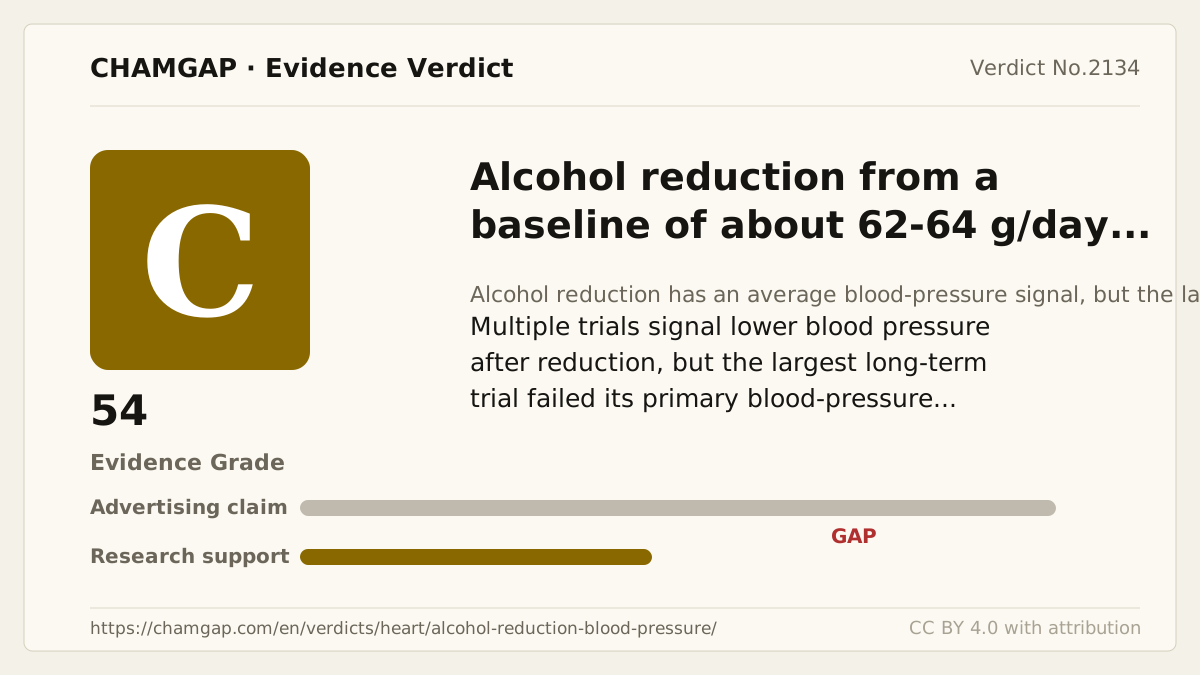
[Chamgap] Alcohol reduction in heavier drinkers x lower blood pressure — Evidence Grade C·50. 2 cited sources checked. Source: https://chamgap.com/en/verdicts/heart/alcohol-reduction-blood-pressure/ · CC BY 4.0CC BY 4.0 — free to use with attribution; do not distort grades, numbers, or verdict meaning.
What this document does and does not do
Chamgap is an information source. It reports what research has and has not confirmed; it does not tell readers what to take or buy. That decision belongs to readers and, when needed, medical or legal professionals. This verdict reflects literature available up to the search date and may change as new research appears. Nothing here is medical advice.