
Vonoprazan,
does it really help with Endoscopic healing and maintenance of healing in erosive esophagitis?
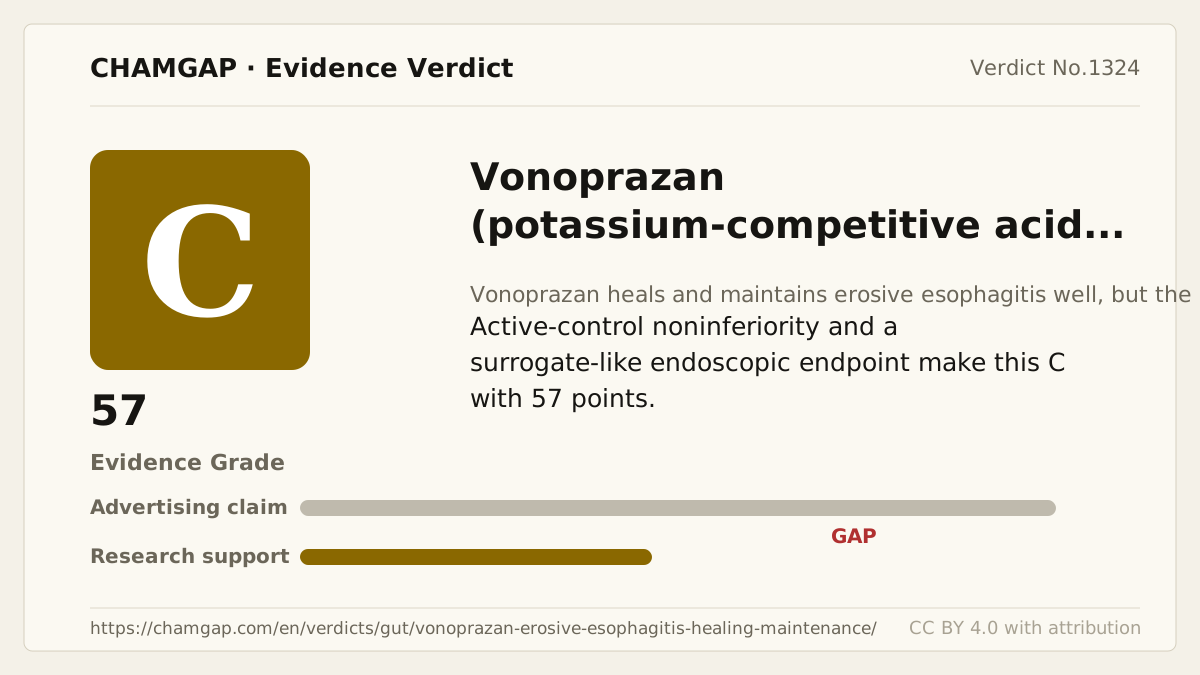
research showsVonoprazan heals erosive esophagitis endoscopically and maintains healing but is rated C. In a 1,024-participant active-controlled trial, eight-week healing was 92.9% versus 84.6% with lansoprazole, meeting noninferiority and showing exploratory superiority, with better early healing in severe LA grade C or D disease. The pivotal design was active-control noninferiority and endoscopic healing is a surrogate-like endpoint, yielding C with 57 points.
ads claimStronger and faster acid suppression can be expanded into a cure for reflux disease or prevention of long-term complications. The trial directly established endoscopic healing and maintenance over specified periods.
Useful facts when choosing a product
- Vonoprazan is an oral prescription potassium-competitive acid blocker; a common erosive-esophagitis healing regimen is 20 mg for eight weeks.
- A lower dose can be used for maintenance, with exact dose and duration determined by local labeling and patient factors.
- Abdominal pain, constipation, diarrhea, and nausea can occur, and profound acid suppression may increase enteric-infection risk.
- Long-term use warrants attention to hypergastrinemia, low vitamin B12 or magnesium, and fundic-gland polyps.
Chamgap Semantic Classification Code
Candidate index · review held
M.vonoprazan.UNK.endoscopic-healing-and-maintenance-of-healing-in-erosive-esophagitis.maintain.activeMedicinal interventions > Vonoprazan > Unknown > Endoscopic healing and maintenance of healing in erosive esophagitis > Maintenance claim > Active comparator
An automated migration candidate, not an issued permanent code; exact claim scope remains under review. This machine-generated migration candidate helps retrieval but is not a permanent assignment. The original verdict ID and URL remain authoritative.
What the research actually shows
Laine and colleagues randomized 1,024 patients with erosive esophagitis to vonoprazan 20 mg or lansoprazole 30 mg for eight weeks. Healing was 92.9% versus 84.6%, meeting noninferiority and exploratory superiority, while the week-two healing difference in LA grade C or D disease was 17.6 percentage points. In 878 healed participants, maintenance with vonoprazan 10 or 20 mg was noninferior to lansoprazole 15 mg and superior in secondary analyses.
Why this is classified as C (57)
Eight-week healing of 92.9% versus 84.6% and maintenance efficacy were positive, but active-control noninferiority and a surrogate-like endoscopic endpoint yield C with 57 points.
Counterpoint. Value can be greater in severe disease or inadequate PPI response, while symptom and endoscopic follow-up remain individualized.
Rejudgment record. New verdict — Accepted noninferior endoscopic healing and maintenance in a large active-controlled trial plus a severe-disease superiority signal, while applying the ceiling for a noninferiority design and surrogate-like healing endpoint
Sub-claim grades by effect
This ingredient is marketed for several effects. A single overall grade blends strong and weak claims together, so each effect is graded separately here. The overall grade reflects the strongest disconfirming or core claim.
| Effect (sub-claim) | Grade | Basis |
|---|---|---|
| Endoscopic healing of erosive esophagitis | C | Eight-week healing was 92.9% versus 84.6%, meeting noninferiority and exploratory superiority. |
| Early healing of severe LA grade C or D esophagitis | C | The week-two healing difference favored vonoprazan by 17.6 percentage points. |
| Maintenance of healed erosive esophagitis | C | Both 10 and 20 mg were noninferior to lansoprazole 15 mg and superior in secondary analyses. |
Cross-check — AI research and Codex final gate
Evidence Table
| Study | Design | Sample | Funding | Endpoint | Result | Weight |
|---|---|---|---|---|---|---|
| Laine L et al. 2023 | Randomized double-blind active-controlled noninferiority trial | 1,024 in the healing phase and 878 in the maintenance phase | Supported by Phathom Pharmaceuticals | Endoscopic healing by eight weeks and maintenance through 24 weeks | Healing 92.9% versus 84.6%, difference 8.3 percentage points; both maintenance doses were noninferior. | Pivotal large active-controlled surrogate-like endpoint trial |
| Ashida K et al. 2016 | Randomized double-blind active-controlled noninferiority trial | 409 patients with erosive esophagitis | Supported by Takeda | Endoscopic healing by eight weeks | Vonoprazan 20 mg was noninferior to lansoprazole 30 mg, with a favorable signal in severe disease. | Replication of noninferiority |
Receipt — 2 References
All 2 cited sources were verified for existence at the original page (as of 2026-07-23).
Final verification and publication gate: Codex · Evidence date: 2026-07-23 · Corrections: none
Cite this verdict
[Chamgap] Vonoprazan x endoscopic healing and maintenance in erosive esophagitis — Evidence Grade C·57. 2 cited sources checked. Source: https://chamgap.com/en/verdicts/gut/vonoprazan-erosive-esophagitis-healing-maintenance/ · CC BY 4.0CC BY 4.0 — free to use with attribution; do not distort grades, numbers, or verdict meaning.
What this document does and does not do
Chamgap is an information source. It reports what research has and has not confirmed; it does not tell readers what to take or buy. That decision belongs to readers and, when needed, medical or legal professionals. This verdict reflects literature available up to the search date and may change as new research appears. Nothing here is medical advice.