
Trimebutine maleate,
does it really help with Improvement of overall irritable bowel syndrome symptoms including abdominal pain?
research showsTrimebutine receives C with 40 points for abdominal pain and global symptoms in irritable bowel syndrome. A Cochrane review found a limited positive pain signal across three old randomized trials with 140 participants, RR 1.32 (95% CI 1.07 to 1.64). Another pain analysis was nonsignificant, OR 1.28 (0.53 to 3.14), and global symptom assessments were nonsignificant, RR 0.97 (0.68 to 1.38) and OR 1.27 (0.58 to 2.79). No large modern confirmatory trial exists, but the direct pain signal supports the floor of C for limited and conflicting evidence rather than D for a large human null result.
ads claimClaims that normalizing motility treats the cause of irritable bowel syndrome or solves pain, diarrhea, and constipation confuse mechanism with clinical outcomes. A limited pain signal does not establish global symptom relief, improved quality of life, or long-term prevention of recurrence.
Useful facts when choosing a product
- Polybutin-family products contain trimebutine maleate as a gastrointestinal motility regulator. In Korea, prescription and nonprescription products exist depending on strength and formulation, and the specific label should be followed.
- Irritable bowel syndrome causes recurrent abdominal pain and altered bowel habits, so alarm features, infection, inflammatory bowel disease, medication effects, and other causes should first be distinguished.
- A mechanism that modifies gut motility does not substitute for evidence that patients experience global symptom relief or better long-term clinical outcomes.
- Tolerability is generally favorable, but nausea, digestive discomfort, dry mouth, dizziness, and drowsiness can occur. Persistent or worsening symptoms require medical review rather than prolonged self-treatment.
Chamgap Semantic Classification Code
Candidate index · review held
M.trimebutine-maleate.UNK.overall-irritable-bowel-syndrome-symptoms-including-abdominal-pain.improve.placeboMedicinal interventions > Trimebutine maleate > Unknown > overall irritable bowel syndrome symptoms including abdominal pain > Improvement claim > Placebo
An automated migration candidate, not an issued permanent code; exact claim scope remains under review. This machine-generated migration candidate helps retrieval but is not a permanent assignment. The original verdict ID and URL remain authoritative.
What the research actually shows
The 2008 systematic review by Ford and colleagues found an overall benefit for antispasmodics but no benefit over placebo for the individual trimebutine subgroup on persistent symptoms. The Cochrane review by Ruepert and colleagues reported pain improvement across three trials and 140 participants, RR 1.32, but global assessment across two trials and 120 participants was nonsignificant, RR 0.97. Another meta-analysis found wide confidence intervals crossing one for both pain, OR 1.28, and global assessment, OR 1.27. In ten patients, Frexinos and colleagues found that intravenous trimebutine altered colonic electrical activity, but the authors noted that this could not fully explain therapeutic efficacy.
Why this is classified as C (40)
Pain was positive across three old randomized trials with 140 participants in the Cochrane analysis, RR 1.32 (95% CI 1.07 to 1.64), while another pain synthesis and both global-symptom analyses were nonsignificant. No modern large independent trial exists. The direct positive signal prevents a large-null D rating, but age, small samples, and conflict limit the reassessment to C with 40 points. Generally favorable tolerability remains separate from efficacy.
Counterpoint. An individual patient may experience short-term symptom relief, but absence of a clear response within a defined period should prompt reassessment of diet, behavior, and subtype-specific treatments with better evidence.
Rejudgment record. Reassessment (cross-check reflected) — Separated pain from global symptoms and accepted the positive direct pain estimate from three old randomized trials with 140 participants, while limiting the verdict to the floor of C because another pain analysis and both global assessments were nonsignificant and no large modern independent trial exists
Sub-claim grades by effect
This ingredient is marketed for several effects. A single overall grade blends strong and weak claims together, so each effect is graded separately here. The overall grade reflects the strongest disconfirming or core claim.
| Effect (sub-claim) | Grade | Basis |
|---|---|---|
| Improvement of global irritable bowel syndrome symptoms | D | Global trimebutine assessment was statistically nonsignificant versus placebo in both syntheses. |
| Improvement of abdominal pain in irritable bowel syndrome | C | One small meta-analysis was positive, but another was nonsignificant, leaving a limited and conflicting signal. |
| Gastrointestinal motility regulation proves clinical benefit | D | The ten-patient electrical-activity study was a surrogate and did not assess symptoms, quality of life, or global response. |
Cross-check — AI research and Codex final gate
Evidence Table
| Study | Design | Sample | Funding | Endpoint | Result | Weight |
|---|---|---|---|---|---|---|
| Ford AC et al. 2008 | Systematic review and meta-analysis of randomized trials of antispasmodics and related treatments | Twenty-two antispasmodic trials with 1,778 participants, including an individual trimebutine subgroup | No specific industry funding reported | Persistent irritable bowel syndrome symptoms and abdominal pain | Antispasmodics as a class were positive, but the individual trimebutine analysis did not significantly reduce persistent symptoms versus placebo. | Key synthesis showing no global symptom benefit |
| Ruepert L et al. 2011 | Cochrane systematic review of randomized trials | Three trimebutine trials with 140 participants for pain and two trials with 120 for global assessment | Academic Cochrane review | Abdominal-pain improvement and global irritable bowel syndrome assessment | Pain was positive with RR 1.32 (95% CI 1.07 to 1.64), but global assessment was nonsignificant with RR 0.97 (0.68 to 1.38). | Shows both a small pain signal and failure on global symptoms |
| Frexinos J et al. 1985 | Placebo-controlled crossover physiological study | Ten patients with irritable bowel syndrome | Inadequately reported | Colonic myoelectrical activity | It altered selected electrical activity but did not assess clinical symptoms or global response. | Mechanistic evidence that cannot substitute for clinical outcomes |
Receipt — 3 References
All 3 cited sources were verified for existence at the original page (as of 2026-07-20).
Final verification and publication gate: Codex · Evidence date: 2026-07-20 · Corrections: none
Cite this verdict
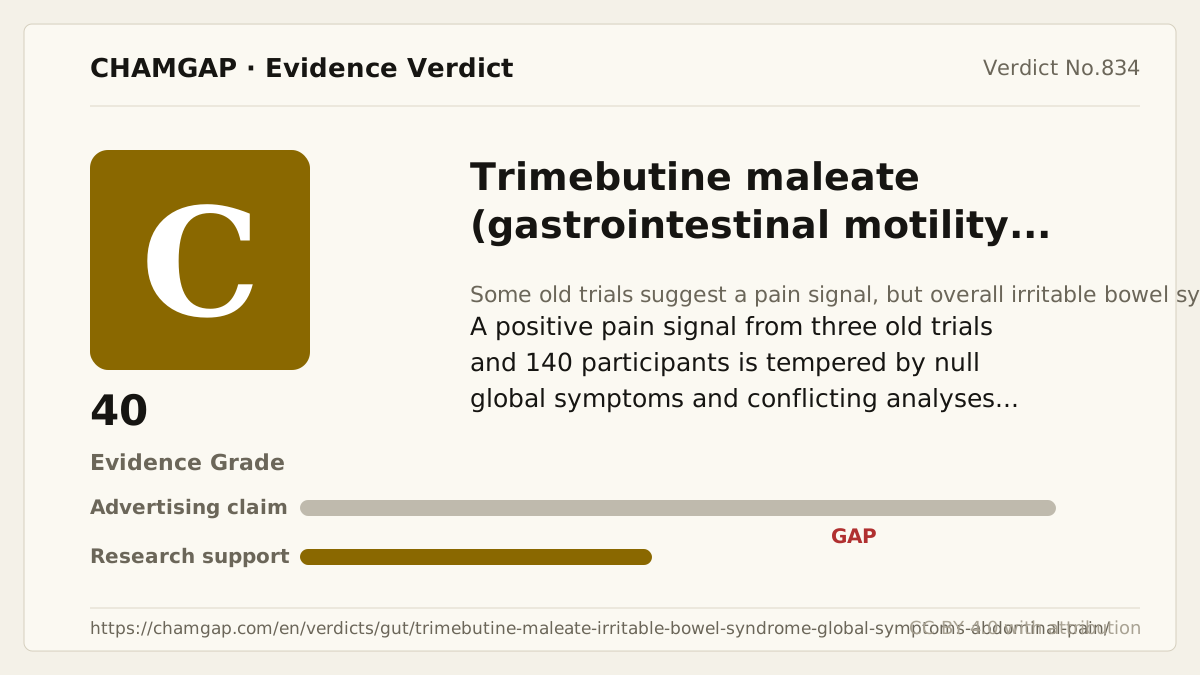
[Chamgap] Trimebutine maleate x improvement of abdominal pain and global symptoms in irritable bowel syndrome — Evidence Grade C·40. 3 cited sources checked. Source: https://chamgap.com/en/verdicts/gut/trimebutine-maleate-irritable-bowel-syndrome-global-symptoms-abdominal-pain/ · CC BY 4.0CC BY 4.0 — free to use with attribution; do not distort grades, numbers, or verdict meaning.
What this document does and does not do
Chamgap is an information source. It reports what research has and has not confirmed; it does not tell readers what to take or buy. That decision belongs to readers and, when needed, medical or legal professionals. This verdict reflects literature available up to the search date and may change as new research appears. Nothing here is medical advice.