
Sodium picosulfate,
does it really help with Improvement in complete spontaneous bowel-movement frequency and stool status in chronic constipation?
research showsSodium picosulfate is rated B because it improves complete spontaneous bowel movements, constipation symptoms, and stool status over the short term in chronic functional constipation. In a four-week randomized double-blind placebo-controlled trial of 367 patients, weekly complete spontaneous bowel movements increased from 0.9 to 3.4 with sodium picosulfate versus 1.1 to 1.7 with placebo, and 51.1% versus 18.0% reached at least three per week. A network meta-analysis of 33 randomized trials and 17,214 patients also ranked bisacodyl and sodium picosulfate highest for the four-week complete-spontaneous-bowel-movement response. The key direct trial was nevertheless a single four-week manufacturer-supported study, and the treatment is symptomatic rather than disease-modifying, yielding B with 72 points. Abdominal pain, diarrhea, dehydration, electrolyte disturbance, and prolonged repetitive self-use remain separate safety concerns.
ads claimMarketing may expand predictable overnight laxation into a root-cause cure for chronic constipation or claims of bowel cleansing and toxin removal. The evidence supports short-term improvement in complete spontaneous bowel movements, stool status, and symptoms, not treatment of obstruction or secondary causes and not detoxification.
Useful facts when choosing a product
- Sodium picosulfate is a stimulant laxative activated by colonic bacteria and usually produces a bowel movement after several hours, so the product-specific bedtime directions and dose should be followed.
- Concentrations and single doses differ across drops and tablet formulations, so drop counts or tablet numbers should not be converted from another product without checking its label.
- Abdominal pain, cramping, and diarrhea are common, and excessive or persistent diarrhea can cause dehydration and electrolyte disturbance, requiring adequate fluids and medical review for severe symptoms.
- Self-treatment is inappropriate with acute abdominal pain, suspected obstruction, or alarm features such as blood in stool, weight loss, or anemia, and daily long-term need should prompt reassessment of the cause and treatment plan rather than continued dependent use.
Chamgap Semantic Classification Code
Candidate index · review held
M.sodium-picosulfate.UNK.complete-spontaneous-bowel-movement-frequency-and-stool-status-in-chronic-constipation.improve.placeboMedicinal interventions > Sodium picosulfate > Unknown > complete spontaneous bowel-movement frequency and stool status in chronic constipation > Improvement claim > Placebo
An automated migration candidate, not an issued permanent code; exact claim scope remains under review. This machine-generated migration candidate helps retrieval but is not a permanent assignment. The original verdict ID and URL remain authoritative.
What the research actually shows
The 2010 Mueller-Lissner trial randomized 367 patients meeting Rome III functional-constipation criteria across 45 German primary-care practices in a 2:1 ratio to sodium-picosulfate drops or placebo for four weeks with dose titration. Mean complete spontaneous bowel movements, response rates, achievement of at least three per week, symptoms, and quality of life all favored treatment. A three-day placebo-controlled trial in 57 patients by Wulkow also found response rates for stool frequency and straining of 82.8% versus 50.0%, but it was extremely short. In the Luthra network meta-analysis of 33 trials and 17,214 patients, bisacodyl and sodium picosulfate 10 mg ranked highest for reducing failure to achieve at least three complete spontaneous bowel movements per week at four weeks, although direct trial counts by drug were limited and long-term relative efficacy remained unknown. The 2023 AGA-ACG guideline strongly recommends sodium picosulfate for short-term use or rescue therapy in adults with chronic idiopathic constipation while acknowledging evidence gaps beyond the short term.
Why this is classified as B (72)
A 367-patient four-week randomized double-blind placebo-controlled trial showed improvements in complete spontaneous bowel movements, response rates, symptoms, and quality of life, and a 33-trial network meta-analysis consistently supported short-term efficacy. The key direct evidence depends heavily on one manufacturer-supported four-week trial and provides no disease-modifying or long-term durability evidence, limiting the grade to B with 72 points. This is stronger than indirect or limited evidence for some other laxatives, but a short symptomatic trial does not justify A. Abdominal pain, diarrhea, electrolyte disturbance, and prolonged repetitive self-use remain separate safety issues.
Counterpoint. It can be a dose-adjustable short-term option when fiber, fluid, activity, and bowel-habit measures are insufficient. New constipation, alarm symptoms, medication-induced constipation, or daily long-term need calls for evaluation of cause and comparison with alternatives such as polyethylene glycol.
Rejudgment record. New verdict — Accepted randomized placebo-controlled improvement in complete spontaneous bowel movements and constipation symptoms as direct patient-centered evidence and incorporated the network meta-analysis, while deducting for four-week duration, manufacturer concentration of the key direct trial, and the absence of long-term data
Sub-claim grades by effect
This ingredient is marketed for several effects. A single overall grade blends strong and weak claims together, so each effect is graded separately here. The overall grade reflects the strongest disconfirming or core claim.
| Effect (sub-claim) | Grade | Basis |
|---|---|---|
| Increased weekly complete spontaneous bowel movements in chronic constipation | B | A 367-patient placebo-controlled trial substantially improved mean complete spontaneous bowel movements and achievement of at least three per week. |
| Improved stool status, straining, and bloating | B | Short placebo-controlled trials improved constipation symptoms and quality of life, although patient-reported components are included. |
| Symptomatic bowel improvement sustained over four weeks | B | Benefit was directly demonstrated through four weeks, but longer durability and treatment of the underlying cause were not established. |
Cross-check — AI research and Codex final gate
Evidence Table
| Study | Design | Sample | Funding | Endpoint | Result | Weight |
|---|---|---|---|---|---|---|
| Mueller-Lissner S et al. 2010 | Multicenter four-week randomized double-blind placebo-controlled trial | 367 randomized patients across 45 German primary-care practices | Supported by Boehringer Ingelheim; several authors were company employees | Mean weekly complete spontaneous bowel movements, response rates, symptoms, and PAC-QoL | Complete spontaneous bowel movements rose from 0.9 to 3.4 versus 1.1 to 1.7 with placebo, and 51.1% versus 18.0% reached at least three per week. | Key direct short-term efficacy trial |
| Wulkow R et al. 2007 | Three-day randomized double-blind placebo-controlled trial | 57 participants | Industry clinical-trial context with contract-research and product-related affiliations | Composite response in stool frequency and straining | Response occurred in 82.8% with sodium picosulfate versus 50.0% with placebo. | Directional replication with extreme short duration |
| Luthra P et al. 2019 | Systematic review and network meta-analysis of drug trials for chronic idiopathic constipation | 33 randomized trials and 17,214 patients | No external funding reported | Failure to achieve at least three complete spontaneous bowel movements per week and other four- and twelve-week responses | Bisacodyl and sodium picosulfate 10 mg ranked first at four weeks for the complete-spontaneous-bowel-movement endpoint, with a failure risk ratio of 0.55. | Independent synthesis support with limited direct trial count |
| Chang L et al. 2023 | AGA-ACG GRADE clinical practice guideline | Entire adult chronic-idiopathic-constipation pharmacotherapy evidence base | American Gastroenterological Association and American College of Gastroenterology | Complete spontaneous bowel movements, symptoms, adverse events, and recommendation strength | Strongly recommended sodium picosulfate for short-term use or rescue therapy in adults with chronic idiopathic constipation while identifying long-term evidence gaps. | Current applicability assessment |
Receipt — 4 References
All 4 cited sources were verified for existence at the original page (as of 2026-07-21).
Final verification and publication gate: Codex · Evidence date: 2026-07-21 · Corrections: none
Cite this verdict
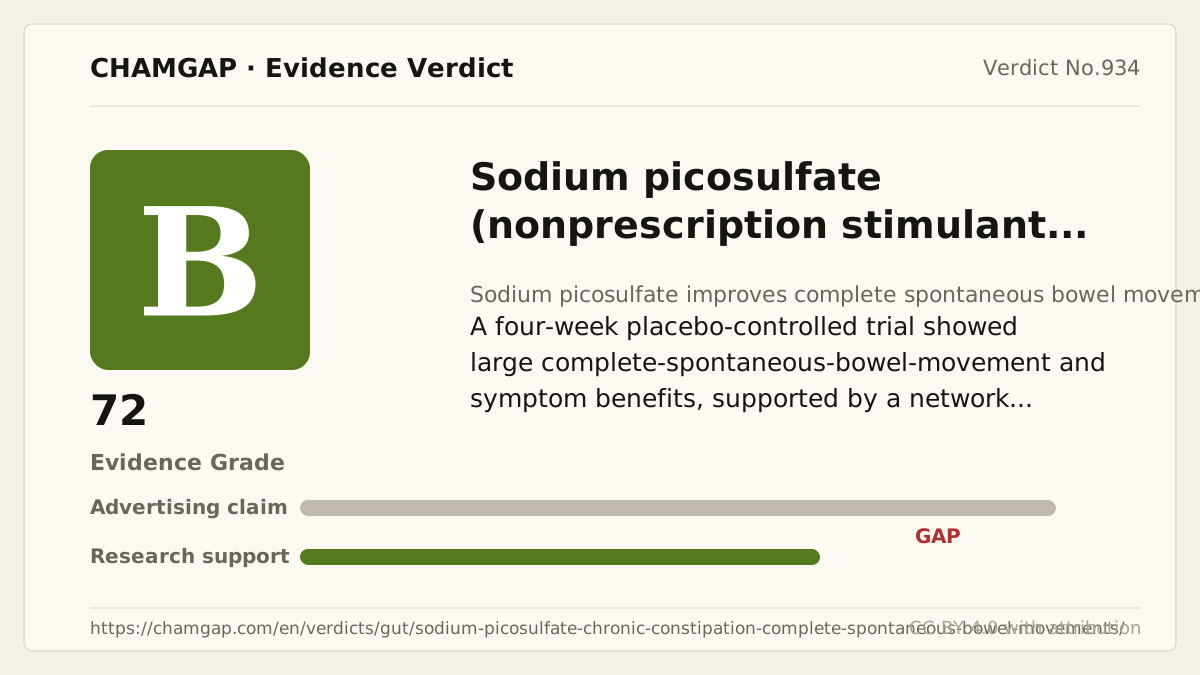
[Chamgap] Sodium picosulfate x improved complete spontaneous bowel movements and stool status in chronic constipation — Evidence Grade B·72. 4 cited sources checked. Source: https://chamgap.com/en/verdicts/gut/sodium-picosulfate-chronic-constipation-complete-spontaneous-bowel-movements/ · CC BY 4.0CC BY 4.0 — free to use with attribution; do not distort grades, numbers, or verdict meaning.
What this document does and does not do
Chamgap is an information source. It reports what research has and has not confirmed; it does not tell readers what to take or buy. That decision belongs to readers and, when needed, medical or legal professionals. This verdict reflects literature available up to the search date and may change as new research appears. Nothing here is medical advice.