
Routine nasogastric decompression,
does it really help with Prevention of pneumonia and pulmonary complications?
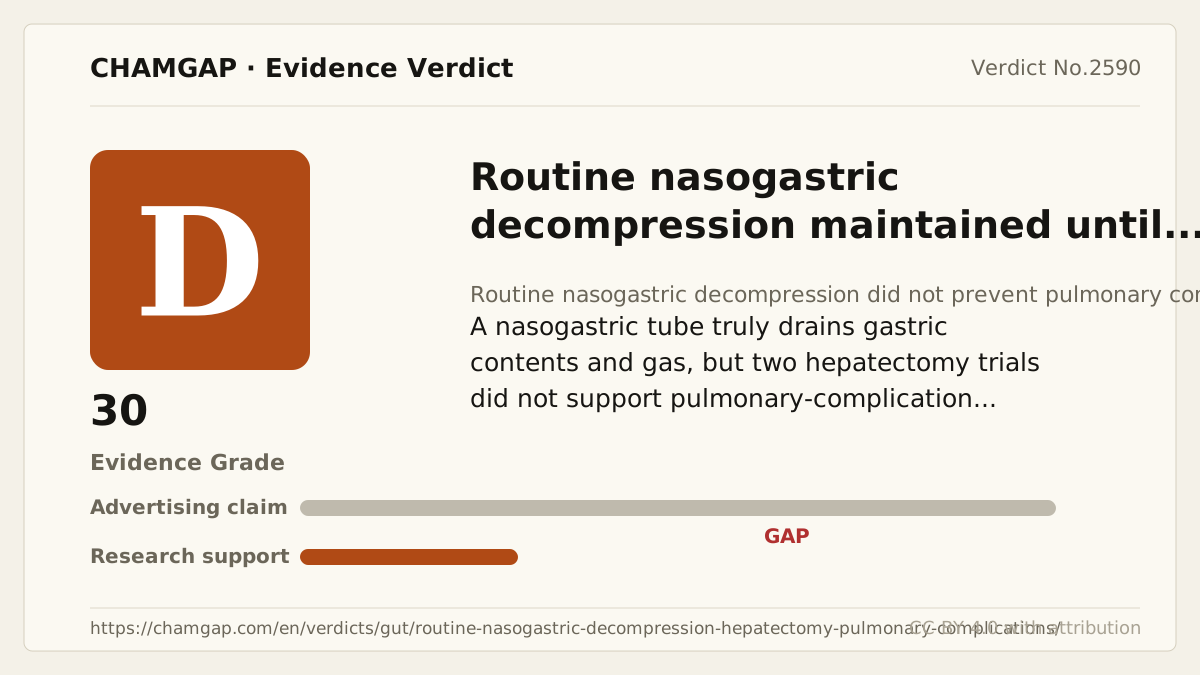
research showsThe grade is D with 30 points. In a 200-participant French trial, pneumonia was more frequent with continued nasogastric decompression, 13/100 versus 5/100 after removal at the end of surgery, P=0.047. A 210-participant Japanese trial found pulmonary complications of 18.5% versus 19.5%, P=0.84. F was not assigned because prespecification of pulmonary harm as a primary or safety endpoint and a pooled confidence interval were not confirmed.
ads claimDraining gastric contents and gas and reducing gastric distension are physical functions. They did not translate into prevention of pneumonia or atelectasis, and one trial observed more pulmonary events.
Useful facts when choosing a product
- A nasogastric tube passes through the nose into the stomach to drain contents and gas.
- Continued groups kept the tube until passage of flatus or stool; controls removed it at the end of surgery.
- In Pessaux, 21 tube patients reported severe discomfort and 19 required premature removal.
Chamgap Semantic Classification Code
Candidate index · review held
P.routine-nasogastric-decompression-maintained-until-passage-of-flatus-or-stool-after-elective-hepatectomy.procedural.pneumonia-and-pulmonary-complications.prevent.UNKProcedures, devices and tests > Routine nasogastric decompression maintained until passage of flatus or stool after elective hepatectomy > Procedural > pneumonia and pulmonary complications > Occurrence-prevention claim > Unknown
An automated migration candidate, not an issued permanent code; exact claim scope remains under review. This machine-generated migration candidate helps retrieval but is not a permanent assignment. The original verdict ID and URL remain authoritative.
What the research actually shows
Pessaux and colleagues randomized 200 elective hepatectomy patients at one French hospital, 100 per group, to continued decompression until flatus or stool versus removal at surgery end. Ichida and colleagues randomized 210 patients at one Japanese center, 108 continued versus 102 removed, and registered UMIN000003220. Author teams did not overlap, but specific funding could not be verified for both trials, so independent funding replication was not claimed.
Why this is classified as D (30)
Two trials in the same hepatectomy context did not show pulmonary benefit, but prespecified harm status and pooled precision were not confirmed, so the verdict is D rather than F, with 30 points.
Counterpoint. This applies to routine continuation after uncomplicated elective hepatectomy. Selective reinsertion for vomiting, ileus, or obstruction is a different clinical situation.
Rejudgment record. Cross-check applied — Cross-checked populations, interventions, pulmonary results, overall morbidity, registration, and funding verification limits against both articles and the UMIN record; prespecified harm remained unconfirmed
| Endpoint | H | Hard endpoint - actual events such as death |
| Replication | R1 | Single confirmatory trial |
| Independence | I1 | Mixed funding sources |
| Effect size | E0 | Null |
| Precision | CX | No pooled confidence interval could be confirmed |
Stored derived and displayed grades match; this is not a current recalculation or validity check (D).
Sub-claim grades by effect
This ingredient is marketed for several effects. A single overall grade blends strong and weak claims together, so each effect is graded separately here. The overall grade reflects the strongest disconfirming or core claim.
| Effect (sub-claim) | Grade | Basis |
|---|---|---|
| Routine nasogastric decompression prevents pulmonary complications after hepatectomy | D | Two trials found no benefit, and one reported more pneumonia. |
| Continued nasogastric decompression reduces overall complications after hepatectomy | D | Both trials were null, 15% versus 19% and 34.3% versus 35.3%. |
Cross-check — AI research and Codex final gate
Evidence Table
| Study | Design | Sample | Funding | Endpoint | Result | Weight |
|---|---|---|---|---|---|---|
| Pessaux P et al. 2007 | Single-center French randomized trial | 200 randomized, 100/100 | PubMed indexed non-US government research support, but the specific institution was not verified | Postoperative morbidity including pneumonia and atelectasis | Pneumonia 13/100 versus 5/100, P=0.047; atelectasis 81/100 versus 67/100, P=0.043; overall surgical complications 15% versus 19%, P=0.451 | First direct trial with a harm signal |
| Ichida H et al. 2016 | Single-center Japanese registered randomized trial | 210 randomized, 108 continued tube and 102 removed | Specific funding statement not verified | Overall morbidity, pulmonary complications, vomiting, oral intake, and length of stay | Pulmonary complications 18.5% versus 19.5%, P=0.84; overall morbidity 34.3% versus 35.3%, P=0.99 | Second null trial in the same indication, with funding and prespecification limitations |
Receipt — 2 References
All 2 cited sources were verified for existence at the original page (as of 2026-08-14).
Final verification and publication gate: Codex · Evidence date: 2026-08-14 · Corrections: none
Cite this verdict
[Chamgap] Routine nasogastric decompression x pulmonary complications after hepatectomy — Evidence Grade D·30. 2 cited sources checked. Source: https://chamgap.com/en/verdicts/gut/routine-nasogastric-decompression-hepatectomy-pulmonary-complications/ · CC BY 4.0CC BY 4.0 — free to use with attribution; do not distort grades, numbers, or verdict meaning.
What this document does and does not do
Chamgap is an information source. It reports what research has and has not confirmed; it does not tell readers what to take or buy. That decision belongs to readers and, when needed, medical or legal professionals. This verdict reflects literature available up to the search date and may change as new research appears. Nothing here is medical advice.