
Rifaximin 550 mg,
does it really help with Relief of global symptoms in irritable bowel syndrome without predominant constipation?
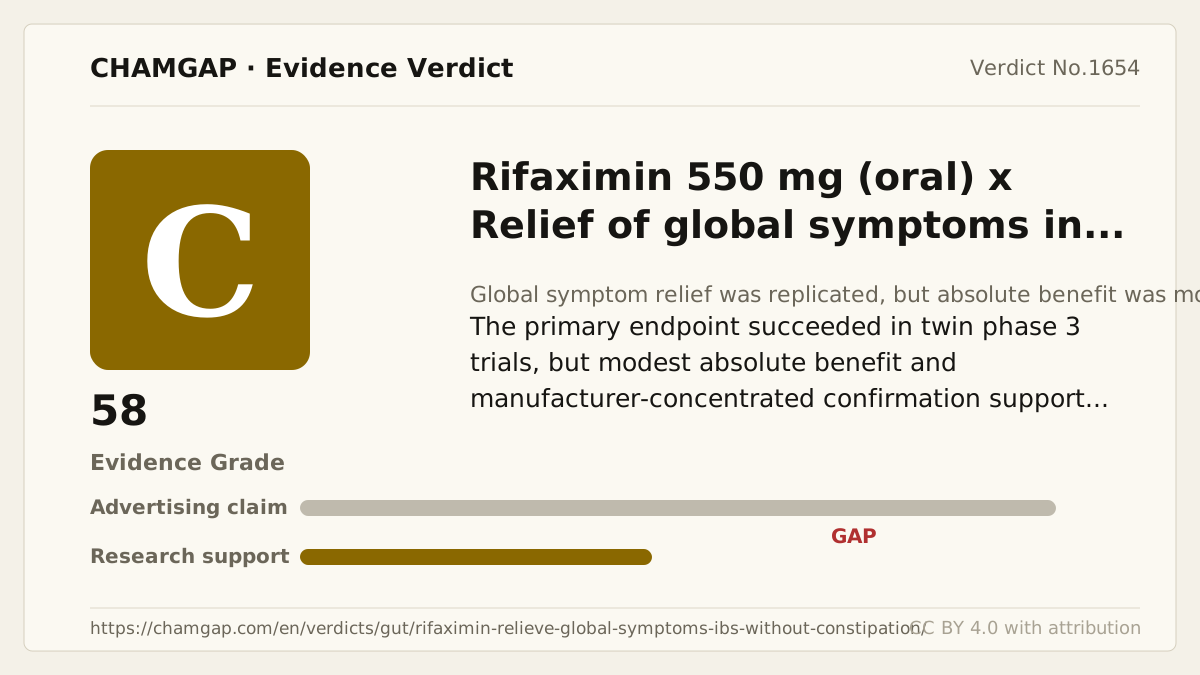
research showsRifaximin 550 mg is rated C because it provides a small improvement in global symptoms of irritable bowel syndrome without predominant constipation. TARGET 1 and 2 randomized 1,260 people and analyzed the 1,258 who received at least one dose in the modified intention-to-treat population. The successful primary endpoint of adequate global symptom relief during the first four post-treatment weeks occurred in 40.8% versus 31.2% and 40.6% versus 32.2%. The absolute benefit was only about 8 to 10 percentage points, and the pivotal and retreatment evidence was sponsored and closely supported by manufacturer Salix. The C ceiling reflects manufacturer concentration and modest effect, not use of a surrogate, giving C with 58 points.
ads claimPromotion can turn symptom relief into removal of bad gut bacteria, treatment of the cause, or a one-course gut reset. The trials measured short-term adequate symptom relief in a minority, not eradication of an established cause or complete remission for most patients.
Useful facts when choosing a product
- The IBS-D research and United States labeled regimen is rifaximin 550 mg three times daily for 14 days, available by prescription.
- Systemic absorption is low, but exposure can rise in severe hepatic impairment, and warfarin or strong P-glycoprotein inhibitors require caution.
- Nausea and liver-test changes can occur, while rare hypersensitivity and antibiotic-associated diarrhea warrant clinical review for severe diarrhea, fever, or blood.
- Symptoms can recur, and repeated antibiotic use requires consideration of cost, indication, microbial ecology, and possible resistance.
Chamgap Semantic Classification Code
Candidate index · review held
UNK.rifaximin.oral.global-symptoms-in-irritable-bowel-syndrome-without-predominant-constipation.relieve.placeboUnknown > Rifaximin > Oral > global symptoms in irritable bowel syndrome without predominant constipation > Symptom-relief claim > Placebo
An automated migration candidate, not an issued permanent code; exact claim scope remains under review. This machine-generated migration candidate helps retrieval but is not a permanent assignment. The original verdict ID and URL remain authoritative.
What the research actually shows
The identically designed TARGET 1 and 2 trials randomized 1,260 people with nonconstipated IBS and analyzed 1,258 who received at least one dose. After rifaximin 550 mg three times daily for 14 days, the primary endpoint of adequate global symptom relief for at least two of the first four post-treatment weeks succeeded at 40.8% versus 31.2% in TARGET 1 and 40.6% versus 32.2% in TARGET 2. Adequate bloating relief also favored rifaximin, but effects were modest. TARGET 3 rerandomized 636 relapsing initial open-label responders and supported retreatment, but this was an enriched responder population and was also manufacturer sponsored.
Why this is classified as C (58)
Two phase 3 trials met the primary global-symptom endpoint in 1,258 modified intention-to-treat participants, but the absolute difference was about nine percentage points and positive pivotal and retreatment evidence is concentrated in manufacturer-sponsored research. The outcome is not a surrogate; the manufacturer-concentration ceiling supports C with 58 points.
Counterpoint. A short prescription course can be considered for selected patients with persistent symptoms despite dietary, lifestyle, and other standard measures, but it is not a proven causal cure for all IBS-D.
Rejudgment record. Cross-check applied — Accepted successful global-symptom primary endpoints in the actual 1,258-person modified intention-to-treat population of TARGET 1 and 2, while applying the C ceiling for modest absolute effects and concentration of sponsorship and author involvement in one manufacturer's program
Sub-claim grades by effect
This ingredient is marketed for several effects. A single overall grade blends strong and weak claims together, so each effect is graded separately here. The overall grade reflects the strongest disconfirming or core claim.
| Effect (sub-claim) | Grade | Basis |
|---|---|---|
| Adequate relief of global symptoms in nonconstipated IBS | C | The primary endpoint succeeded in two phase 3 trials, but the absolute difference was about nine percentage points and confirmation is manufacturer concentrated. |
| Relief of abdominal bloating | C | Both trials were positive, but the effect was modest and came from the same manufacturer's program. |
| Renewed symptom relief with retreatment after relapse | C | The randomized TARGET 3 phase supports retreatment, but it used 636 selected initial open-label responders who relapsed and was manufacturer sponsored. |
Cross-check — AI research and Codex final gate
Evidence Table
| Study | Design | Sample | Funding | Endpoint | Result | Weight |
|---|---|---|---|---|---|---|
| Pimentel M et al.; TARGET Study Group. 2011 | Two identically designed multicenter double-blind randomized placebo-controlled phase 3 trials | 1,260 randomized; modified intention-to-treat population 1,258 | Sponsored by Salix Pharmaceuticals; manufacturer employees were coauthors and involved in analysis | Primary: adequate relief of global IBS symptoms for at least two of the first four post-treatment weeks | Primary endpoint met: 40.8% versus 31.2% in TARGET 1 and 40.6% versus 32.2% in TARGET 2. | Pivotal confirmation with manufacturer concentration |
| Lembo A et al. 2016 | Phase 3 trial with open-label initial treatment followed by randomized double-blind placebo-controlled retreatment of responders who relapsed | 636 relapsing responders rerandomized (rifaximin 328, placebo 308) | Sponsored by Salix Pharmaceuticals; manufacturer employees were coauthors | Primary: composite abdominal-pain and stool-consistency response after retreatment | The primary composite retreatment response was significantly higher than placebo, but the population was enriched for initial responders who relapsed. | Retreatment support in an enriched population |
Receipt — 2 References
All 2 cited sources were verified for existence at the original page (as of 2026-07-24).
Final verification and publication gate: Codex · Evidence date: 2026-07-24 · Corrections: none
Cite this verdict
[Chamgap] Rifaximin 550 mg x relief of global symptoms in nonconstipated irritable bowel syndrome — Evidence Grade C·58. 2 cited sources checked. Source: https://chamgap.com/en/verdicts/gut/rifaximin-relieve-global-symptoms-ibs-without-constipation/ · CC BY 4.0CC BY 4.0 — free to use with attribution; do not distort grades, numbers, or verdict meaning.
What this document does and does not do
Chamgap is an information source. It reports what research has and has not confirmed; it does not tell readers what to take or buy. That decision belongs to readers and, when needed, medical or legal professionals. This verdict reflects literature available up to the search date and may change as new research appears. Nothing here is medical advice.