
Alcohol during NSAID use,
does it really help with Increased major upper gastrointestinal bleeding requiring hospitalization or transfusion?
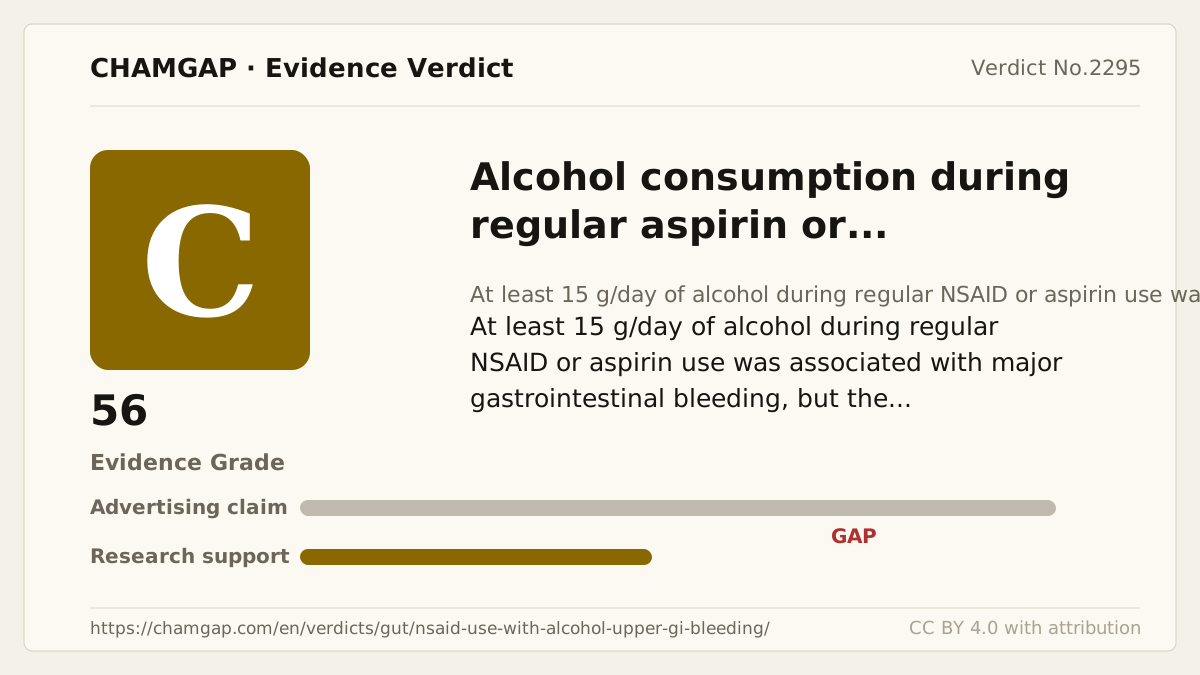
research showsThe grade is C with 56 points. In a prospective cohort of about 48,000 male health professionals, regular aspirin or NSAID users had major gastrointestinal bleeding RRs of 1.37, 95% CI 0.85 to 2.19, with 1 to 14 g/day of alcohol and 1.75, 1.07 to 2.88, with at least 15 g/day, each versus nondrinkers. The interaction analysis covered all major gastrointestinal bleeding and combined aspirin with nonaspirin NSAIDs rather than isolating upper bleeding from one drug class.
ads claimAlcohol exposure did not mean swallowing the pill with a drink at the same sitting. It meant usual alcohol consumption during follow-up periods in which regular NSAID or aspirin use was reported.
Useful facts when choosing a product
- The drug exposure combined aspirin or another NSAID used at least twice per week.
- Interaction categories were nondrinking, 1 to 14 g/day, and at least 15 g/day.
- Whole-cohort absolute rates were about 0.35 major bleeds and 0.16 upper bleeds per 1,000 person-years; combined-exposure rates were not reported.
- Prior ulcer was excluded and some antithrombotic use was adjusted, but complete Helicobacter adjustment was unavailable.
Chamgap Semantic Classification Code
Candidate index · review held
M.alcohol-consumption-during-regular-aspirin-or-nonsteroidal-anti-inflammatory-drug-use.UNK.major-upper-gastrointestinal-bleeding-requiring-hospitalization-or-transfusion.increase.UNKMedicinal interventions > Alcohol consumption during regular aspirin or nonsteroidal anti-inflammatory drug use > Unknown > major upper gastrointestinal bleeding requiring hospitalization or transfusion > Increase claim > Unknown
An automated migration candidate, not an issued permanent code; exact claim scope remains under review. This machine-generated migration candidate helps retrieval but is not a permanent assignment. The original verdict ID and URL remain authoritative.
What the research actually shows
Strate and colleagues followed about 48,000 male health professionals, aged 40 to 75 at baseline in 1986, through 2012. Alcohol was updated every four years in categories of 0, 1 to 4, 5 to 14, 15 to 29, and at least 30 g/day; the interaction analysis collapsed these to nondrinking, 1 to 14, and at least 15 g/day. Nondrinking meant long-term zero or less than one serving per month. Regular NSAID or aspirin use meant at least twice weekly and was updated biennially. Across 883,797 person-years, 305 major bleeds included 142 upper bleeds, absolute rates of about 0.35 and 0.16 per 1,000 person-years in the whole cohort. Exposure-stratum absolute rates were not reported. Prior peptic ulcer was excluded. Models adjusted broad clinical factors, and a 2008-2012 subanalysis also adjusted PPI, H2 blocker, SSRI, warfarin, and clopidogrel use. Helicobacter status was unavailable for all participants.
Why this is classified as C (56)
A publicly funded prospective cohort found a positive association at at least 15 g/day during regular NSAID or aspirin use, but mixed exposure and residual confounding limit the evidence to C with 56 points.
Counterpoint. The study did not report an upper-bleeding RR or absolute rate for each joint exposure stratum, so it cannot quantify one ibuprofen dose or one drinking occasion.
Rejudgment record. Cross-check applied — Prospective follow-up, alcohol and NSAID definitions, reference group, whole-cohort absolute major and upper bleeding rates, joint RRs and intervals, prior-ulcer exclusion, antithrombotic adjustment, and missing Helicobacter status were applied
| Endpoint | H | Hard endpoint - actual events such as death |
| Replication | R1 | Single confirmatory trial |
| Independence | I2 | Decisive evidence is publicly or non-profit funded |
| Effect size | E+ | Meets the clinically important threshold |
Stored derived and displayed grades match; this is not a current recalculation or validity check (C).
Sub-claim grades by effect
This ingredient is marketed for several effects. A single overall grade blends strong and weak claims together, so each effect is graded separately here. The overall grade reflects the strongest disconfirming or core claim.
| Effect (sub-claim) | Grade | Basis |
|---|---|---|
| At least 15 g/day of alcohol during regular NSAID or aspirin use increases major gastrointestinal bleeding | C | The prospective cohort RR was 1.75, 1.07 to 2.88, with observational limitations. |
| Swallowing one NSAID with alcohol at the same sitting quantitatively increases upper bleeding risk | ? | The cohort did not measure that simultaneous exposure or its absolute upper-bleeding risk. |
Cross-check — AI research and Codex final gate
Evidence Table
| Study | Design | Sample | Funding | Endpoint | Result | Weight |
|---|---|---|---|---|---|---|
| Strate LL et al. 2016 HPFS | Prospective cohort with repeated exposure updates and medical-record confirmation | About 48,000 men and 883,797 person-years; 305 major bleeds including 142 upper bleeds | Public US NIH, NCI, and NIDDK funding | Major gastrointestinal bleeding requiring hospitalization or transfusion; upper bleeding originated in the esophagus, stomach, or duodenum | Among regular NSAID or aspirin users, versus long-term nondrinkers, RR was 1.37, 95% CI 0.85 to 2.19, for 1 to 14 g/day and 1.75, 1.07 to 2.88, for at least 15 g/day. Whole-cohort absolute rates were 0.35 major and 0.16 upper bleeds per 1,000 person-years. | Pivotal single prospective observational evidence |
Receipt — 1 References
All 1 cited sources were verified for existence at the original page (as of 2026-08-05).
Final verification and publication gate: Codex · Evidence date: 2026-08-05 · Corrections: none
Cite this verdict
[Chamgap] Alcohol during NSAID use x upper gastrointestinal bleeding — Evidence Grade C·56. 1 cited sources checked. Source: https://chamgap.com/en/verdicts/gut/nsaid-use-with-alcohol-upper-gi-bleeding/ · CC BY 4.0CC BY 4.0 — free to use with attribution; do not distort grades, numbers, or verdict meaning.
What this document does and does not do
Chamgap is an information source. It reports what research has and has not confirmed; it does not tell readers what to take or buy. That decision belongs to readers and, when needed, medical or legal professionals. This verdict reflects literature available up to the search date and may change as new research appears. Nothing here is medical advice.