
Non-celiac gluten-free diet,
does it really help with Relief of abdominal pain, bloating, and other gastrointestinal symptoms?
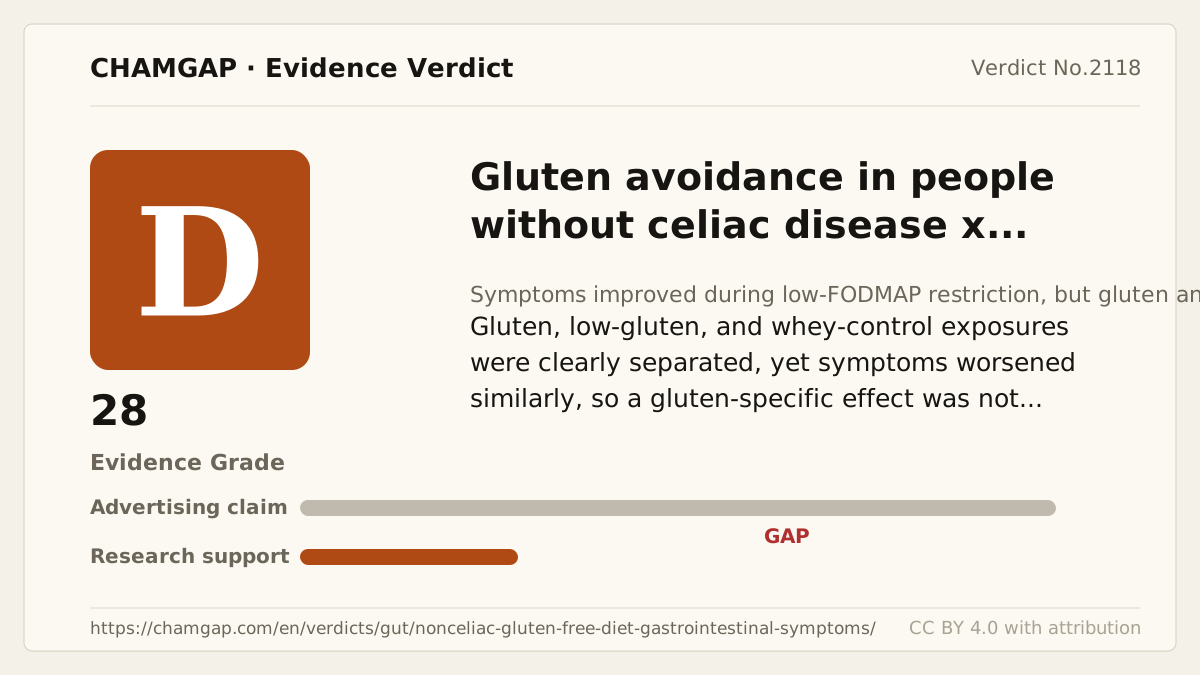
research showsThe grade is D with 28 points. Thirty-seven people with IBS, self-reported gluten sensitivity, and excluded celiac disease completed a low-FODMAP run-in and then received 16 g/day gluten, 2 g/day gluten, and a 0-g-gluten, 16-g-whey-protein control in a double-blind crossover challenge. Overall symptoms worsened similarly under all three conditions, with no gluten-specific or dose-response effect. Improvement during the low-FODMAP run-in cannot be assigned to gluten removal itself.
ads claimSymptoms did improve during low-FODMAP restriction. The similar worsening with whey means that improvement cannot be sold as a specific benefit of gluten removal.
Useful facts when choosing a product
- The challenge supplied 16 g/day, 2 g/day, or 0 g/day gluten, creating clear exposure separation.
- Participants consumed 96% to 99% of provided meals and adhered to the gluten-free low-FODMAP background, so inadequate adherence is not supported.
- A gluten-free diet is established treatment for celiac disease, which is outside this non-celiac verdict.
- Verdict 1611 is C with 58 points for low-FODMAP treatment of IBS; this verdict asks about the incremental effect of removing gluten protein itself.
Chamgap Semantic Classification Code
Candidate index · review held
D.gluten-avoidance-in-people-without-celiac-disease.dietary.abdominal-pain-bloating-and-other-gastrointestinal-symptoms.relieve.placeboDietary patterns and eating practices > Gluten avoidance in people without celiac disease > Dietary regimen > abdominal pain, bloating, and other gastrointestinal symptoms > Symptom-relief claim > Placebo
An automated migration candidate, not an issued permanent code; exact claim scope remains under review. This machine-generated migration candidate helps retrieval but is not a permanent assignment. The original verdict ID and URL remain authoritative.
What the research actually shows
ACTRN12610000524099 used a two-week low-FODMAP run-in followed by randomized seven-day periods of 16 g gluten, 2 g gluten plus 14 g whey, and a 0-g-gluten, 16-g-whey-protein control in 37 participants; 22 also entered a three-day rechallenge. Participants consumed 96% to 99% of provided meals and all adhered to the gluten-free, low-FODMAP background. Energy and major nutrients were similar across challenge periods. Australia’s NHMRC and George Weston Foods jointly supported the study, and one author disclosed publishing a book about diets for irritable bowel syndrome.
Why this is classified as D (28)
A placebo-controlled rechallenge on a low-FODMAP background found no gluten-specific effect, but its small size and short periods give D with 28 points.
Counterpoint. Exposure separation and blinding are strengths, but 37 highly selected participants cannot represent every non-celiac gastrointestinal presentation.
Rejudgment record. Cross-check applied — No gluten-specific effect in a blinded whey-controlled challenge on a low-FODMAP background, limited by small size and short challenge periods
| Endpoint | P | Symptom or function itself is the target - including patient reports and performance tests |
| Replication | R1 | Single confirmatory trial |
| Independence | I1 | Mixed funding sources |
| Effect size | E0 | Null |
| Precision | CX | No pooled confidence interval could be confirmed |
Stored derived and displayed grades match; this is not a current recalculation or validity check (D).
Sub-claim grades by effect
This ingredient is marketed for several effects. A single overall grade blends strong and weak claims together, so each effect is graded separately here. The overall grade reflects the strongest disconfirming or core claim.
| Effect (sub-claim) | Grade | Basis |
|---|---|---|
| Low-FODMAP run-in reduces overall gastrointestinal symptoms | C | Several symptoms improved during run-in, but this was not a gluten-specific effect. |
| Gluten removal itself relieves non-celiac gastrointestinal symptoms | D | Gluten and whey challenges worsened symptoms similarly. |
Cross-check — AI research and Codex final gate
Evidence Table
| Study | Design | Sample | Funding | Endpoint | Result | Weight |
|---|---|---|---|---|---|---|
| Biesiekierski JR et al. 2013 | Double-blind randomized crossover placebo-controlled rechallenge | 37 in the seven-day trial; 22 in a separate three-day rechallenge | Joint support from Australia’s NHMRC and George Weston Foods; one author disclosed an IBS-diet book | Overall gastrointestinal symptoms, abdominal pain, bloating, and related symptoms | Similar worsening under 16 g, 2 g, and 0 g gluten; no specific or dose-response effect | Pivotal low-FODMAP-background trial with a 0-g-gluten, 16-g-whey-protein control |
Receipt — 2 References
All 2 cited sources were verified for existence at the original page (as of 2026-08-04).
Final verification and publication gate: Codex · Evidence date: 2026-08-04 · Corrections: none
Cite this verdict
[Chamgap] Non-celiac gluten-free diet x gastrointestinal symptom relief — Evidence Grade D·28. 2 cited sources checked. Source: https://chamgap.com/en/verdicts/gut/nonceliac-gluten-free-diet-gastrointestinal-symptoms/ · CC BY 4.0CC BY 4.0 — free to use with attribution; do not distort grades, numbers, or verdict meaning.
What this document does and does not do
Chamgap is an information source. It reports what research has and has not confirmed; it does not tell readers what to take or buy. That decision belongs to readers and, when needed, medical or legal professionals. This verdict reflects literature available up to the search date and may change as new research appears. Nothing here is medical advice.