
Methylnaltrexone,
does it really help with Rapid rescue-free laxation in opioid-induced constipation during advanced illness?
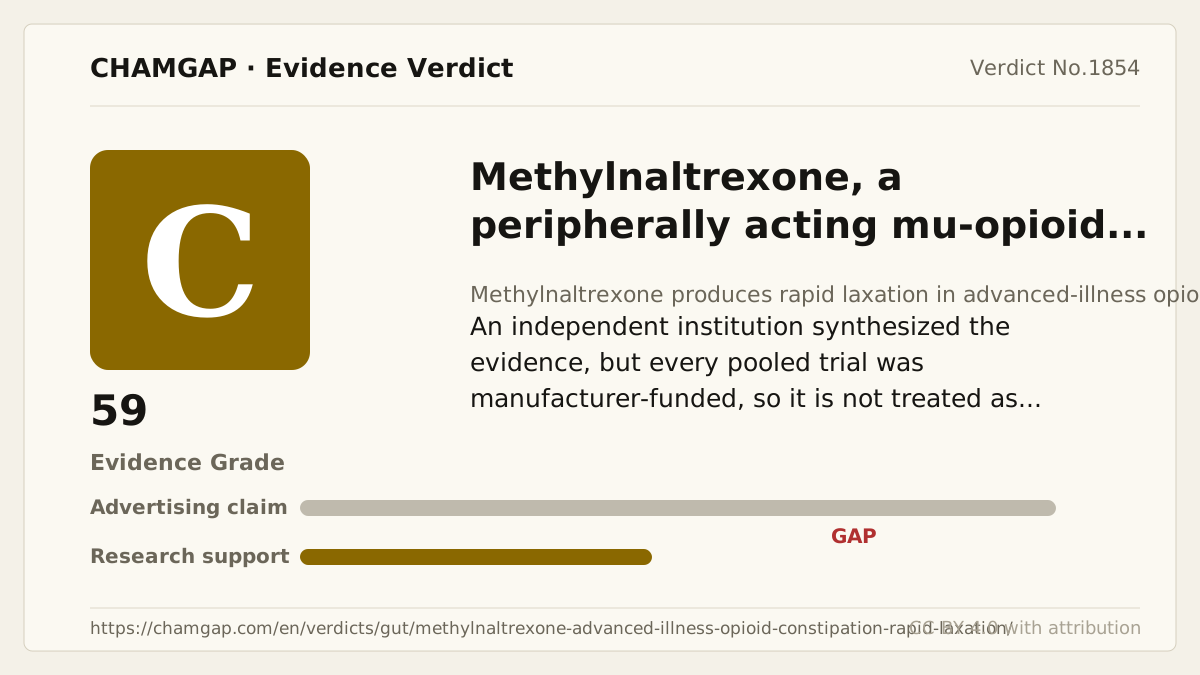
research showsMethylnaltrexone is rated C. Rescue-free laxation within four hours after the first dose occurred in 48.8% versus 15.5%, a 33.3-point difference, and a separate trial replicated rates of 58% to 62% versus 14%. The absolute effect was large, but decisive trials came only from manufacturer programs, so the I0 ceiling applies.
ads claimThis is evidence for rapid relief of laxative-refractory opioid-induced constipation, not a universal treatment for general constipation. A rapid single response is not the same as long-term normalization.
Useful facts when choosing a product
- The Thomas trial randomized and analyzed 133 participants for efficacy.
- Coprimary endpoints assessed the first dose and response after at least two of the first four doses.
Chamgap Semantic Classification Code
Candidate index · review held
UNK.methylnaltrexone.UNK.rapid-rescue-free-laxation-in-opioid-induced-constipation-during-advanced-illness.assess.placeboUnknown > Methylnaltrexone > Unknown > Rapid rescue-free laxation in opioid-induced constipation during advanced illness > Association or change assessment > Placebo
An automated migration candidate, not an issued permanent code; exact claim scope remains under review. This machine-generated migration candidate helps retrieval but is not a permanent assignment. The original verdict ID and URL remain authoritative.
What the research actually shows
Thomas 2008 randomized 133, all included in the efficacy analysis, 62 methylnaltrexone and 71 placebo. Laxation within four hours after the first dose occurred in 48.8% versus 15.5%, a 33.3-percentage-point difference, while response after at least two of the first four doses was 52% versus 8%; both coprimary endpoints succeeded at P<0.001. A separate 154-person trial found 62% and 58% versus 14%, both P<0.0001. An independent Cochrane review synthesized methylnaltrexone efficacy, but every included methylnaltrexone trial belonged to manufacturer-funded Progenics, Wyeth, or Salix programs, so I0 remains. Pain and withdrawal scores did not worsen significantly. Verdict 1845 evaluates 12-week weekly response with naldemedine, whereas this verdict evaluates rapid laxation within four hours.
Why this is classified as C (50)
P, R1, I0, E+, and B1 derive C with 50 points under manufacturer-only and short-duration ceilings.
Counterpoint. Analgesia and withdrawal scores were preserved in trials, while clinical monitoring for withdrawal remains necessary.
Rejudgment record. Cross-check applied — Two randomized trials reproduced a large rapid-laxation effect, but decisive evidence is confined to the Progenics manufacturer program
| Endpoint | P | Symptom or function itself is the target - including patient reports and performance tests |
| Replication | R1 | Single confirmatory trial |
| Independence | I0 | Evidence comes only from manufacturer studies |
| Effect size | E+ | Meets the clinically important threshold |
Stored derived and displayed grades match; this is not a current recalculation or validity check (C).
Sub-claim grades by effect
This ingredient is marketed for several effects. A single overall grade blends strong and weak claims together, so each effect is graded separately here. The overall grade reflects the strongest disconfirming or core claim.
| Effect (sub-claim) | Grade | Basis |
|---|---|---|
| Rescue-free laxation within four hours of the first dose | C | The endpoint succeeded with a 33-point absolute difference, but evidence is manufacturer-only. |
| Rapid laxation across repeated doses | C | Response after at least two of the first four doses was 52% versus 8%. |
| Constipation improvement while preserving analgesia | C | Pain and withdrawal scores did not worsen significantly. |
Cross-check — AI research and Codex final gate
Evidence Table
| Study | Design | Sample | Funding | Endpoint | Result | Weight |
|---|---|---|---|---|---|---|
| Thomas J et al. Study 302, 2008 | Two-week randomized double-blind placebo-controlled trial | 133 randomized and analyzed for efficacy; 62 versus 71 | Manufacturer sponsorship by Progenics Pharmaceuticals, which designed, collected, and analyzed the study | Coprimary rescue-free laxation endpoints within four hours | First dose 48.8% versus 15.5%, a 33.3-point difference; at least two of first four doses 52% versus 8%; both P<0.001, succeeded | Key confirmatory trial |
| Slatkin N et al. Study 301, 2009 | Single-dose randomized double-blind placebo-controlled trial | 154 randomized and analyzed | Manufacturer development program by Progenics Pharmaceuticals | Rescue-free laxation within four hours | 0.15 and 0.30 mg/kg: 62% and 58% versus placebo 14%, both P<0.0001; succeeded | Replication within the same manufacturer program |
Receipt — 3 References
All 3 cited sources were verified for existence at the original page (as of 2026-07-24).
Final verification and publication gate: Codex · Evidence date: 2026-07-24 · Corrections: none
Cite this verdict
[Chamgap] Methylnaltrexone x rapid laxation in advanced-illness opioid-induced constipation — Evidence Grade C·50. 3 cited sources checked. Source: https://chamgap.com/en/verdicts/gut/methylnaltrexone-advanced-illness-opioid-constipation-rapid-laxation/ · CC BY 4.0CC BY 4.0 — free to use with attribution; do not distort grades, numbers, or verdict meaning.
What this document does and does not do
Chamgap is an information source. It reports what research has and has not confirmed; it does not tell readers what to take or buy. That decision belongs to readers and, when needed, medical or legal professionals. This verdict reflects literature available up to the search date and may change as new research appears. Nothing here is medical advice.