
Mesalamine,
does it really help with Induction and maintenance of clinical remission in mild-to-moderate ulcerative colitis?
research showsMesalamine is rated B for both inducing and maintaining remission in mild-to-moderate ulcerative colitis. A Cochrane induction review found oral 5-ASA superior to placebo on direct remission and clinical-improvement outcomes across many randomized trials. The latest maintenance Cochrane review included 44 studies and 9,967 participants; in the placebo-controlled analysis, relapse occurred in 37% with 5-ASA versus 55% with placebo, RR 0.68. Direct remission evidence combining symptoms and endoscopy is strong, but formulations, doses, and routes vary, and mesalamine alone is insufficient for severe or 5-ASA-refractory disease. These limits yield B with 79 points. Nausea and rare nephritis or pancreatitis are recorded separately under safety.
ads claimPromotion may extend control of mild-to-moderate inflammation into claims of curing every severity with every formulation. Mesalamine controls disease and helps prevent relapse; it does not remove the cause of ulcerative colitis, and severe flares or nonresponse require other treatment.
Useful facts when choosing a product
- Mesalamine is available as oral tablets or granules and as rectal suppositories or enemas; dose and route depend on disease extent and the product's release characteristics.
- Mesalamine products, including Pentasa, do not all release drug in the same way and should not be interchanged dose for dose without following the prescription and product information.
- Common adverse effects include headache, nausea, abdominal pain, and diarrhea; rare harms include interstitial nephritis, pancreatitis, myocarditis, pericarditis, and an acute intolerance syndrome.
- Renal function is generally checked before and during long-term treatment, and worsening pain, bleeding, or fever requires clinical assessment to distinguish drug intolerance from a disease flare.
Chamgap Semantic Classification Code
Candidate index · review held
M.mesalazine-mesalamine.UNK.induction-and-maintenance-of-clinical-remission-in-mild-to-moderate-ulcerative-colitis.maintain.placeboMedicinal interventions > Mesalazine/mesalamine > Unknown > Induction and maintenance of clinical remission in mild-to-moderate ulcerative colitis > Maintenance claim > Placebo
An automated migration candidate, not an issued permanent code; exact claim scope remains under review. This machine-generated migration candidate helps retrieval but is not a permanent assignment. The original verdict ID and URL remain authoritative.
What the research actually shows
The Wang 2016 induction review found oral 5-ASA superior to placebo for remission and clinical improvement across 53 trials and 8,548 participants with mild-to-moderately active ulcerative colitis. The maintenance review included 41 trials and 8,928 participants and reported a relapse risk ratio of 0.69 across seven placebo-controlled studies involving 1,298 participants. In the 205-participant Miner 1995 double-blind trial, estimated 12-month remission was 64% with Pentasa 4 g daily and 38% with placebo. Trials used direct disease-activity and remission outcomes combining rectal bleeding, stool frequency, and endoscopy, although formulations and doses were not uniform.
Why this is classified as B (79)
B. The maintenance Cochrane review included 44 studies and 9,967 participants and found placebo-controlled relapse of 37% versus 55%, RR 0.68, while induction trials strongly support direct clinical and endoscopic remission. Formulation, dose, and route heterogeneity, industry-funding concentration, and limits as monotherapy in severe or refractory disease yield B with 79 points. Rare nephritis and pancreatitis remain separate safety issues.
Counterpoint. Mesalamine is a standard first-line option in mild-to-moderate ulcerative colitis, and stopping maintenance treatment simply because symptoms improve may permit relapse. Severe flares, systemic illness, or nonresponse to an adequate regimen require a different strategy rather than indefinite dose escalation.
Rejudgment record. Cross-check revision — Accepted the latest maintenance Cochrane evidence from 44 studies and 9,967 participants, with placebo-controlled relapse of 37% versus 55% and RR 0.68, plus strong direct clinical and endoscopic remission evidence for induction, while applying upper B for formulation, dose, and route heterogeneity, concentration of industry funding, and limits of monotherapy in severe or refractory disease
Sub-claim grades by effect
This ingredient is marketed for several effects. A single overall grade blends strong and weak claims together, so each effect is graded separately here. The overall grade reflects the strongest disconfirming or core claim.
| Effect (sub-claim) | Grade | Basis |
|---|---|---|
| Induction of clinical remission in mild-to-moderate ulcerative colitis | B | Multiple placebo-controlled trials and meta-analyses consistently improved clinical and endoscopic remission. |
| Maintenance of clinical remission in mild-to-moderate ulcerative colitis | B | Randomized trials lasting six to twelve months or longer reduced relapse, although formulations and doses varied. |
| Mesalamine monotherapy for remission in severe or 5-ASA-refractory ulcerative colitis | C | This does not match the population in the main positive evidence, and severe or refractory disease requires additional or alternative therapy. |
Cross-check — AI research and Codex final gate
Evidence Table
| Study | Design | Sample | Funding | Endpoint | Result | Weight |
|---|---|---|---|---|---|---|
| Wang Y et al. 2016 induction Cochrane review | Systematic review and meta-analysis of randomized oral 5-ASA trials | 53 studies and 8,548 participants | Academic Cochrane review; many included trials had industry support | Clinical remission and improvement in mild-to-moderately active ulcerative colitis | Oral 5-ASA was superior to placebo for remission and clinical improvement, with a remission number needed to treat of nine. | Large key synthesis for induction |
| Wang Y et al. 2016 maintenance Cochrane review | Systematic review and meta-analysis of oral 5-ASA randomized trials lasting at least six months | 41 studies and 8,928 participants; seven placebo comparisons with 1,298 participants | Academic Cochrane review; mixed funding across included trials | Maintenance of clinical or endoscopic remission and relapse | Relapse occurred in 41% with 5-ASA and 58% with placebo, RR 0.69 (95% CI 0.62 to 0.77). | Large key synthesis for maintenance |
| Miner P et al. 1995 Pentasa UC Maintenance Study Group | Twelve-month randomized double-blind placebo-controlled trial | 205 patients with ulcerative colitis in remission | Funding not stated in the PubMed abstract; product-evaluation trial | Twelve-month remission defined by rectal bleeding, stool frequency, and sigmoidoscopic index | Estimated remission was 64% with Pentasa 4 g daily and 38% with placebo (P=0.0004). | Direct product-specific long-term maintenance trial |
Receipt — 3 References
All 3 cited sources were verified for existence at the original page (as of 2026-07-21).
Final verification and publication gate: Codex · Evidence date: 2026-07-21 · Corrections: none
Cite this verdict
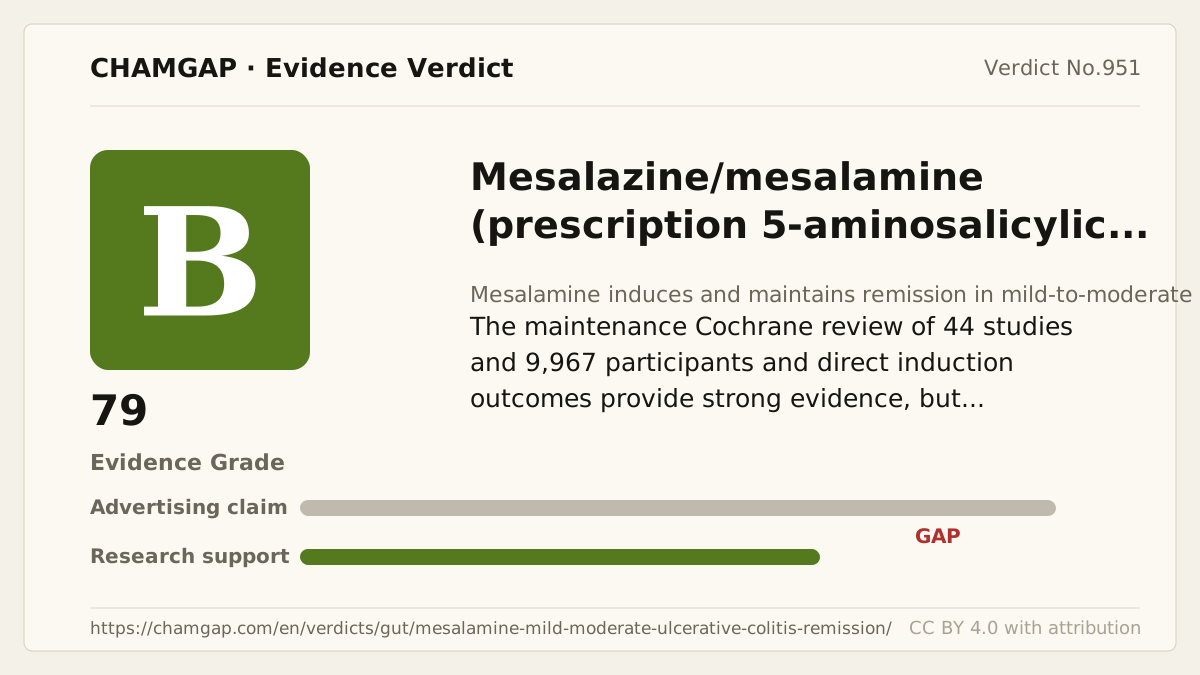
[Chamgap] Mesalamine x induction and maintenance of clinical remission in mild-to-moderate ulcerative colitis — Evidence Grade B·79. 3 cited sources checked. Source: https://chamgap.com/en/verdicts/gut/mesalamine-mild-moderate-ulcerative-colitis-remission/ · CC BY 4.0CC BY 4.0 — free to use with attribution; do not distort grades, numbers, or verdict meaning.
What this document does and does not do
Chamgap is an information source. It reports what research has and has not confirmed; it does not tell readers what to take or buy. That decision belongs to readers and, when needed, medical or legal professionals. This verdict reflects literature available up to the search date and may change as new research appears. Nothing here is medical advice.