
Low-FODMAP diet,
does it really help with Relief of abdominal pain, bloating, and global symptoms in irritable bowel syndrome?
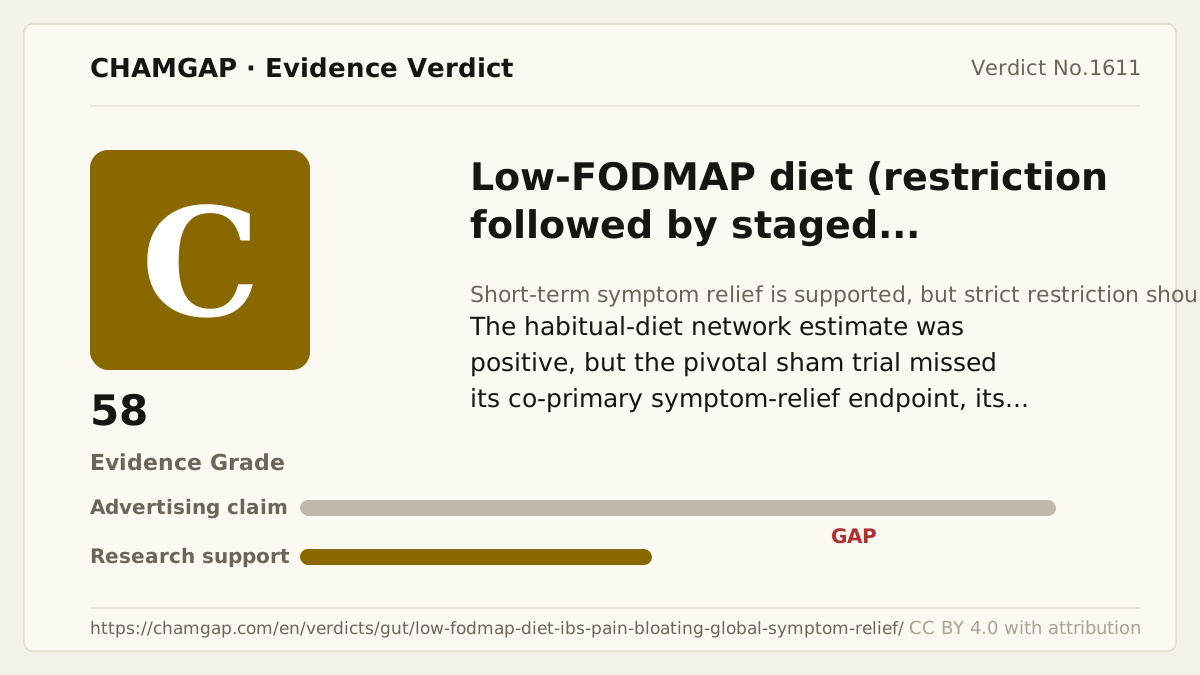
research showsA low-FODMAP diet is rated C for relieving global symptoms, abdominal pain, and bloating in irritable bowel syndrome. A network meta-analysis of 13 randomized trials and 944 participants was positive versus habitual diet, with a relative risk of failure to improve global symptoms of 0.67 (95% CI 0.48 to 0.91), but the result was comparator dependent. Crucially, in the 104-person double-blind sham-diet trial, the co-primary adequate-symptom-relief endpoint failed in the intention-to-treat analysis at 57% versus 38% (P=.051), while the secondary IBS Severity Scoring System endpoint was positive at 173 versus 224 (P=.001). Active-diet comparisons were mixed, and the long-term evidence was an 18-person observational follow-up rather than a randomized trial, yielding C with 58 points.
ads claimMarketing and online meal plans can turn a short restriction phase into permanent broad food avoidance and attribute every episode of pain, gas, or diarrhea to FODMAPs. The evidence-based approach uses brief restriction followed by challenges and personalization to tolerance, while alternative diagnoses such as celiac or inflammatory bowel disease must not be overlooked.
Useful facts when choosing a product
- A low-FODMAP diet is a structured dietary treatment rather than a medicine or single ingredient, temporarily reducing fermentable oligosaccharides, disaccharides, monosaccharides, and polyols.
- The standard approach has three stages: brief restriction, systematic reintroduction of FODMAP groups, and long-term personalization to individual tolerance; indefinite strict restriction is not the intended method.
- Excessive long-term restriction can reduce fiber, micronutrient intake, and dietary diversity and may alter the gut microbiota, so guidance from a gastrointestinal dietitian is preferable.
- People at risk of an eating disorder, with low body weight, pregnancy, ongoing growth, or complex disease should not self-restrict without first assessing nutrition and alternative diagnoses with clinicians.
Chamgap Semantic Classification Code
Candidate index · review held
D.low-fodmap-diet.dietary.abdominal-pain-bloating-and-global-symptoms-in-irritable-bowel-syndrome.relieve.MULTIDietary patterns and eating practices > Low-FODMAP diet > Dietary regimen > abdominal pain, bloating, and global symptoms in irritable bowel syndrome > Symptom-relief claim > Multiple: primary unresolved
An automated migration candidate, not an issued permanent code; exact claim scope remains under review. This machine-generated migration candidate helps retrieval but is not a permanent assignment. The original verdict ID and URL remain authoritative.
What the research actually shows
Black, Staudacher, and Ford 2022 was a peer-reviewed systematic review and network meta-analysis of 13 randomized trials with 944 participants. The relative risk of failure to improve global symptoms versus habitual diet was 0.67 (95% CI 0.48 to 0.91), but findings were comparator dependent; bloating favored low FODMAP over BDA/NICE advice, whereas pain versus habitual diet was not significant at 0.72 (0.47 to 1.10). In the 104-person randomized double-blind sham-diet trial by Staudacher and colleagues in 2017, the co-primary adequate-symptom-relief endpoint failed in the intention-to-treat analysis at 57% versus 38% (P=.051), while the secondary IBS Severity Scoring System endpoint was positive at 173 versus 224 (P=.001). The 12-month evidence was an observational follow-up of 18 participants after reintroduction and personalization, not a long-term randomized trial.
Why this is classified as C (58)
The 13-trial network meta-analysis found a positive relative risk of 0.67 versus habitual diet, but the estimate was comparator dependent. The pivotal sham trial missed its co-primary adequate-symptom-relief endpoint at 57% versus 38% (P=.051), while the positive IBS Severity Scoring System result of 173 versus 224 (P=.001) was secondary. Mixed active-diet comparisons and an 18-person observational long-term follow-up support the upper end of C under rule ①-ⓒ, yielding C with 58 points.
Counterpoint. Responders may obtain meaningful symptom relief without medication. Lack of response or an excessively narrow diet calls for stopping and reassessment, while responders should reintroduce tolerated foods to identify the least restrictive effective long-term diet.
Rejudgment record. Cross-check applied — Applied the upper end of C under rule ①-ⓒ because the positive habitual-diet network estimate was comparator dependent, the pivotal sham trial missed its co-primary symptom-relief endpoint and was positive only on the secondary IBS Severity Scoring System endpoint, active-diet results conflicted, and long-term evidence was an 18-person observational follow-up
Sub-claim grades by effect
This ingredient is marketed for several effects. A single overall grade blends strong and weak claims together, so each effect is graded separately here. The overall grade reflects the strongest disconfirming or core claim.
| Effect (sub-claim) | Grade | Basis |
|---|---|---|
| Relief of global IBS symptoms | C | The network relative risk versus habitual diet was positive at 0.67, but results were comparator dependent and the sham trial missed its co-primary symptom-relief endpoint. |
| Relief of abdominal pain and bloating | C | The secondary IBS Severity Scoring System endpoint was positive, but findings were inconsistent across habitual-diet, BDA/NICE, and sham comparators. |
| Consistent superiority to other structured active diets | C | Some network estimates favored low FODMAP, but individual active-comparator trials were mixed and difficult to mask, leaving superiority uncertain. |
Cross-check — AI research and Codex final gate
Evidence Table
| Study | Design | Sample | Funding | Endpoint | Result | Weight |
|---|---|---|---|---|---|---|
| Black CJ et al. 2022 | Systematic review and network meta-analysis of randomized trials | 13 randomized trials involving 944 participants with IBS | No specific funding; peer-reviewed evidence synthesis | Failure to improve global symptoms, abdominal pain, bloating, and bowel habit | The relative risk of global symptoms not improving versus habitual diet was 0.67 (95% CI 0.48 to 0.91); bloating favored low FODMAP over BDA/NICE advice, while some pain and bowel-habit comparisons were not significant. | Key synthesis of multiple trials with comparator-dependent inconsistency |
| Staudacher HM et al. 2017 | Randomized double-blind sham-diet and probiotic factorial original trial | 104 participants with IBS analyzed | United Kingdom academic and charitable support for the diet and probiotic trial | Four-week co-primary adequate symptom relief, secondary IBS Severity Scoring System, and fecal Bifidobacterium | The co-primary symptom-relief endpoint failed in the intention-to-treat analysis at 57% versus 38% (P=.051), while the secondary IBS Severity Scoring System endpoint was positive at 173 versus 224 (P=.001); Bifidobacterium abundance was lower with low FODMAP. | Direct sham-diet comparison with co-primary failure and a positive secondary endpoint |
| Staudacher HM et al. 2022 | Twelve-month observational follow-up of participants from a prior dietary trial | 18 participants completing restriction, reintroduction, and personalization | Academic follow-up published as a peer-reviewed original study | Twelve-month adequate relief, IBS Severity Scoring System, nutrient intake, and microbiota | Relief persisted and Bifidobacterium did not differ from baseline after personalization, but this was an 18-person observational follow-up rather than a long-term randomized trial. | Context for reintroduction and personalization safety |
Receipt — 3 References
All 3 cited sources were verified for existence at the original page (as of 2026-07-24).
Final verification and publication gate: Codex · Evidence date: 2026-07-24 · Corrections: none
Cite this verdict
[Chamgap] Low-FODMAP diet x relief of abdominal pain, bloating, and global symptoms in irritable bowel syndrome — Evidence Grade C·58. 3 cited sources checked. Source: https://chamgap.com/en/verdicts/gut/low-fodmap-diet-ibs-pain-bloating-global-symptom-relief/ · CC BY 4.0CC BY 4.0 — free to use with attribution; do not distort grades, numbers, or verdict meaning.
What this document does and does not do
Chamgap is an information source. It reports what research has and has not confirmed; it does not tell readers what to take or buy. That decision belongs to readers and, when needed, medical or legal professionals. This verdict reflects literature available up to the search date and may change as new research appears. Nothing here is medical advice.