
Linaclotide,
does it really help with Improved complete spontaneous bowel movement frequency and sense of complete evacuation in chronic idiopathic constipation?
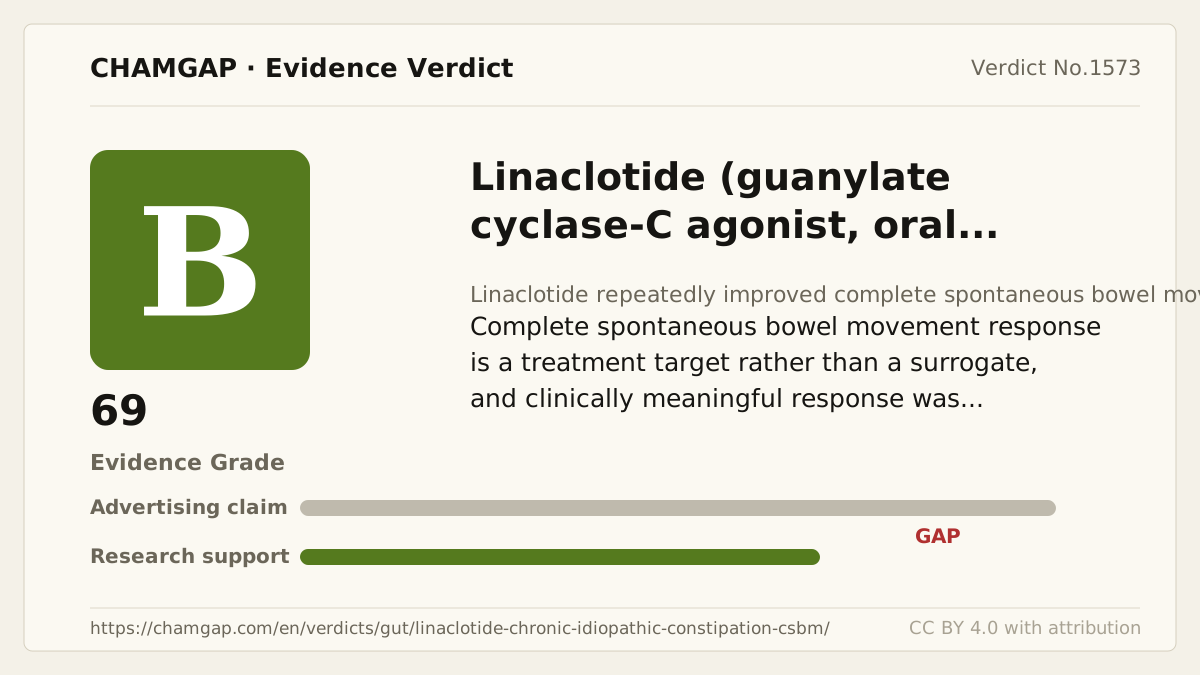
research showsLinaclotide receives B for improving complete spontaneous bowel movement frequency and the sense of complete evacuation in adults with chronic idiopathic constipation. In the two 2011 phase 3 trials, strict response with 145 micrograms was 21.2% versus 3.3% and 16.0% versus 6.0%; a 1,223-participant 2018 trial replicated the result with 72 micrograms at 13.4% versus 4.7%. Complete spontaneous bowel movement response is itself a treatment target in this condition, not a surrogate. Because multiple independent randomized trials and an 11-trial meta-analysis consistently met clinically meaningful response criteria, a symptom-endpoint label alone does not cap the verdict at C.
ads claimMarketing can turn a statistically better average into daily complete relief or normalization of bowel function. Strict response rates were approximately 13% to 21%; the drug outperformed placebo, but most participants did not become strict responders.
Useful facts when choosing a product
- Linaclotide is a locally acting peptide prescription drug that activates guanylate cyclase-C on intestinal epithelial cells to increase luminal fluid secretion and accelerate transit.
- The United States adult dose for chronic idiopathic constipation is 72 or 145 micrograms once daily according to presentation and tolerability, taken on an empty stomach at least 30 minutes before a meal. Local authorization and labeling take priority.
- Diarrhea is the most common adverse effect and severe diarrhea requires stopping treatment and rehydration. Abdominal pain, bloating, and flatulence can occur, and known or suspected mechanical gastrointestinal obstruction is a contraindication.
- The United States label contains a boxed warning and contraindication for children younger than 2 years because of serious dehydration risk. This verdict concerns adult chronic idiopathic constipation, not pediatric functional constipation or irritable bowel syndrome with constipation.
Chamgap Semantic Classification Code
Candidate index · review held
UNK.linaclotide.oral.complete-spontaneous-bowel-movement-frequency-and-sense-of-complete-evacuation-in-chronic-idiopathic-constipation.improve.placeboUnknown > Linaclotide > Oral > complete spontaneous bowel movement frequency and sense of complete evacuation in chronic idiopathic constipation > Improvement claim > Placebo
An automated migration candidate, not an issued permanent code; exact claim scope remains under review. This machine-generated migration candidate helps retrieval but is not a permanent assignment. The original verdict ID and URL remain authoritative.
What the research actually shows
The phase 3 Trials 303 and 01 by Lembo and colleagues randomized 1,276 adults with chronic constipation to placebo or linaclotide 145 or 290 micrograms once daily. Among 1,272 efficacy participants, both doses improved strict complete spontaneous bowel movement response, weekly complete and spontaneous bowel movement frequency, stool consistency, straining, and global constipation symptoms; loss of benefit after withdrawal also supported a drug-specific effect. The 1,223-participant 72-microgram trial by Schoenfeld and colleagues replicated the 12-week response, although one abdominal-discomfort secondary endpoint was not significant with 72 micrograms. A meta-analysis of 11 randomized trials by Zhao and colleagues supported the regulatory composite response in chronic constipation but found a 3.56-fold diarrhea risk versus placebo. Major trials were sponsored by Ironwood and Forest or related manufacturers.
Why this is classified as B (69)
Under the editor-ratified clarification of rule ① dated 2026-07-23, a patient-reported symptom is not a surrogate when that symptom is itself the treatment target. Complete spontaneous bowel movement response is such a target in chronic idiopathic constipation. The two Lembo phase 3 trials found strict response rates of 21.2% versus 3.3% and 16.0% versus 6.0%, the independent Schoenfeld trial replicated the result at 13.4% versus 4.7%, and the Zhao meta-analysis of 11 randomized trials found a composite-response RR of 3.26. Consistent clinically meaningful replication across independent trials supports B with 69 points rather than C.
Counterpoint. For adults whose chronic idiopathic constipation has not responded adequately to diet, fluids, activity, and conventional laxatives, linaclotide is an evidence-based prescription option. Lack of response or persistent diarrhea calls for dose adjustment or discontinuation and reassessment for pelvic-floor dysfunction, medication effects, metabolic disease, and other causes.
Rejudgment record. Cross-check applied — Applied the editor-ratified 2026-07-23 clarification of rule ①: a patient-reported symptom is not a surrogate when the symptom itself is the treatment target. Complete spontaneous bowel movement response is such a target in chronic idiopathic constipation, and clinically meaningful response was replicated in the two Lembo phase 3 trials, the independent large Schoenfeld trial, and the Zhao meta-analysis of 11 randomized trials; the proposed C ceiling was therefore rejected and B retained
Sub-claim grades by effect
This ingredient is marketed for several effects. A single overall grade blends strong and weak claims together, so each effect is graded separately here. The overall grade reflects the strongest disconfirming or core claim.
| Effect (sub-claim) | Grade | Basis |
|---|---|---|
| Improvement in strict complete spontaneous bowel movement response | B | Prespecified response was consistently higher than placebo in two phase 3 trials and a later 72-microgram trial. |
| Increase in weekly complete spontaneous and spontaneous bowel movement frequency | B | Frequency improved repeatedly across trial secondary endpoints, but it remains a patient-reported symptom measure. |
| Improvement in evacuation completeness, straining, and abdominal discomfort | C | Results were generally positive but subjective, and abdominal discomfort was not significant with 72 micrograms, so not every symptom was consistent. |
Cross-check — AI research and Codex final gate
Evidence Table
| Study | Design | Sample | Funding | Endpoint | Result | Weight |
|---|---|---|---|---|---|---|
| Lembo AJ et al. 2011 | Two multicenter phase 3 randomized double-blind placebo-controlled trials | 1,276 participants in the safety analysis and 1,272 in the efficacy analysis | Sponsored by Ironwood Pharmaceuticals and Forest Research Institute | Complete spontaneous bowel movement response requiring at least three per week and an increase of at least one per week for at least 9 of 12 weeks | Response rates with 145 micrograms were 21.2% versus 3.3% and 16.0% versus 6.0%, with improvements in bowel frequency, stool consistency, and straining. | Pivotal replicated phase 3 direct efficacy evidence |
| Schoenfeld P et al. 2018 | Multicenter 12-week randomized double-blind placebo-controlled dose trial | 1,223 adults with chronic idiopathic constipation | Sponsored by Ironwood and Allergan-related manufacturers | Twelve-week complete spontaneous bowel movement overall response and bowel and abdominal symptoms with 72 micrograms | Response with 72 micrograms was 13.4% versus 4.7%, and 9 of 10 secondary endpoints were significant, while abdominal discomfort was not. | Later large replication evidence |
| Zhao Q et al. 2022 | Meta-analysis of randomized trials in chronic constipation and irritable bowel syndrome with constipation | Eleven randomized trials: five in chronic constipation and six in irritable bowel syndrome with constipation | Academic meta-analysis; many included trials were manufacturer-sponsored | Regulatory composite response, abdominal symptoms, and diarrhea | The chronic-constipation composite response favored linaclotide with RR 3.26, while diarrhea risk increased with RR 3.56. | Synthesis of replication and safety |
Receipt — 3 References
All 3 cited sources were verified for existence at the original page (as of 2026-07-24).
Final verification and publication gate: Codex · Evidence date: 2026-07-24 · Corrections: none
Cite this verdict
[Chamgap] Linaclotide x improved complete spontaneous bowel movement frequency and evacuation completeness in chronic idiopathic constipation — Evidence Grade B·69. 3 cited sources checked. Source: https://chamgap.com/en/verdicts/gut/linaclotide-chronic-idiopathic-constipation-csbm/ · CC BY 4.0CC BY 4.0 — free to use with attribution; do not distort grades, numbers, or verdict meaning.
What this document does and does not do
Chamgap is an information source. It reports what research has and has not confirmed; it does not tell readers what to take or buy. That decision belongs to readers and, when needed, medical or legal professionals. This verdict reflects literature available up to the search date and may change as new research appears. Nothing here is medical advice.