
LGG,
does it really help with Reduced severity and diarrhea duration in pediatric acute infectious gastroenteritis?
research showsLGG is rated F for this indication. The large double-blind PECARN trial directly tested LGG in 971 children, but moderate-to-severe gastroenteritis occurred in 11.8% versus 12.6%, RR 0.96 (95% CI 0.68 to 1.35; P=.83). Median diarrhea duration was also unchanged at 49.7 versus 50.9 hours (P=.26). A separate Canadian trial of 886 children tested L. rhamnosus R0011 plus L. helveticus R0052, not LGG, and was also null. Ingredient specificity leaves PECARN as the sole direct LGG trial, but its null result and the AGA recommendation against use still give F with 12 points.
ads claimMarketing equates replenishing beneficial bacteria with eliminating the diarrheal pathogen, speeding intestinal recovery, or preventing dehydration. Biological plausibility and gut delivery do not establish shorter illness in children, and a probiotic cannot replace fluid and electrolyte replacement.
Useful facts when choosing a product
- LGG is the specific strain also labeled ATCC 53103, and results from other L. rhamnosus strains or multistrain products should not automatically be treated as LGG evidence.
- Oral rehydration solution, continued age-appropriate feeding, and breastfeeding are the core treatments for pediatric acute gastroenteritis, and probiotics do not replace them.
- Bloody stool, severe abdominal pain, persistent vomiting, reduced urination, lethargy, reduced tears or saliva, and high fever in an infant require prompt medical assessment rather than reliance on a supplement.
- LGG is generally well tolerated in healthy children, but rare bloodstream infection is a concern in severe immunosuppression, central venous catheter use, critical illness, or impaired intestinal barriers.
Chamgap Semantic Classification Code
Candidate index · review held
S.lacticaseibacillus-rhamnosus-gg.oral.severity-and-diarrhea-duration-in-pediatric-acute-infectious-gastroenteritis.reduce.placeboSupplements and nutraceuticals > Lacticaseibacillus rhamnosus GG > Oral > severity and diarrhea duration in pediatric acute infectious gastroenteritis > Reduction claim > Placebo
An automated migration candidate, not an issued permanent code; exact claim scope remains under review. This machine-generated migration candidate helps retrieval but is not a permanent assignment. The original verdict ID and URL remain authoritative.
What the research actually shows
PECARN randomized 971 children aged 3 months to 4 years presenting to emergency departments to LGG at 10^10 CFU twice daily for five days or placebo. Follow-up was completed by 943 participants, and there was no benefit for 14-day modified Vesikari severity, diarrhea or vomiting duration, health-care use, absence, or household transmission. The parallel Canadian PERC PROGUT study randomized 886 children to L. rhamnosus R0011 plus L. helveticus R0052, not LGG, or placebo and also found null primary and secondary outcomes; it is not a second direct LGG trial. The 2020 AGA guideline used this modern evidence to suggest against probiotics in pediatric acute infectious gastroenteritis. Ingredient specificity does not rescue the core claim because PECARN directly studied LGG.
Why this is classified as F (12)
PECARN is the sole direct LGG trial and found a null severity RR of 0.96 and unchanged diarrhea duration of 49.7 versus 50.9 hours. The separate 886-participant trial tested R0011 plus R0052 rather than LGG and serves only as concordant class evidence. Accounting for ingredient specificity raises the score slightly, but the direct PECARN null result and AGA recommendation against use still give F with 12 points.
Counterpoint. Effects could differ in selected regions, pathogens, nutritional settings, or with another high-dose strain. Current evidence nevertheless does not support routine LGG for typical pediatric acute infectious gastroenteritis, and rehydration remains the priority.
Rejudgment record. Cross-check applied — Applied F because PECARN is the sole direct LGG trial and found no benefit for severity or diarrhea duration in 971 participants. The separate 886-participant Canadian trial tested R0011 plus R0052 rather than LGG and is counted only as concordant class evidence, while AGA guidance suggests against probiotics for pediatric acute infectious gastroenteritis
Sub-claim grades by effect
This ingredient is marketed for several effects. A single overall grade blends strong and weak claims together, so each effect is graded separately here. The overall grade reflects the strongest disconfirming or core claim.
| Effect (sub-claim) | Grade | Basis |
|---|---|---|
| Reduction in pediatric acute gastroenteritis severity | F | PECARN found moderate-to-severe modified Vesikari outcomes in 11.8% versus 12.6%, a null RR of 0.96. |
| Shortening of diarrhea duration in pediatric acute gastroenteritis | F | PECARN medians were 49.7 versus 50.9 hours, with no significant shortening. |
| Faster overall recovery from pediatric acute gastroenteritis | F | There was no benefit for vomiting duration, health-care use, absence, or household transmission, and the AGA advises against use. |
Cross-check — AI research and Codex final gate
Evidence Table
| Study | Design | Sample | Funding | Endpoint | Result | Weight |
|---|---|---|---|---|---|---|
| Schnadower D et al., for the PECARN Probiotics Study Group. 2018 PECARN | Multicenter randomized double-blind placebo-controlled trial | 971 children; 943 completed follow-up | Public support from the United States NIH and HRSA; study product supplied by iHealth | Fourteen-day modified Vesikari severity, diarrhea and vomiting duration, health-care use, absence, and transmission | Moderate-to-severe gastroenteritis was 11.8% versus 12.6%, RR 0.96, and diarrhea lasted 49.7 versus 50.9 hours; both results were null. | Key large direct confirmatory null trial |
| Freedman SB et al. 2018 PERC PROGUT | Multicenter randomized double-blind placebo-controlled trial at six Canadian emergency departments | 886 children aged 3 to 48 months | Support including the Alberta Children's Hospital Foundation; study product supplied | Moderate-to-severe gastroenteritis over 14 days and diarrhea and vomiting duration | The L. rhamnosus R0011 and L. helveticus R0052 combination did not improve severity or symptom duration over placebo. | Independent large concordant null trial |
| Su GL et al. 2020 AGA guideline | Evidence-based clinical practice guideline | Evidence base for probiotics in pediatric acute infectious gastroenteritis | American Gastroenterological Association | Clinical efficacy in pediatric acute infectious gastroenteritis | Suggested against the use of probiotics in children with acute infectious gastroenteritis. | Guideline recommendation against use |
Receipt — 3 References
All 3 cited sources were verified for existence at the original page (as of 2026-07-24).
Final verification and publication gate: Codex · Evidence date: 2026-07-24 · Corrections: none
Cite this verdict
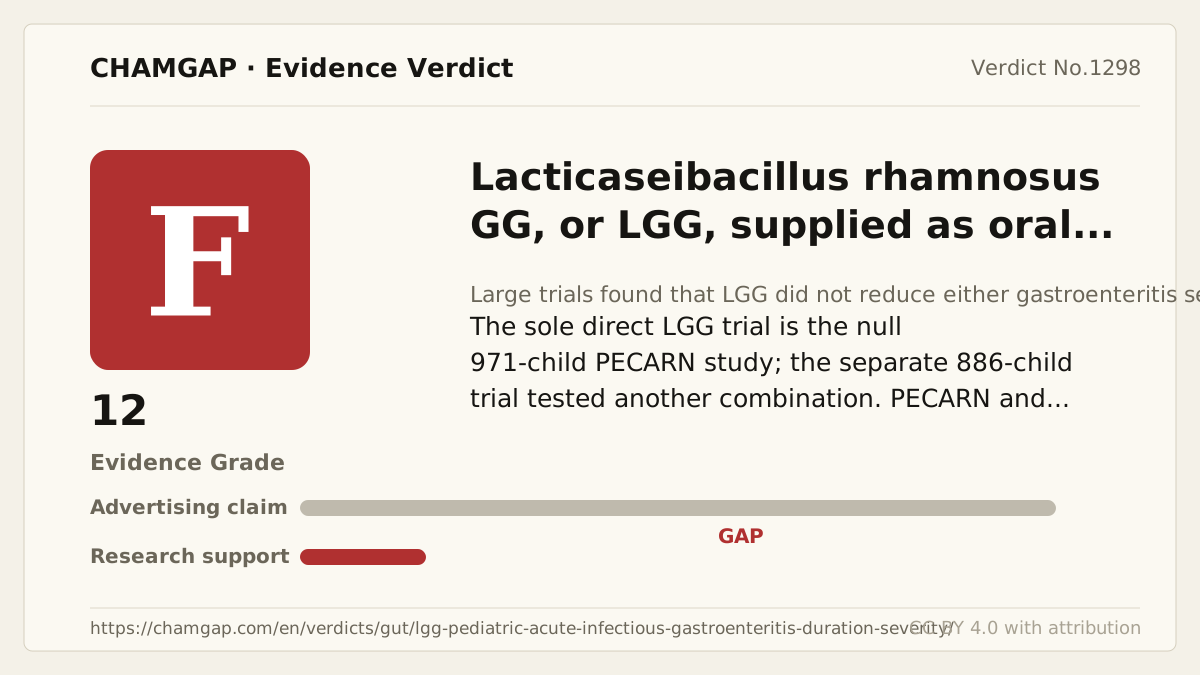
[Chamgap] LGG x reduced severity and diarrhea duration in pediatric acute infectious gastroenteritis — Evidence Grade F·12. 3 cited sources checked. Source: https://chamgap.com/en/verdicts/gut/lgg-pediatric-acute-infectious-gastroenteritis-duration-severity/ · CC BY 4.0CC BY 4.0 — free to use with attribution; do not distort grades, numbers, or verdict meaning.
What this document does and does not do
Chamgap is an information source. It reports what research has and has not confirmed; it does not tell readers what to take or buy. That decision belongs to readers and, when needed, medical or legal professionals. This verdict reflects literature available up to the search date and may change as new research appears. Nothing here is medical advice.