
Lactulose,
does it really help with Improvement of bowel-movement frequency and stool consistency in chronic constipation?
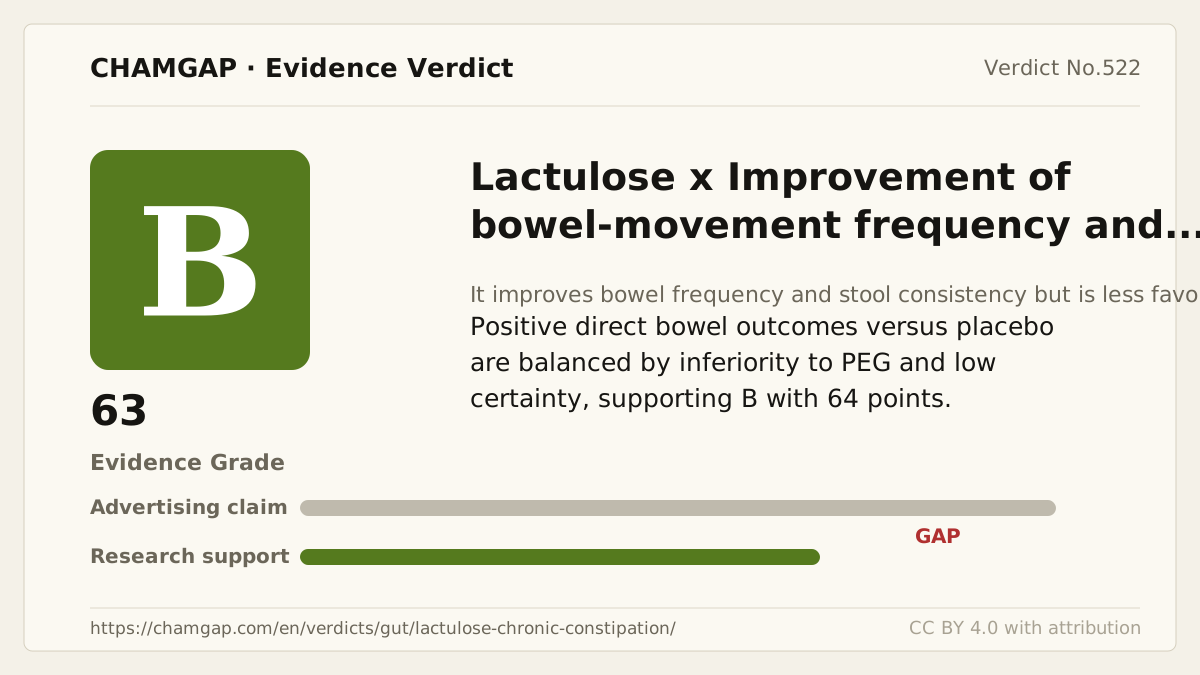
research showsLactulose is an osmotic laxative that draws water into the colon, and placebo-controlled trials show direct improvement in spontaneous bowel-movement frequency and stool consistency, supporting B. The latest AGA-ACG recommendation is conditional with very low certainty, and a meta-analysis of ten randomized comparisons found PEG superior for stool frequency, stool form, and abdominal pain. Gas and bloating are common, so claims of equivalence or superiority to PEG are not supported.
ads claimMarketing and medication descriptions may call it a gentle natural sugar or a perfect daily solution. Fermentation commonly causes gas, bloating, and abdominal pain, and both efficacy and tolerability can be less favorable than with PEG.
Useful facts when choosing a product
- Korean products such as Dulackhan-Easy syrup are sold as nonprescription lactulose 0.67 g/mL solutions in 15-mL sachets and bottles.
- A 15-mL sachet contains about 10.05 g lactulose. A common adult starting dose on overseas constipation labels is 15 to 30 mL/day, but the age-specific Korean label takes priority.
- The effect may take 24 to 48 hours rather than occurring immediately, and repeated unsupervised dose escalation can cause diarrhea and electrolyte disturbance.
- Gas, bloating, abdominal pain, and diarrhea are common. Suspected bowel obstruction, galactosemia, and relevant sugar intolerance require checking contraindications and product sugars.
Chamgap Semantic Classification Code
Candidate index · review held
UNK.lactulose.UNK.bowel-movement-frequency-and-stool-consistency-in-chronic-constipation.improve.placeboUnknown > Lactulose > Unknown > bowel-movement frequency and stool consistency in chronic constipation > Improvement claim > Placebo
An automated migration candidate, not an issued permanent code; exact claim scope remains under review. This machine-generated migration candidate helps retrieval but is not a permanent assignment. The original verdict ID and URL remain authoritative.
What the research actually shows
The 2019 Kasugai trial randomized 250 Japanese adults with chronic constipation to placebo or lactulose at 13, 26, or 39 g/day. The 26- and 39-g doses significantly increased spontaneous bowel movements at week one and improved stool consistency and severity, but treatment lasted two weeks and the developer funded the study and employed several authors. The 2010 Cochrane review by Lee-Robichaud pooled ten randomized comparisons and concluded that PEG was better for weekly stool frequency, stool form, relief of abdominal pain, and need for additional products. The 2023 AGA-ACG guideline issued a conditional suggestion for lactulose with very low certainty.
Why this is classified as B (63)
Placebo-controlled trials improve direct outcomes of bowel frequency and stool consistency, and guidelines retain lactulose as an option, supporting B. Very low guideline certainty, inferiority to PEG, and a pivotal modern trial that was developer-linked and only two weeks long limit the score to B with 63 points.
Counterpoint. Lactulose can remain useful when PEG is not tolerated or cannot be used. This verdict distinguishes efficacy versus placebo from comparative efficacy versus PEG.
Rejudgment record. New verdict — Positive direct bowel-frequency and stool-consistency outcomes versus placebo, with A excluded because of inferiority to PEG, very low guideline certainty, developer concentration, and short trials
Sub-claim grades by effect
This ingredient is marketed for several effects. A single overall grade blends strong and weak claims together, so each effect is graded separately here. The overall grade reflects the strongest disconfirming or core claim.
| Effect (sub-claim) | Grade | Basis |
|---|---|---|
| Improvement in bowel frequency and stool consistency versus placebo | B | A modern 250-person trial and older direct trials improved spontaneous bowel movements and stool consistency, while long-term confirmation remains limited. |
| Constipation relief equivalent or superior to PEG | D | A Cochrane review of ten randomized head-to-head comparisons favored PEG for stool frequency, stool form, and related outcomes. |
Cross-check — AI research and Codex final gate
Evidence Table
| Study | Design | Sample | Funding | Endpoint | Result | Weight |
|---|---|---|---|---|---|---|
| Kasugai K et al. 2019 | Multicenter randomized double-blind placebo-controlled dose-finding trial | n=250 | Funded by Sanwa Kagaku Kenkyusho; three employee authors | Spontaneous bowel movements, stool consistency, and constipation severity at one and two weeks | Doses of 26 and 39 g/day significantly increased spontaneous bowel movements versus placebo; diarrhea increased at 39 g/day. | Key; short term; developer-linked |
| Lee-Robichaud H et al. 2010 | Cochrane systematic review and meta-analysis | 10 | Cochrane review | Weekly stool frequency, stool form, abdominal pain, and additional laxative use | Across adult and pediatric comparisons, PEG was generally superior to lactulose. | Key comparative evidence |
| Chang L et al. 2023 | AGA-ACG clinical practice guideline and systematic evidence review | Professional-society guideline | Spontaneous bowel movements, global symptoms, and adverse events | Conditionally suggested lactulose after failure or intolerance of other nonprescription therapies, with very low certainty. | Key context |
Receipt — 4 References
All 4 cited sources were verified for existence at the original page (as of 2026-07-18).
Final verification and publication gate: Codex · Evidence date: 2026-07-18 · Corrections: none
Cite this verdict
[Chamgap] Lactulose x chronic constipation — Evidence Grade B·63. 4 cited sources checked. Source: https://chamgap.com/en/verdicts/gut/lactulose-chronic-constipation/ · CC BY 4.0CC BY 4.0 — free to use with attribution; do not distort grades, numbers, or verdict meaning.
What this document does and does not do
Chamgap is an information source. It reports what research has and has not confirmed; it does not tell readers what to take or buy. That decision belongs to readers and, when needed, medical or legal professionals. This verdict reflects literature available up to the search date and may change as new research appears. Nothing here is medical advice.