
Lactase enzyme,
does it really help with Prevention of bloating and diarrhea from lactose intolerance?
research showsDirect lactose hydrolysis by lactase and reduction of breath hydrogen are grade-A evidence. Clinical relief of bloating and diarrhea, however, rests on crossover trials with only 10 to 47 participants and substantial variation in formulation and FCC activity, so the combined rating is B.
ads claimMarketing can expand the claim to unrestricted dairy intake, better gut health, or relief of milk allergy. The supported scope is digestion of ingested lactose and reduction of the resulting short-term gastrointestinal symptoms in lactose intolerance.
Useful facts when choosing a product
- Products sold in Korea include tablets and capsules labeled around 3,000 to 9,000 FCC per serving; activity units and serving size should be checked.
- The EFSA-evaluated claim condition is at least 4,500 FCC with each lactose-containing meal, taken with the first bite.
- Response varies with meal lactose load, residual personal lactase activity, intestinal fermentation, and product enzyme activity.
- Lactase hydrolyzes lactose; it does not prevent or treat allergy to milk proteins.
Chamgap Semantic Classification Code
Candidate index · review held
UNK.lactase-enzyme.UNK.bloating-and-diarrhea-from-lactose-intolerance.prevent.MULTIUnknown > Lactase enzyme > Unknown > bloating and diarrhea from lactose intolerance > Occurrence-prevention claim > Multiple: primary unresolved
An automated migration candidate, not an issued permanent code; exact claim scope remains under review. This machine-generated migration candidate helps retrieval but is not a permanent assignment. The original verdict ID and URL remain authoritative.
What the research actually shows
Medow 1990 conducted a double-blind crossover trial in 18 children with lactose malabsorption and reported major reductions in breath hydrogen and abdominal pain, bloating, diarrhea, and related symptoms with lactase tablets. Montalto 2005 administered 3,000 or 6,000 units with milk to 30 adults and found dose-responsive improvement in breath hydrogen and clinical scores. Baijal 2020 reported that 4,500 FCC reduced cumulative breath hydrogen by about 55% and improved symptom scores in a randomized double-blind crossover trial of 47 participants. Ramirez 1994 documented differences among commercial preparations in a 10-person trial. This evidence applies only to digestion of the tested lactose load and symptom relief in lactose intolerance; it cannot be attributed to milk-protein allergy, inflammatory bowel disease, or general gut health.
Why this is classified as B (78)
Lactose hydrolysis and breath-hydrogen reduction are A because of the direct mechanism and repeated findings, whereas relief of bloating and diarrhea is B because trials enrolled only 10 to 47 participants and preparations varied. The clinical headline therefore receives B with 78 points.
Counterpoint. The scope is digestion of the ingested lactose load and symptom relief in lactose intolerance. It cannot be attributed to milk-protein allergy, inflammatory bowel disease, or general gut health; FCC activity, lactose load, and dosing time matter more than total milligrams.
Rejudgment record. Reassessment (cross-check reflected) — Separated grade-A lactose hydrolysis from grade-B symptom relief based on small crossover trials and reflected formulation and FCC-activity variation
Sub-claim grades by effect
This ingredient is marketed for several effects. A single overall grade blends strong and weak claims together, so each effect is graded separately here. The overall grade reflects the strongest disconfirming or core claim.
| Effect (sub-claim) | Grade | Basis |
|---|---|---|
| Lactose hydrolysis and reduced breath hydrogen (mechanism) | A | Direct enzyme mechanism and repeated reductions in breath hydrogen |
| Relief of bloating and diarrhea | B | Small crossover trials and formulation variation |
Cross-check — AI research and Codex final gate
Evidence Table
| Study | Design | Sample | Funding | Endpoint | Result | Weight |
|---|---|---|---|---|---|---|
| Medow MS et al. 1990 | Randomized double-blind placebo-controlled crossover trial | 18 | Unknown | Breath hydrogen, pain, bloating, gas, and diarrhea | Lactase tablets markedly reduced breath hydrogen and multiple symptoms. | Key |
| Montalto M et al. 2005 | Randomized double-blind crossover trial | 30 | Unknown | Breath hydrogen and clinical symptom score | Dose-responsive improvement with 3,000 and 6,000 units added to milk. | Key |
| Baijal R, Tandon RK. 2020 | Randomized double-blind placebo-controlled crossover trial | 47 | Unknown | Cumulative breath hydrogen and symptom score | About a 55% reduction in cumulative breath hydrogen and symptom improvement with 4,500 FCC. | Key |
| Ramirez FC et al. 1994 | Crossover comparison of commercial preparations | 10 | Unknown | Breath hydrogen and symptoms | Commercial lactase preparations differed in efficacy, documenting product variation. | Product variation |
Receipt — 5 References
All 5 cited sources were verified for existence at the original page (as of 2026-07-16).
Final verification and publication gate: Codex · Evidence date: 2026-07-16 · Corrections: none
Cite this verdict
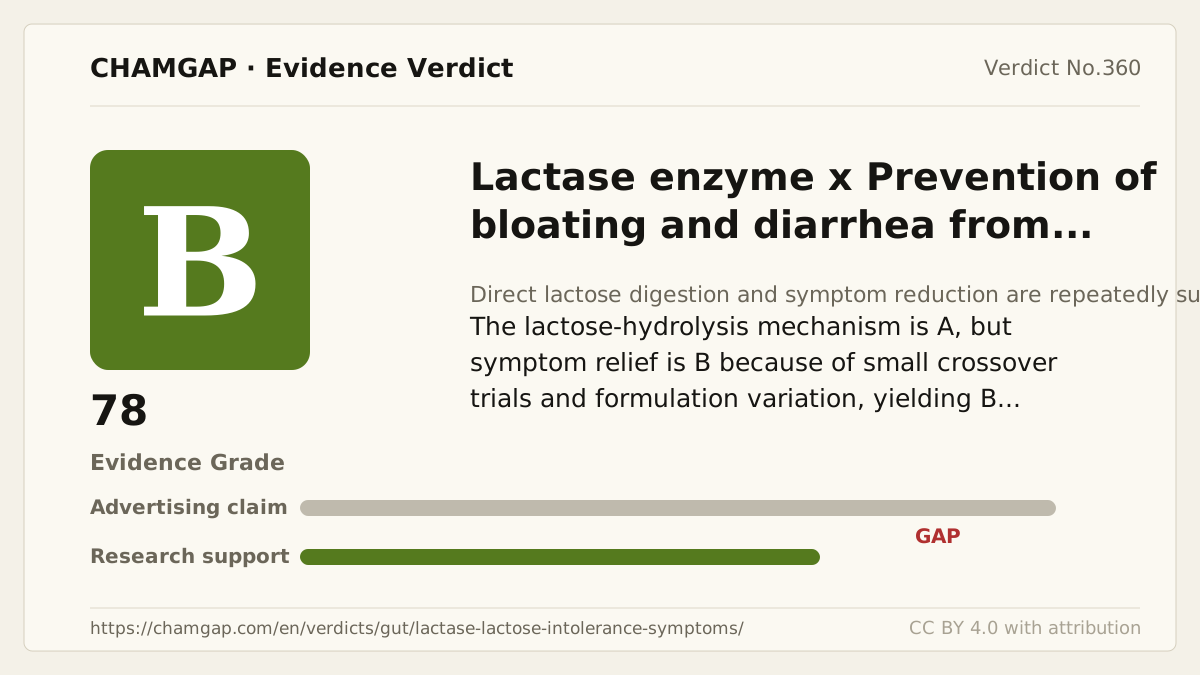
[Chamgap] Lactase enzyme x prevention of lactose-intolerance symptoms — Evidence Grade B·78. 5 cited sources checked. Source: https://chamgap.com/en/verdicts/gut/lactase-lactose-intolerance-symptoms/ · CC BY 4.0CC BY 4.0 — free to use with attribution; do not distort grades, numbers, or verdict meaning.
What this document does and does not do
Chamgap is an information source. It reports what research has and has not confirmed; it does not tell readers what to take or buy. That decision belongs to readers and, when needed, medical or legal professionals. This verdict reflects literature available up to the search date and may change as new research appears. Nothing here is medical advice.