
Macrogol 4000,
does it really help with Improvement in bowel-movement frequency and stool form in chronic functional constipation?
research showsMacrogol increases weekly bowel movements and improves hard stools and difficult defecation in chronic functional or idiopathic constipation. Placebo-controlled trials and meta-analyses are consistent, and adult guidelines strongly recommend PEG. The grade is B, however, because the evidence often combines PEG 3350 with PEG 4000 and formulations with or without electrolytes, while trials specific to PEG 4000 are older or limited in size.
ads claimClaims of removing intestinal toxins, clearing old retained waste, or treating IBS abdominal pain exceed the evidence. The established role is symptomatic treatment with an osmotic laxative that softens stool and increases bowel frequency.
Useful facts when choosing a product
- In South Korea, over-the-counter products include Forlax powder with 10 g per sachet and Crirol solution containing 10 g of PEG 4000 per 20 mL.
- Korean authorization materials list 10-20 g per day for adults and children aged eight years or older, dissolved or diluted as directed by the product.
- Trials and guidelines sometimes combine PEG 3350 and PEG 4000 and formulations with or without electrolytes, so molecular weight and formulation should be checked.
- Common adverse effects include bloating, abdominal pain, and diarrhea; suspected bowel obstruction is not a situation for unsupervised use.
Chamgap Semantic Classification Code
Candidate index · review held
UNK.macrogol-4000.UNK.bowel-movement-frequency-and-stool-form-in-chronic-functional-constipation.improve.placeboUnknown > Macrogol 4000 > Unknown > bowel-movement frequency and stool form in chronic functional constipation > Improvement claim > Placebo
An automated migration candidate, not an issued permanent code; exact claim scope remains under review. This machine-generated migration candidate helps retrieval but is not a permanent assignment. The original verdict ID and URL remain authoritative.
What the research actually shows
Reviews of adults with chronic idiopathic constipation found that macrogols improved bowel frequency versus placebo over one to twenty weeks. An older PEG 4000 trial reported an asymptomatic rate of 70% versus 20% at twenty weeks, but differential completion and possible non-intention-to-treat analysis could favor treatment. Meta-analysis of PEG as a class found roughly two additional bowel movements per week versus placebo, and the 2023 AGA-ACG guideline strongly recommended PEG for adult chronic idiopathic constipation. Pediatric trials also found that PEG 4000 improved bowel frequency and Bristol stool form versus lactulose, but pediatric and adult doses and comparator evidence should remain separate.
Why this is classified as B (78)
Bowel frequency and stool form are direct clinical endpoints, and placebo-controlled trials, meta-analyses, and a strong guideline recommendation point in the same direction. Because evidence specific to PEG 4000 is mixed with class evidence and some pivotal trials are old and vulnerable to attrition bias, the grade is upper-range B with 78 points.
Counterpoint. Several additional recent independent large trials dedicated to PEG 4000, with clear reproducibility across formulations, could justify considering A. Confidence is already high for simple bowel improvement, but the verdict does not extend to IBS-C pain.
Rejudgment record. New verdict — Repeated positive direct bowel endpoints and a strong guideline recommendation, limited to B because of mixed PEG molecular weights and formulations and older trials
Sub-claim grades by effect
This ingredient is marketed for several effects. A single overall grade blends strong and weak claims together, so each effect is graded separately here. The overall grade reflects the strongest disconfirming or core claim.
| Effect (sub-claim) | Grade | Basis |
|---|---|---|
| Improvement in bowel frequency and stool form in adults with chronic functional or idiopathic constipation | B | Direct clinical endpoints improve repeatedly and guidelines strongly recommend PEG, but PEG 3350, PEG 4000, and formulations are mixed. |
| Improvement in bowel frequency and stool form in pediatric functional constipation | B | PEG 4000 comparative trials and pediatric systematic reviews are supportive, but evidence centers on age-specific dosing and active comparators. |
| Improvement in abdominal pain in IBS-C | D | Evidence for extending bowel improvement to IBS-specific abdominal pain is weak, and PEG has not been established as a pain treatment. |
Cross-check — AI research and Codex final gate
Evidence Table
| Study | Design | Sample | Funding | Endpoint | Result | Weight |
|---|---|---|---|---|---|---|
| Lyseng-Williamson KA 2018 | Clinical trial evidence profile | Publisher drug profile | Bowel frequency, stool form, and difficult defecation | PEG 4000 was more effective than placebo and generally improved bowel frequency and stool form more than lactulose. | Key | |
| Chang L et al. 2023 | AGA-ACG clinical practice guideline with systematic evidence review | Professional society guideline | Spontaneous bowel movements, bowel frequency, and adverse events | PEG was strongly recommended over no PEG for adult chronic idiopathic constipation with moderate certainty of evidence. | Key | |
| Clinical Evidence review 2007 | Systematic evidence summary | 3 | Unknown | Bowel frequency and asymptomatic status | Improvement versus placebo was found over one to twenty weeks, while possible attrition bias in an older PEG 4000 trial was noted. | Supportive |
Receipt — 3 References
All 3 cited sources were verified for existence at the original page (as of 2026-07-18).
Final verification and publication gate: Codex · Evidence date: 2026-07-18 · Corrections: none
Cite this verdict
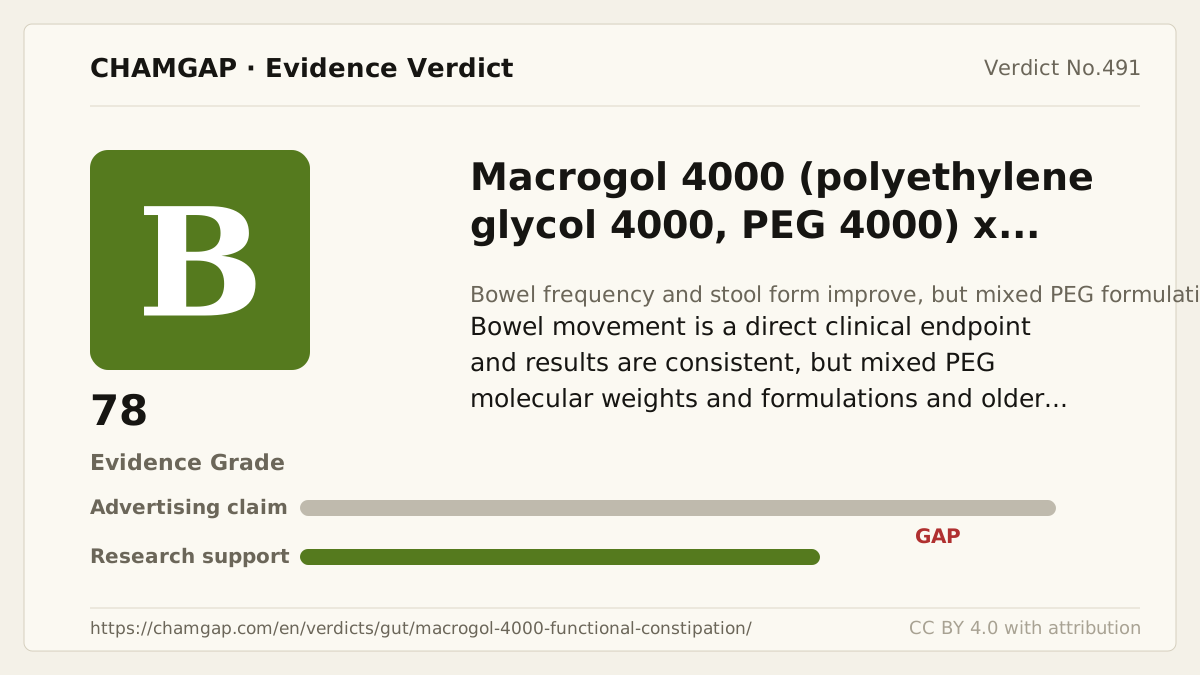
[Chamgap] Macrogol 4000 x bowel frequency and stool form in chronic functional constipation — Evidence Grade B·78. 3 cited sources checked. Source: https://chamgap.com/en/verdicts/gut/macrogol-4000-functional-constipation/ · CC BY 4.0CC BY 4.0 — free to use with attribution; do not distort grades, numbers, or verdict meaning.
What this document does and does not do
Chamgap is an information source. It reports what research has and has not confirmed; it does not tell readers what to take or buy. That decision belongs to readers and, when needed, medical or legal professionals. This verdict reflects literature available up to the search date and may change as new research appears. Nothing here is medical advice.