
Intravenous pantoprazole,
does it really help with Reduced clinically important upper gastrointestinal bleeding in invasively ventilated ICU patients?
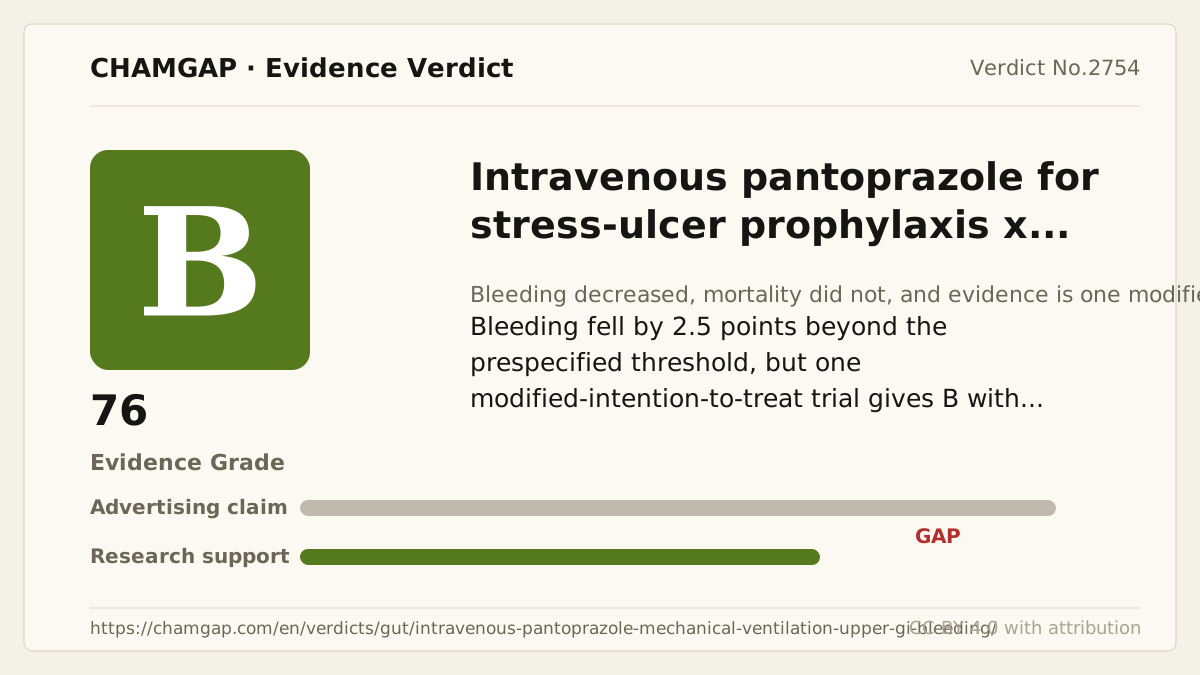
research showsThe grade is B. In REVISE's 4,762-participant efficacy analysis, clinically important upper gastrointestinal bleeding occurred in 25/2,385 (1.0%) with pantoprazole versus 84/2,377 (3.5%) with placebo, HR 0.30 (95% CI 0.19–0.47). The 2.5-point absolute reduction, approximate NNT 40, exceeded the prespecified 1.5-point smallest clinically important reduction. Evidence remains one confirmatory trial using a modified analysis that did not include everyone allocated, giving B with 76 points.
ads claimA hazard ratio of 0.30 does not mean bleeding disappeared in 70% of patients. Absolute incidence fell from 3.5% to 1.0%, a 2.5-point difference and an approximate NNT of 40. Mortality was not reduced.
Useful facts when choosing a product
- Intravenous pantoprazole 40 mg was given once daily during mechanical ventilation.
- Absolute bleeding reduction was 2.5 points, with an approximate NNT of 40.
- Peer-reviewed reports state no commercial or private support, while fulfillment of an earlier Takeda supply plan could not be confirmed.
Chamgap Semantic Classification Code
Candidate index · review held
M.pantoprazole.intravenous.clinically-important-upper-gastrointestinal-bleeding-in-invasively-ventilated-icu-patients.reduce.placeboMedicinal interventions > pantoprazole > Intravenous > clinically important upper gastrointestinal bleeding in invasively ventilated ICU patients > Reduction claim > Placebo
An automated migration candidate, not an issued permanent code; exact claim scope remains under review. This machine-generated migration candidate helps retrieval but is not a permanent assignment. The original verdict ID and URL remain authoritative.
What the research actually shows
REVISE used concealed 1:1 allocation through a central website in 68 ICUs across eight countries and masked patients, families, clinicians, researchers, adjudicators, and analysts. Of 4,900 people entering allocation, 4,821 formed the modified intention-to-treat cohort; 4,762 had primary efficacy data and 4,769 had 90-day mortality data. This incomplete all-randomized analysis is counted as one avoidable limitation. Pantoprazole was described as 'locally sourced,' and color stability was tested for formulations from five companies. A 2017–18 ANZICS planning report said Takeda Pharmaceuticals Australia was expected to supply active drug in Australia and New Zealand, but actual fulfillment was not confirmed in the final protocol or report. If fulfilled, it would be provision of the tested product, not an assessment tool. The peer-reviewed funding statement says, "This trial received no support from the commercial or private sector." Support included CIHR, Australia's NHMRC, and the UK NIHR Clinical Research Network. Enrollment continued after the planned interim analysis and reached target.
Why this is classified as B (76)
A large publicly funded masked trial exceeded the prespecified clinical bleeding threshold, but one confirmatory trial and incomplete all-randomized analysis give B with 76 points.
Counterpoint. Mortality, ventilator-associated pneumonia, and new renal-replacement therapy did not differ significantly, while the numerical C. difficile increase remained uncertain.
Rejudgment record. Cross-check applied — Balances the 2.5-point bleeding reduction in a 4,762-participant publicly funded masked trial against single-trial and modified-analysis limitations
| Endpoint | H | Hard endpoint - actual events such as death |
| Replication | R1 | Single confirmatory trial |
| Independence | I2 | Decisive evidence is publicly or non-profit funded |
| Effect size | E+ | Meets the clinically important threshold |
Stored derived and displayed grades match; this is not a current recalculation or validity check (B).
Sub-claim grades by effect
This ingredient is marketed for several effects. A single overall grade blends strong and weak claims together, so each effect is graded separately here. The overall grade reflects the strongest disconfirming or core claim.
| Effect (sub-claim) | Grade | Basis |
|---|---|---|
| Reduced clinically important upper gastrointestinal bleeding | B | The absolute reduction was 2.5 points, exceeding the prespecified 1.5-point threshold. |
| Reduced 90-day mortality | D | The mortality result was null, HR 0.94 (95% CI 0.85–1.04). |
Cross-check — AI research and Codex final gate
Evidence Table
| Study | Design | Sample | Funding | Endpoint | Result | Weight |
|---|---|---|---|---|---|---|
| Cook D et al. 2024 REVISE | Centrally concealed double-blind randomized placebo-controlled trial in 68 ICUs across eight countries | 4,900 entered allocation; modified intention-to-treat cohort 4,821 (2,417/2,404); primary efficacy data for 4,762 (2,385/2,377) | Public and nonprofit grants including CIHR, Australian NHMRC, and UK NIHR; peer-reviewed report states no commercial or private support; fulfillment of an earlier Takeda supply plan was not confirmed | Clinically important upper gastrointestinal bleeding through 90 days | 25/2,385 (1.0%) versus 84/2,377 (3.5%); HR 0.30 (95% CI 0.19–0.47), absolute difference -2.5 points, approximate NNT 40 | Single large publicly funded bleeding-outcome trial using a modified intention-to-treat cohort |
Receipt — 3 References
All 3 cited sources were verified for existence at the original page (as of 2026-08-18).
Final verification and publication gate: Codex · Evidence date: 2026-08-18 · Corrections: none
Cite this verdict
[Chamgap] Intravenous pantoprazole x upper gastrointestinal bleeding during invasive ventilation — Evidence Grade B·76. 3 cited sources checked. Source: https://chamgap.com/en/verdicts/gut/intravenous-pantoprazole-mechanical-ventilation-upper-gi-bleeding/ · CC BY 4.0CC BY 4.0 — free to use with attribution; do not distort grades, numbers, or verdict meaning.
What this document does and does not do
Chamgap is an information source. It reports what research has and has not confirmed; it does not tell readers what to take or buy. That decision belongs to readers and, when needed, medical or legal professionals. This verdict reflects literature available up to the search date and may change as new research appears. Nothing here is medical advice.