
Famotidine,
does it really help with Relief of heartburn and gastroesophageal reflux symptoms and healing of erosive esophagitis?
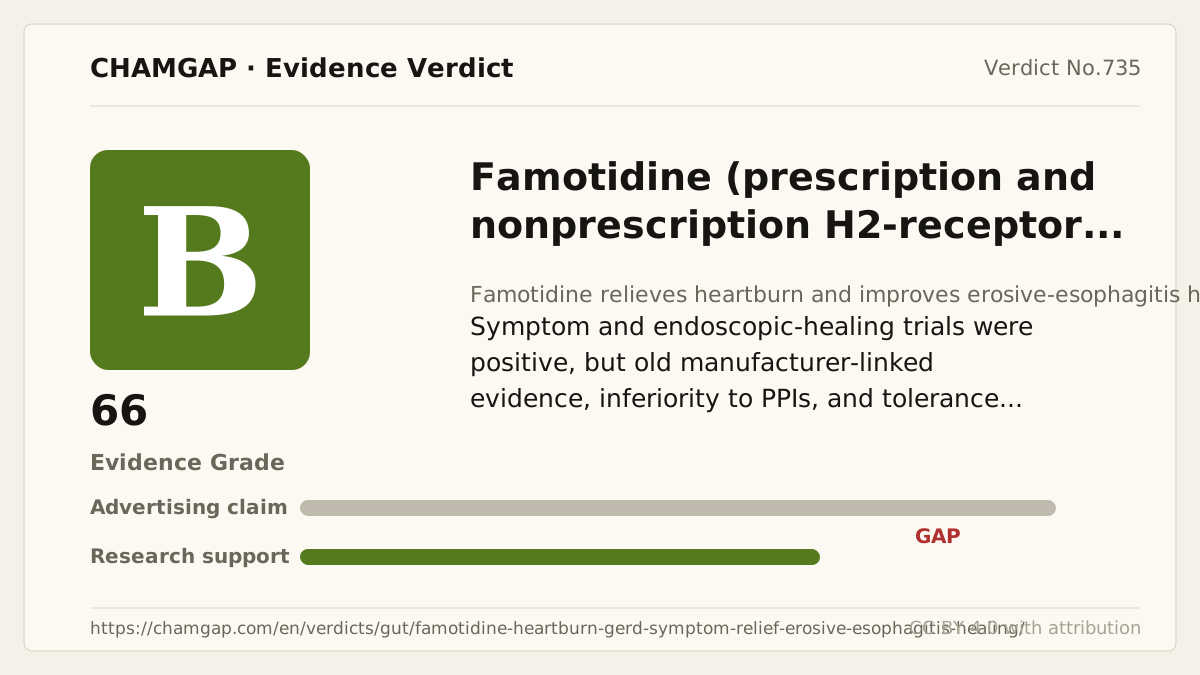
research showsFamotidine is rated B because multiple placebo-controlled trials reduced episodic heartburn and nonerosive reflux symptoms and increased endoscopically confirmed healing of erosive esophagitis. In a 318-patient trial, healing with 40 mg twice daily was 48% at six weeks and 69% at 12 weeks, versus 18% and 29% with placebo; a 528-patient nonerosive-reflux trial also improved heartburn-free days. Pivotal trials are old and often manufacturer-linked, proton-pump inhibitors generally heal esophagitis better, and repeated H2-blocker dosing can rapidly develop tolerance, keeping the grade at mid B.
ads claimClaims of a powerful cure for reflux, identical nightly acid suppression with daily use, or superiority to PPIs are exaggerated. The best-supported scope is short-term relief of intermittent heartburn and healing of erosive esophagitis at studied doses; persistent or alarm symptoms require evaluation.
Useful facts when choosing a product
- Famotidine is an H2-receptor blocker that reduces acid secretion; low-dose nonprescription products are used for intermittent heartburn, whereas higher-dose or longer treatment should follow diagnosis and prescribing instructions.
- It is eliminated mainly by the kidneys, so impaired kidney function can require dose or interval adjustment, and rare confusion or delirium deserves extra attention in older adults.
- Difficulty swallowing, black stool or vomiting blood, anemia or weight loss, repeated vomiting, chest pain, or persistent symptoms should prompt medical assessment rather than prolonged self-treatment.
Chamgap Semantic Classification Code
Candidate index · review held
M.famotidine.UNK.heartburn-and-gastroesophageal-reflux-symptoms-and-healing-of-erosive-esophagitis.relieve.placeboMedicinal interventions > Famotidine > Unknown > heartburn and gastroesophageal reflux symptoms and healing of erosive esophagitis > Symptom-relief claim > Placebo
An automated migration candidate, not an issued permanent code; exact claim scope remains under review. This machine-generated migration candidate helps retrieval but is not a permanent assignment. The original verdict ID and URL remain authoritative.
What the research actually shows
Simon 1994 randomized 318 patients with erosive esophagitis to famotidine 20 mg or 40 mg twice daily or placebo and confirmed better six- and 12-week endoscopic healing and heartburn relief. Hongo 2008 found a small but significant difference in heartburn-free days over eight weeks among 528 patients with nonerosive reflux: 62% with the higher dose versus 55% with placebo. Wang 2005 synthesized 52 comparative trials and concluded that PPIs heal every grade of erosive esophagitis better than H2 blockers. McRorie 2014 reviewed repeated-dose studies and found that H2-blocker acid-suppression tolerance may emerge by the second day.
Why this is classified as B (66)
Placebo-controlled trials repeatedly confirm heartburn relief and endoscopic healing, but limited symptom effect size, old manufacturer-concentrated evidence, better PPI healing, and repeated-dose tolerance yield B with 66 points. Safety and kidney-related dosing differences remain separate.
Counterpoint. It remains useful for brief, infrequent heartburn because of cost and onset, but persistent or severe reflux and complication risk may require diagnosis and a stronger acid-suppression strategy.
Rejudgment record. New verdict — Accepted placebo-controlled heartburn relief and endoscopic healing while accounting for old manufacturer-linked evidence, limited symptom effect size, lower healing than PPIs, and tolerance with repeated dosing
Sub-claim grades by effect
This ingredient is marketed for several effects. A single overall grade blends strong and weak claims together, so each effect is graded separately here. The overall grade reflects the strongest disconfirming or core claim.
| Effect (sub-claim) | Grade | Basis |
|---|---|---|
| Relief of intermittent heartburn and nonerosive reflux symptoms | B | Several placebo-controlled trials showed significant short-term relief, although some effect sizes were small. |
| Healing of erosive esophagitis | B | Placebo-controlled trials improved endoscopic healing, but the evidence is old and manufacturer-concentrated. |
| Superiority to proton-pump inhibitors for healing erosive esophagitis | D | Head-to-head meta-analysis consistently favored PPIs instead. |
| Unchanged acid suppression despite repeated nightly dosing | D | Repeated-dose studies show rapid H2-blocker tolerance and do not support this claim. |
Cross-check — AI research and Codex final gate
Evidence Table
| Study | Design | Sample | Funding | Endpoint | Result | Weight |
|---|---|---|---|---|---|---|
| Simon TJ et al. 1994 | Multicenter randomized double-blind placebo-controlled trial | 318 patients with erosive esophagitis | Merck Research Laboratories | Endoscopic healing and heartburn relief at six and 12 weeks | Healing with 40 mg twice daily was 48% and 69%, versus 18% and 29% with placebo. | Pivotal objective healing evidence |
| Hongo M et al. 2008 | Multicenter randomized double-blind placebo-controlled trial | 528 patients with nonerosive reflux disease | Industry-development context | Heartburn-free days over eight weeks | The higher-dose group had 62% versus 55% with placebo, a small but significant difference. | Direct symptom randomized trial |
| Wang WH et al. 2005 | Systematic review and meta-analysis of head-to-head trials | 52 trials; 1,613 patients in standard PPI versus standard H2-blocker comparisons | University of Hong Kong research fund | Healing of erosive esophagitis | PPIs achieved higher healing rates than H2 blockers across time points and severity grades. | Limits claims of comparative potency |
Receipt — 4 References
All 4 cited sources were verified for existence at the original page (as of 2026-07-20).
Final verification and publication gate: Codex · Evidence date: 2026-07-20 · Corrections: none
Cite this verdict
[Chamgap] Famotidine x heartburn and reflux relief plus erosive-esophagitis healing — Evidence Grade B·66. 4 cited sources checked. Source: https://chamgap.com/en/verdicts/gut/famotidine-heartburn-gerd-symptom-relief-erosive-esophagitis-healing/ · CC BY 4.0CC BY 4.0 — free to use with attribution; do not distort grades, numbers, or verdict meaning.
What this document does and does not do
Chamgap is an information source. It reports what research has and has not confirmed; it does not tell readers what to take or buy. That decision belongs to readers and, when needed, medical or legal professionals. This verdict reflects literature available up to the search date and may change as new research appears. Nothing here is medical advice.