
DPP-IV gluten digestive enzymes,
does it really help with Prevention of accidental gluten exposure and intestinal mucosal injury in celiac disease?
research showsZero human trials test the named DPP-IV product for mucosal protection. The n=14 AN-PEP study and n=494 latiglutenase study used different enzymes and cannot be transferred; the available evidence is in vitro only, so the verdict is ?.
ads claimMarketing converts in-vitro digestion percentages or digestive support into removal of celiac-toxic epitopes and protection of intestinal mucosa. Relief of nonspecific digestive discomfort and protection from autoimmune celiac injury are different claims.
Useful facts when choosing a product
- Janssen et al. 2015 evaluated five retail digestive-enzyme products in vitro but measured no human mucosal outcome (PLoS One 2015; PMID 26030273).
- The efficacy phase of Tack et al. 2013 included 14 celiac patients for two weeks and used AN-PEP rather than DPP-IV (PMID 23319492).
- The n=494 phase 2 latiglutenase trial used an EP-B2 plus SC-PEP combination, a different enzyme product from DPP-IV (PMID 29110502).
Chamgap Semantic Classification Code
Candidate index · review held
M.gluten-digestive-enzyme-blend-containing-dpp-iv.intravenous.accidental-gluten-exposure-and-intestinal-mucosal-injury-in-celiac-disease.prevent.placeboMedicinal interventions > Gluten digestive enzyme blend containing DPP-IV > Intravenous > accidental gluten exposure and intestinal mucosal injury in celiac disease > Occurrence-prevention claim > Placebo
An automated migration candidate, not an issued permanent code; exact claim scope remains under review. This machine-generated migration candidate helps retrieval but is not a permanent assignment. The original verdict ID and URL remain authoritative.
What the research actually shows
Janssen and colleagues assessed five retail supplements with mass spectrometry, R5 ELISA, and T-cell assays and found failure to neutralize immunogenic 26-mer and 33-mer peptides. Tack and colleagues gave recovered celiac patients about 7 g of gluten daily with AN-PEP or placebo for two weeks, but only 14 entered the efficacy analysis, precluding efficacy conclusions. A 494-participant phase 2 trial of latiglutenase, a combination of EP-B2 and SC-PEP, found no improvement in villous atrophy or symptoms. Failure of this more potent investigational enzyme does not support celiac protection by retail DPP-IV products, and the 2023 ACG guideline retains a strict gluten-free diet as current treatment.
Why this is classified as ?
Zero human trials test the named DPP-IV product for celiac mucosal protection, so the grade is ?. Available evidence is in vitro, and AN-PEP and latiglutenase are different enzymes that were not transferred.
Counterpoint. Guidance retaining a strict gluten-free diet as standard care is kept only as a clinical safety note and not used for grading. Pharmaceutical enzyme development at a different dose, formulation, and quality does not establish efficacy for retail supplements.
Rejudgment record. New verdict — Applied ? because zero human trials test the named DPP-IV product for celiac mucosal protection, evidence is in vitro only, and AN-PEP and latiglutenase are different enzymes that cannot be transferred
Sub-claim grades by effect
This ingredient is marketed for several effects. A single overall grade blends strong and weak claims together, so each effect is graded separately here. The overall grade reflects the strongest disconfirming or core claim.
| Effect (sub-claim) | Grade | Basis |
|---|---|---|
| Prevention of accidental celiac gluten exposure by retail DPP-IV blends | ? | Neither toxic-epitope neutralization nor clinical protection has been demonstrated. |
| Prevention of small-intestinal mucosal injury in celiac disease | ? | The AN-PEP pilot was too small, and a larger investigational-enzyme trial was negative. |
| Replacement for a gluten-free diet | ? | Current guidance and clinical evidence clearly do not support replacement. |
Cross-check — AI research and Codex final gate
Evidence Table
| Study | Design | Sample | Funding | Endpoint | Result | Weight |
|---|---|---|---|---|---|---|
| Janssen G et al. 2015 | In-vitro and immunologic comparison of retail supplements | Five retail digestive enzymes with AN-PEP as control | DSM employees were coauthors with industry interests related to AN-PEP | R5 ELISA, mass spectrometry, and gluten-specific T-cell activation | Retail products failed to neutralize immunogenic gluten epitopes, while AN-PEP degraded them under test conditions. | Key direct refutation for retail products |
| Tack GJ et al. 2013 | Randomized double-blind placebo-controlled pilot trial | 16 in the safety phase and 14 in the efficacy phase | DSM Food Specialties supplied the AN-PEP preparation and randomization support | Symptoms, serology, and duodenal immunohistology after a two-week gluten challenge | No major safety signal emerged, but the sample and duration were too small to establish mucosal protection. | Direct exploratory human evidence for AN-PEP |
| Murray JA et al. 2017 | Multicenter randomized double-blind placebo-controlled phase 2 trial | 494 participants with symptomatic celiac disease | Sponsored by Alvine Pharmaceuticals | Duodenal villous morphology and symptoms | The investigational EP-B2 and SC-PEP combination latiglutenase did not improve histology or symptoms versus placebo. | Large negative context for enzyme-protection claims |
Receipt — 4 References
All 4 cited sources were verified for existence at the original page (as of 2026-07-20).
Final verification and publication gate: Codex · Evidence date: 2026-07-20 · Corrections: none
Cite this verdict
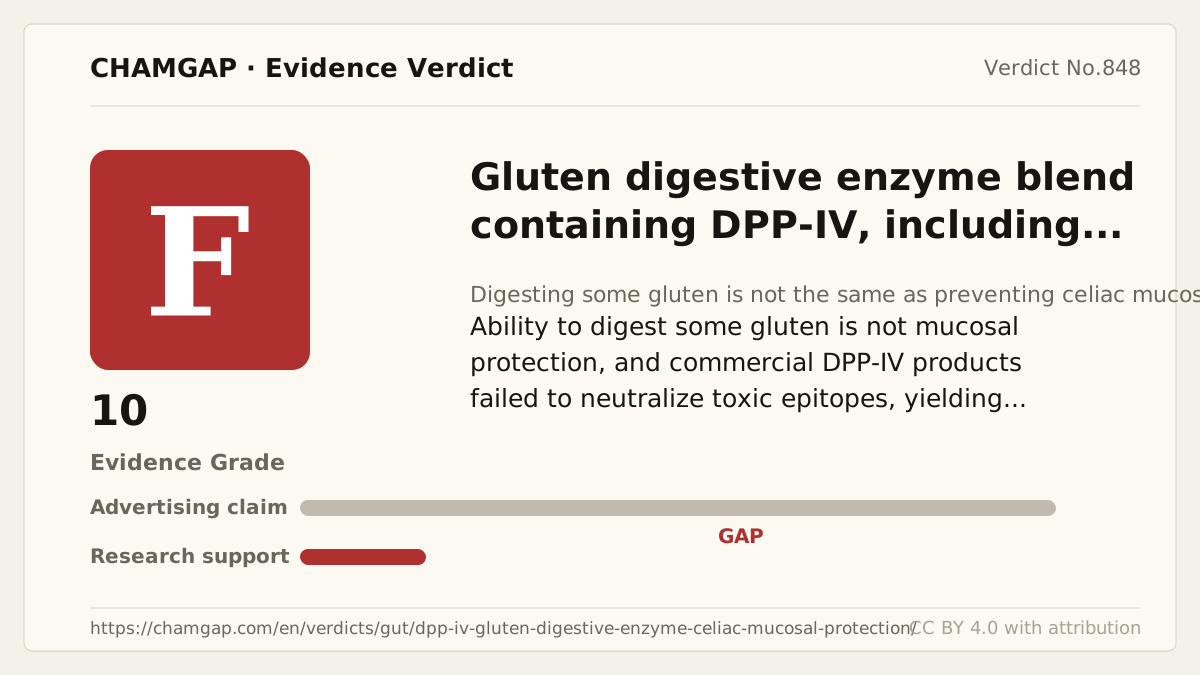
[Chamgap] DPP-IV gluten digestive enzymes x mucosal protection in celiac disease — Evidence Grade ?. 4 cited sources checked. Source: https://chamgap.com/en/verdicts/gut/dpp-iv-gluten-digestive-enzyme-celiac-mucosal-protection/ · CC BY 4.0CC BY 4.0 — free to use with attribution; do not distort grades, numbers, or verdict meaning.
What this document does and does not do
Chamgap is an information source. It reports what research has and has not confirmed; it does not tell readers what to take or buy. That decision belongs to readers and, when needed, medical or legal professionals. This verdict reflects literature available up to the search date and may change as new research appears. Nothing here is medical advice.