
Donor FMT,
does it really help with Clinical cure and prevention of recurrence in multiply recurrent Clostridioides difficile infection?
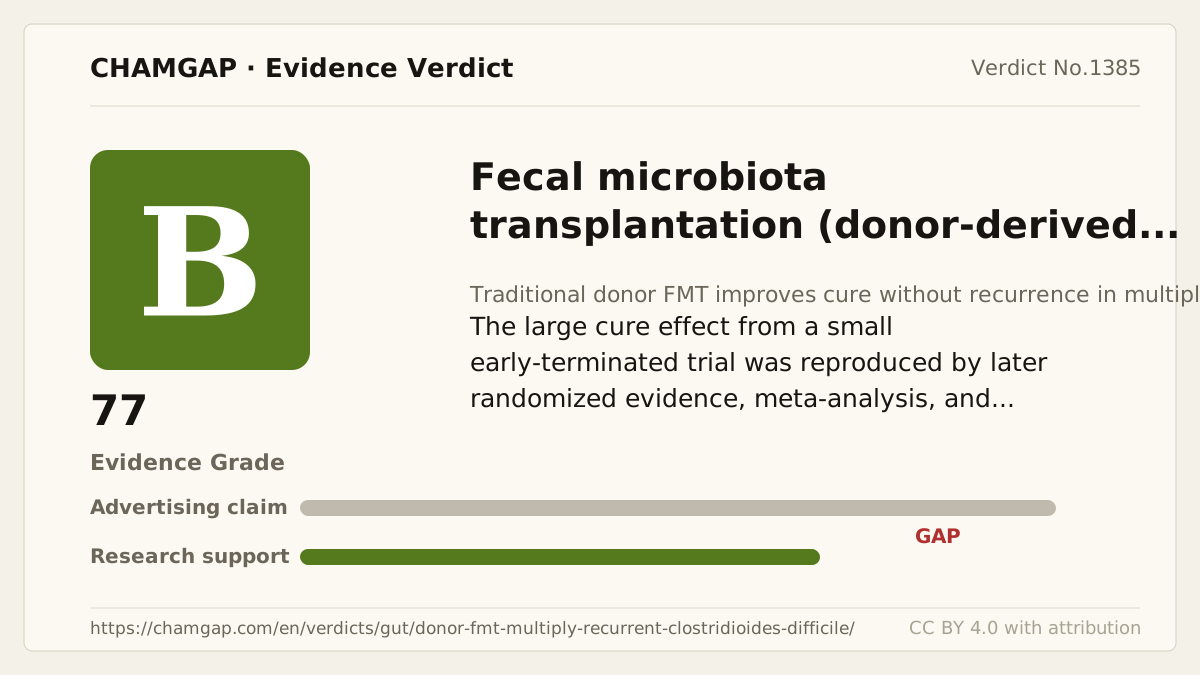
research showsTraditional donor fecal microbiota transplantation is rated B for clinical cure without recurrence after appropriately treated, multiply recurrent C. difficile infection. The 43-person van Nood trial found 81% cure without relapse after the first infusion versus 31% with vancomycin and stopped early. That trial alone would merit C, but a later double-blind donor-versus-autologous-stool trial, meta-analysis showing about 91% effectiveness with repeat FMT, and recommendations from professional guidelines provide strong replication and support B.
ads claimFMT should not be expanded into a universal microbiome remedy for every diarrheal or intestinal disorder. Its strongest clinical evidence is for multiply recurrent infection after appropriate antibiotics; other disorders and initial infection require separate evidence.
Useful facts when choosing a product
- Traditional FMT transfers screened and processed stool microbiota from a healthy donor by colonoscopy, enema, or an upper gastrointestinal route.
- United States guidance generally considers it after appropriate antibiotics and at least two recurrences, with specialized donor and specimen screening and informed consent.
- Transient diarrhea, cramping, and bloating are common; aspiration, endoscopic complications, bacteremia, and transmission of multidrug-resistant organisms or viruses are possible.
- Donor pathogen screening reduces known risks but cannot eliminate every infectious or long-term metabolic risk, requiring particular caution in immunocompromised recipients.
Chamgap Semantic Classification Code
Candidate index · review held
P.fecal-microbiota-transplantation.procedural.clinical-cure-and-prevention-of-recurrence-in-multiply-recurrent-clostridioides-difficile-infection.prevent.UNKProcedures, devices and tests > Fecal microbiota transplantation > Procedural > Clinical cure and prevention of recurrence in multiply recurrent Clostridioides difficile infection > Occurrence-prevention claim > Unknown
An automated migration candidate, not an issued permanent code; exact claim scope remains under review. This machine-generated migration candidate helps retrieval but is not a permanent assignment. The original verdict ID and URL remain authoritative.
What the research actually shows
Van Nood and colleagues randomized patients with recurrent infection to short-course vancomycin followed by donor stool through a duodenal tube, standard vancomycin, or vancomycin plus lavage, and stopped early for a large difference. Kelly and colleagues independently used a double-blind colonoscopic donor-versus-autologous-stool design in patients with at least three recurrences. The Baunwall meta-analysis estimated about 91% effectiveness at eight weeks for repeat FMT, and American College of Gastroenterology guidance recommends FMT for second or further recurrence.
Why this is classified as B (77)
The 43-person early-terminated trial's 81% versus 31% cure result was reproduced by a double-blind randomized trial, a high-effect meta-analysis, and professional guidelines. Small samples, donor and route heterogeneity, and uncertain long-term safety yield B with 77 points.
Counterpoint. For patients with repeated recurrence despite appropriate antibiotics, the large effect makes FMT a meaningful option. Current pathogen screening, procedural route, and immune status require specialist review.
Rejudgment record. New verdict — Although the 43-person early-terminated trial alone would merit C, a later double-blind donor-versus-autologous-stool randomized trial, updated meta-analysis, and American College of Gastroenterology and infectious-disease guidance for multiply recurrent infection constitute strong replication and support B
Sub-claim grades by effect
This ingredient is marketed for several effects. A single overall grade blends strong and weak claims together, so each effect is graded separately here. The overall grade reflects the strongest disconfirming or core claim.
| Effect (sub-claim) | Grade | Basis |
|---|---|---|
| Clinical cure of multiply recurrent C. difficile infection | B | Large effects were reproduced in antibiotic- and autologous-stool-controlled trials and meta-analysis. |
| Prevention of C. difficile recurrence after treatment | B | Major trials assessed clinical resolution combined with freedom from recurrence over a defined follow-up period. |
| Clinical improvement across all intestinal disorders | D | This verdict applies only to multiply recurrent C. difficile infection and cannot be generalized to other disorders. |
Cross-check — AI research and Codex final gate
Evidence Table
| Study | Design | Sample | Funding | Endpoint | Result | Weight |
|---|---|---|---|---|---|---|
| van Nood E et al. 2013 | Open-label randomized antibiotic-controlled trial | 43 patients with recurrent C. difficile infection | Dutch public research funding | Resolution of diarrhea without relapse at ten weeks | Cure was 81% after the first donor infusion versus 31% with vancomycin alone; the trial stopped early after interim analysis. | Pivotal small early-terminated randomized trial |
| Kelly CR et al. 2016 | Double-blind randomized donor-versus-autologous-stool controlled trial | 46 adults with at least three recurrences | United States NIH and academic funding | Clinical cure without recurrence at eight weeks | Donor FMT produced a higher cure rate than autologous-stool control, providing independent replication. | Key blinded randomized replication |
| Baunwall SMD et al. 2020 | Updated systematic review and meta-analysis | 45 randomized and cohort studies | Academic research | Clinical resolution without recurrence at eight weeks | Repeat FMT had an overall effectiveness of about 91% and a number needed to treat of about 1.5 versus standard antibiotics. | Key synthesis with heterogeneity |
Receipt — 4 References
All 4 cited sources were verified for existence at the original page (as of 2026-07-23).
Final verification and publication gate: Codex · Evidence date: 2026-07-23 · Corrections: none
Cite this verdict
[Chamgap] Donor FMT x cure and recurrence prevention in multiply recurrent C. difficile infection — Evidence Grade B·77. 4 cited sources checked. Source: https://chamgap.com/en/verdicts/gut/donor-fmt-multiply-recurrent-clostridioides-difficile/ · CC BY 4.0CC BY 4.0 — free to use with attribution; do not distort grades, numbers, or verdict meaning.
What this document does and does not do
Chamgap is an information source. It reports what research has and has not confirmed; it does not tell readers what to take or buy. That decision belongs to readers and, when needed, medical or legal professionals. This verdict reflects literature available up to the search date and may change as new research appears. Nothing here is medical advice.