
Caprylic acid,
does it really help with Eradicate intestinal Candida overgrowth and improve bloating when taken orally?
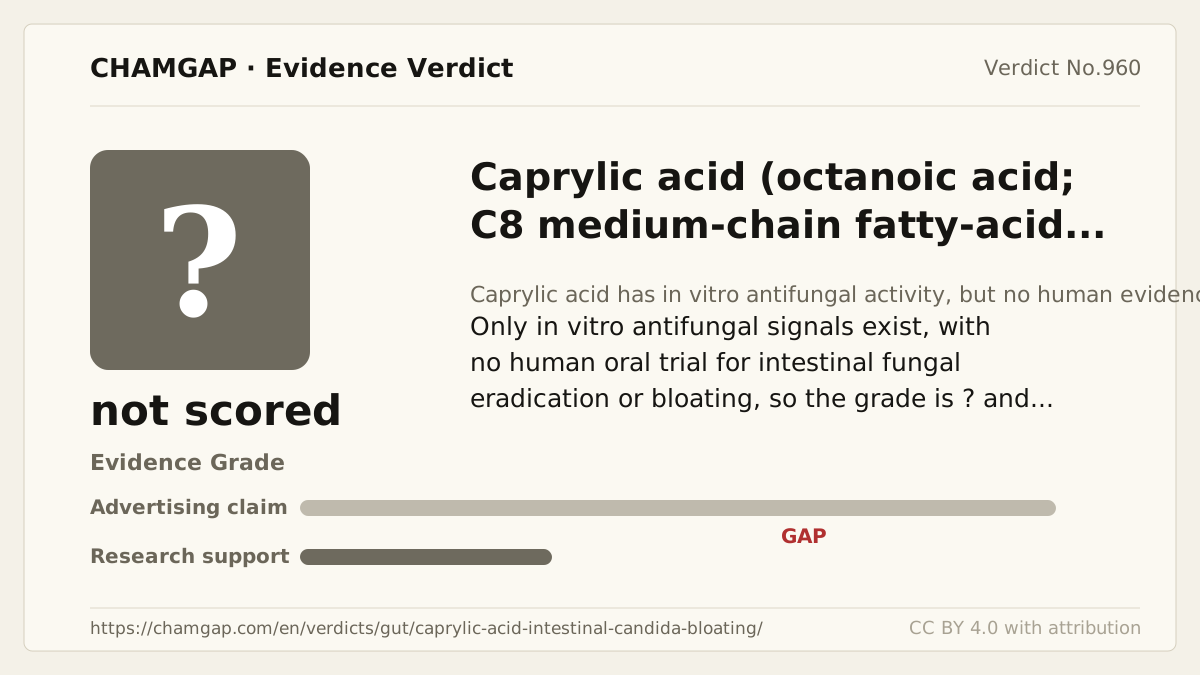
research showsCaprylic acid is rated ? because no claim-matched human efficacy literature was found showing that oral use eradicates intestinal Candida overgrowth or improves bloating. Caprylic acid inhibits Candida albicans growth, hyphae, and biofilm-related outcomes in vitro, but culture-dish concentrations are not equivalent to intestinal exposure after oral supplementation. Small intestinal fungal overgrowth has nonspecific symptoms, lacks standardized diagnostic protocols, and is assessed using fungal culture of small-intestinal aspirates. In vitro antifungal activity does not demonstrate fungal eradication or symptom improvement in people.
ads claimMarketing translates Candida inhibition in a culture dish into intestinal Candida eradication, detoxification, and relief of gas or bloating. Candida can be part of normal gut flora, and bloating has many causes including diet, constipation, irritable bowel syndrome, and bacterial overgrowth, so symptoms alone do not diagnose fungal overgrowth.
Useful facts when choosing a product
- Caprylic acid is an eight-carbon medium-chain fatty acid present in dietary fats, while supplements sell concentrated C8 or medium-chain triglyceride forms.
- An inhibitory concentration in a Candida culture does not mean that the same concentration and contact time are maintained in the human intestine after oral use.
- Concentrated C8 can cause nausea, abdominal pain, or diarrhoea and can potentially worsen gastrointestinal symptoms in someone who already has bloating.
- Persistent bloating or suspected fungal infection requires evaluation rather than supplement-based self-diagnosis, and invasive candidiasis in an immunocompromised person is a separate condition requiring prompt standard antifungal treatment.
Chamgap Semantic Classification Code
Candidate index · review held
S.caprylic-acid.UNK.eradicate-intestinal-candida-overgrowth-and-improve-bloating-when-taken-orally.improve.UNKSupplements and nutraceuticals > Caprylic acid > Unknown > Eradicate intestinal Candida overgrowth and improve bloating when taken orally > Improvement claim > Unknown
An automated migration candidate, not an issued permanent code; exact claim scope remains under review. This machine-generated migration candidate helps retrieval but is not a permanent assignment. The original verdict ID and URL remain authoritative.
What the research actually shows
Jadhav 2017 evaluated whether caprylic and capric acids inhibit growth, morphogenesis, adhesion, biofilm, enzyme, and sterol-related virulence factors in cultured C. albicans. Lee 2021 reported that six medium-chain fatty acids including octanoic acid inhibited biofilm formation by more than 75% in vitro and had minimum inhibitory concentrations of 100 to 200 micrograms per millilitre. Neither study administered caprylic acid orally to humans. A 2025 review described nonspecific bloating and other symptoms, lack of standardized protocols, and reliance on fungal culture of small-intestinal aspirates for small intestinal fungal overgrowth, but it did not provide a caprylic-acid treatment trial.
Why this is classified as ?
Candida inhibition by caprylic or octanoic acid is demonstrated in culture studies, but no claim-matched human trial was identified showing that an oral supplement reduces intestinal fungal burden or improves bloating. The proposed diagnosis also has nonspecific symptoms and limited standardization. The grade is therefore ? and the score is null.
Counterpoint. Absence of human trials does not mean the claim has been repeatedly disproved; it means efficacy is unknown. Until clinical evidence exists, culture-dish findings should not be advertised as treatment efficacy.
Rejudgment record. New verdict — Applied ? for absence of claim-matched human efficacy literature: caprylic or octanoic acid inhibits Candida growth, hyphae, and biofilm only in vitro, no oral human trial showed intestinal fungal eradication or improved bloating, and the small-intestinal-fungal-overgrowth diagnosis has nonspecific symptoms and limited standardization
Sub-claim grades by effect
This ingredient is marketed for several effects. A single overall grade blends strong and weak claims together, so each effect is graded separately here. The overall grade reflects the strongest disconfirming or core claim.
| Effect (sub-claim) | Grade | Basis |
|---|---|---|
| Eradication of intestinal Candida overgrowth with oral caprylic acid | ? | The identified evidence is limited to in vitro inhibition, with no efficacy trial measuring intestinal fungal burden in humans. |
| Improvement of bloating with oral caprylic acid | ? | Symptoms attributed to small intestinal fungal overgrowth are nonspecific, diagnosis is not standardized, and no caprylic-acid human symptom trial exists. |
Cross-check — AI research and Codex final gate
Evidence Table
| Study | Design | Sample | Funding | Endpoint | Result | Weight |
|---|---|---|---|---|---|---|
| Jadhav A et al. 2017 | In vitro mechanistic and antifungal study in Candida albicans | Cultured C. albicans; zero human participants | Detailed funding not stated in the PubMed record | Growth, morphogenesis, adhesion, biofilm, virulence enzymes, and sterols | Caprylic acid inhibited multiple C. albicans virulence factors in vitro. | Preclinical evidence providing biological plausibility only |
| Lee JH et al. 2021 | In vitro comparison of 31 fatty acids against Candida plus a nematode model | Cultured C. albicans and a nonanoic-acid C. elegans model; zero human participants | Supported by the National Research Foundation of Korea | Hyphae, aggregation, biofilm, minimum inhibitory concentration, and related genes | Six medium-chain fatty acids including octanoic acid inhibited in vitro biofilm formation by more than 75%. | Preclinical evidence that cannot establish oral human efficacy |
| Soliman N et al. 2025 | Narrative comprehensive review of small intestinal bacterial and fungal overgrowth | Synthesis of clinical and mechanistic literature; no caprylic-acid treatment trial | No external funding reported in the article | Risk factors, symptoms, diagnosis, and management of small intestinal fungal overgrowth | Symptoms were nonspecific, standardized protocols were absent, and diagnosis relied on fungal culture of small-intestinal aspirates. | Context for diagnostic uncertainty and the clinical evidence gap |
Receipt — 3 References
All 3 cited sources were verified for existence at the original page (as of 2026-07-21).
Final verification and publication gate: Codex · Evidence date: 2026-07-21 · Corrections: none
Cite this verdict
[Chamgap] Caprylic acid x eradication of intestinal Candida and improvement of bloating — Evidence Grade ?. 3 cited sources checked. Source: https://chamgap.com/en/verdicts/gut/caprylic-acid-intestinal-candida-bloating/ · CC BY 4.0CC BY 4.0 — free to use with attribution; do not distort grades, numbers, or verdict meaning.
What this document does and does not do
Chamgap is an information source. It reports what research has and has not confirmed; it does not tell readers what to take or buy. That decision belongs to readers and, when needed, medical or legal professionals. This verdict reflects literature available up to the search date and may change as new research appears. Nothing here is medical advice.