
Black walnut–wormwood–clove complex,
does it really help with Removal of intestinal parasites or a parasite cleanse?
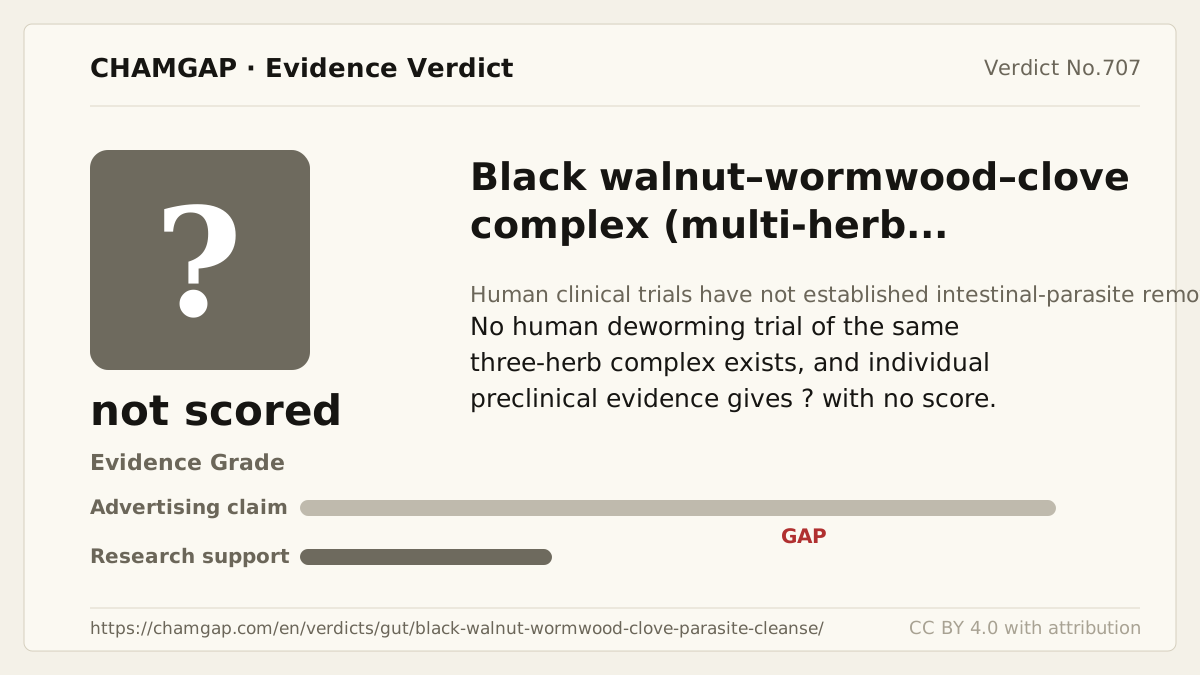
research showsThe black walnut–wormwood–clove complex is rated ? because no human efficacy trial was identified showing that this three-ingredient product removes intestinal parasites. The evidence found mainly concerns individual preclinical findings, such as laboratory antibacterial activity of black walnut, in vitro or animal anthelmintic activity of wormwood, and experimental biological activity of clove; none is a human deworming trial of the same three ingredients, doses, and formulation. The EMA traditional-use scope for wormwood is limited to temporary appetite loss and mild digestive discomfort and is unrelated to parasite removal. Thujone-related neurotoxicity and seizure risk from wormwood, avoidance during pregnancy and lactation, and black-walnut allergy are safety issues separate from efficacy.
ads claimMarketing assembles unrelated experimental findings into a sequence in which black walnut and wormwood kill adults, clove removes eggs, and die-off symptoms prove success. Without a human trial of the same complex, those assigned roles and eradication rates are unproven.
Useful facts when choosing a product
- Parasite-cleanse products vary in black-walnut species and hull material, Artemisia species and thujone content, and the eugenol concentration of clove oil, so products should not be assumed equivalent.
- The EMA traditional-use scope for wormwood covers temporary appetite loss and mild digestive discomfort, not diagnosis or treatment of intestinal parasites.
- Parasites require species-appropriate testing and treatment, so visible mucus or changes in stool should not be declared expelled parasites without laboratory confirmation.
- Thujone in wormwood raises neurotoxicity and seizure concerns at high exposure, and use should be avoided during pregnancy and lactation. Black walnut can trigger reactions in people with tree-nut allergy, while concentrated clove oil can cause irritation and increase bleeding risk.
Chamgap Semantic Classification Code
Candidate index · review held
S.black-walnutwormwoodclove-complex.UNK.removal-of-intestinal-parasites-or-a-parasite-cleanse.assess.UNKSupplements and nutraceuticals > Black walnut–wormwood–clove complex > Unknown > Removal of intestinal parasites or a parasite cleanse > Association or change assessment > Unknown
An automated migration candidate, not an issued permanent code; exact claim scope remains under review. This machine-generated migration candidate helps retrieval but is not a permanent assignment. The original verdict ID and URL remain authoritative.
What the research actually shows
Almeida 2016 directly exposed adult Schistosoma mansoni to Artemisia absinthium extracts and isolated compounds in vitro and reported activity of some crude extracts, but no human received the product. Tariq 2009 studied wormwood against gastrointestinal nematodes in sheep. Ho 2018 used metabolomics to identify antibacterial compounds in black walnuts rather than conducting an intestinal-parasite trial, and Haro-González 2021 reviewed the composition, food applications, and biological activity of clove essential oil without testing human eradication by the three-herb complex. The EMA discusses wormwood only as traditional use for temporary appetite loss and mild gastrointestinal discomfort, not as approval for deworming.
Why this is classified as ?
No efficacy trial was found that tested the same black walnut–wormwood–clove complex for removal of human intestinal parasites. In vitro and animal findings for individual ingredients cannot establish clinical efficacy of the combination or attribute a contribution to each component, so the grade is ? and the score is null.
Counterpoint. Suspected parasitic infection should be evaluated according to symptoms and exposure history, with validated species-specific treatment selected after appropriate testing. A cleanse can delay diagnosis and effective therapy while adding toxicity.
Rejudgment record. New verdict — Applied ? because no human efficacy trial tests the same black walnut–wormwood–clove complex for intestinal-parasite removal, and in vitro or animal data for separate ingredients cannot be attributed to the combination or to each component
Sub-claim grades by effect
This ingredient is marketed for several effects. A single overall grade blends strong and weak claims together, so each effect is graded separately here. The overall grade reflects the strongest disconfirming or core claim.
| Effect (sub-claim) | Grade | Basis |
|---|---|---|
| Removal of human intestinal parasites by the black walnut–wormwood–clove complex | ? | No human efficacy trial of the same three ingredients and formulation measuring stool clearance or egg-count reduction was identified. |
| Expansion of EMA traditional use of wormwood into deworming efficacy | ? | The EMA scope concerns appetite loss and mild digestive discomfort, and no human deworming trial supports the separate claim. |
| Attribution of adult-worm and egg removal to separate ingredients | ? | Neither a human combination trial nor a component-dismantling design exists, so the proposed roles cannot be attributed. |
Cross-check — AI research and Codex final gate
Evidence Table
| Study | Design | Sample | Funding | Endpoint | Result | Weight |
|---|---|---|---|---|---|---|
| Almeida LMS et al. 2016 | In vitro anthelmintic study of wormwood extracts and isolated compounds | Zero humans; adult Schistosoma mansoni assay | Brazilian academic research support | In vitro adult-worm motility and death | High-concentration crude extracts showed activity, while some isolated compounds were inactive; treatment of human intestinal infection was not tested. | Preclinical signal for one ingredient |
| Ho KV et al. 2018 | Metabolomics and in vitro antibacterial study of black walnut | Zero humans; bacterial-strain assays | United States Department of Agriculture and university research support | Identification of antibacterial compounds | Some antibacterial compounds were identified, but parasite eradication and the three-herb combination were not evaluated. | Highly indirect to clinical deworming efficacy |
| EMA HMPC Absinthii herba assessment; Pelkonen O et al. 2013 | Traditional-use regulatory assessment and toxicological review of thujone | No human deworming trial; synthesis of toxicology data | Public regulatory assessment and academic toxicology review | Traditional-use scope of wormwood and thujone neurotoxicity | The EMA scope is limited to appetite loss and mild digestive discomfort, while the thujone review identified GABA-A antagonism and dose-dependent convulsive potential. | Scope limitation and key safety evidence |
Receipt — 5 References
All 5 cited sources were verified for existence at the original page (as of 2026-07-19).
Final verification and publication gate: Codex · Evidence date: 2026-07-19 · Corrections: none
Cite this verdict
[Chamgap] Black walnut–wormwood–clove complex x intestinal parasite removal — Evidence Grade ?. 5 cited sources checked. Source: https://chamgap.com/en/verdicts/gut/black-walnut-wormwood-clove-parasite-cleanse/ · CC BY 4.0CC BY 4.0 — free to use with attribution; do not distort grades, numbers, or verdict meaning.
What this document does and does not do
Chamgap is an information source. It reports what research has and has not confirmed; it does not tell readers what to take or buy. That decision belongs to readers and, when needed, medical or legal professionals. This verdict reflects literature available up to the search date and may change as new research appears. Nothing here is medical advice.