
Bismuth subsalicylate,
does it really help with Reduced stool frequency and duration in acute nonbloody, nonbacterial diarrhea?
research showsBismuth subsalicylate is rated B because it reduces stool frequency and duration in acute nonbloody, nonbacterial diarrhea. An adult travelers' diarrhea trial reduced unformed stools over 4 to 24 hours, and a 275-participant pediatric acute watery-diarrhea trial increased resolution within 120 hours from 74% with placebo to 88% to 89% with treatment. A 2021 meta-analysis separated three prevention studies from 11 treatment studies; the 11-study treatment subgroup found an OR of 3.7 for diarrhea relief, with a 95% CI of 2.1 to 6.3. Repeated direct symptom endpoints support the bottom of B with 60 points. Bloody diarrhea, high fever, and invasive bacterial infection remain outside self-treatment.
ads claimPromotion may suggest a rapid treatment for every cause of diarrhea. Oral rehydration remains primary, and bloody stool, high fever, marked dehydration, or persistence beyond two days requires medical evaluation.
Useful facts when choosing a product
- Each United States Pepto-Bismol chewable tablet contains 262 mg of bismuth subsalicylate and is labeled for short-term use in adults and children aged 12 years or older.
- Use should stop and medical advice should be sought if diarrhea worsens or lasts more than two days; it does not replace fluid and electrolyte replacement.
- Temporary darkening of the tongue and stool can occur and is usually harmless, but pre-existing black or bloody stool is a reason not to self-treat.
- It contains salicylate, requiring caution with aspirin allergy, anticoagulants, bleeding disorders, or kidney disease; children and teenagers recovering from influenza or chickenpox should avoid it because of Reye syndrome risk.
Chamgap Semantic Classification Code
Candidate index · review held
M.bismuth-subsalicylate.UNK.stool-frequency-and-duration-in-acute-nonbloody-nonbacterial-diarrhea.reduce.placeboMedicinal interventions > Bismuth subsalicylate > Unknown > stool frequency and duration in acute nonbloody, nonbacterial diarrhea > Reduction claim > Placebo
An automated migration candidate, not an issued permanent code; exact claim scope remains under review. This machine-generated migration candidate helps retrieval but is not a permanent assignment. The original verdict ID and URL remain authoritative.
What the research actually shows
DuPont 1977 found that both doses reduced unformed stools over 4 to 24 hours versus placebo in Mexican university students, with the higher dose remaining favorable through 48 hours. Steinhoff 1980 randomized 59 Norwalk-agent-challenged volunteers. Figueroa-Quintanilla 1993 found diarrhea stopped within 120 hours in 74% with placebo and 88% to 89% with bismuth in 275 children with nonbloody acute watery diarrhea. Brum 2021 included 14 studies overall, comprising three prevention and 11 treatment studies; only the 11-study treatment subgroup produced the diarrhea-relief OR of 3.7, with a 95% CI of 2.1 to 6.3. Current nonprescription warnings prevent straightforward pediatric application because of Reye syndrome risk.
Why this is classified as B (60)
Direct symptom endpoints repeat across reduced unformed-stool time in adults, resolution within 120 hours of 74% versus 88% to 89% in 275 children, and an OR of 3.7 with a 95% CI of 2.1 to 6.3 in the 11-treatment-study subgroup. Old special populations, manufacturer internal data, and limited generalizability to routine nonbacterial adult illness keep the verdict at the bottom of B with 60 points. Salicylate and bismuth hazards remain separate safety issues.
Counterpoint. Short-term symptom relief is plausible in mild nonbloody watery diarrhea, but this is not causal treatment or a substitute for rehydration. Bloody stool, fever, dehydration, or immunocompromise should not be self-treated.
Rejudgment record. Reassessment (cross-check reflected) — Upgraded to B because direct symptom outcomes repeat across adult unformed-stool reduction, pediatric resolution of 74% versus 88% to 89%, and an OR of 3.7 in the 11-treatment-study subgroup among 14 studies overall, with a low-band score for special populations and manufacturer concentration
Sub-claim grades by effect
This ingredient is marketed for several effects. A single overall grade blends strong and weak claims together, so each effect is graded separately here. The overall grade reflects the strongest disconfirming or core claim.
| Effect (sub-claim) | Grade | Basis |
|---|---|---|
| Reduced stool frequency and duration in acute nonbacterial diarrhea | B | Direct symptom trials in adults and children and an 11-treatment-study meta-analysis are repeatedly positive. |
| Suitability for self-treatment of bacterial or bloody diarrhea | ? | Bloody stool, high fever, and invasive infection fall outside the efficacy evidence and require medical evaluation, so suitability is not graded. |
| Salicylate- and bismuth-related safety | ? | Allergy, bleeding, kidney disease, Reye syndrome, and dark-stool risks are assessed separately under safety. |
Cross-check — AI research and Codex final gate
Evidence Table
| Study | Design | Sample | Funding | Endpoint | Result | Weight |
|---|---|---|---|---|---|---|
| DuPont HL et al. 1977 | Randomized placebo-controlled trial | Mexican university students with acute diarrhea; 169 active-treatment participants plus placebo controls | Limited reporting in a branded-product evaluation context | Number of unformed stools over 4 to 48 hours | Both doses reduced unformed stools over 4 to 24 hours, and the higher dose remained favorable through 48 hours. | Direct adult symptom evidence with travelers' diarrhea indirectness |
| Figueroa-Quintanilla D et al. 1993 | Randomized double-blind placebo-controlled trial | 275 infants and young children with acute nonbloody watery diarrhea | P&G supplied study medication and partial support | Diarrhea duration, total stool output, and hospital stay | Diarrhea stopped within 120 hours in 74% with placebo and 88% to 89% with active treatment, with lower stool output and shorter hospitalization. | Direct clinical endpoints with pediatric indirectness |
Receipt — 3 References
All 3 cited sources were verified for existence at the original page (as of 2026-07-20).
Final verification and publication gate: Codex · Evidence date: 2026-07-20 · Corrections: none
Cite this verdict
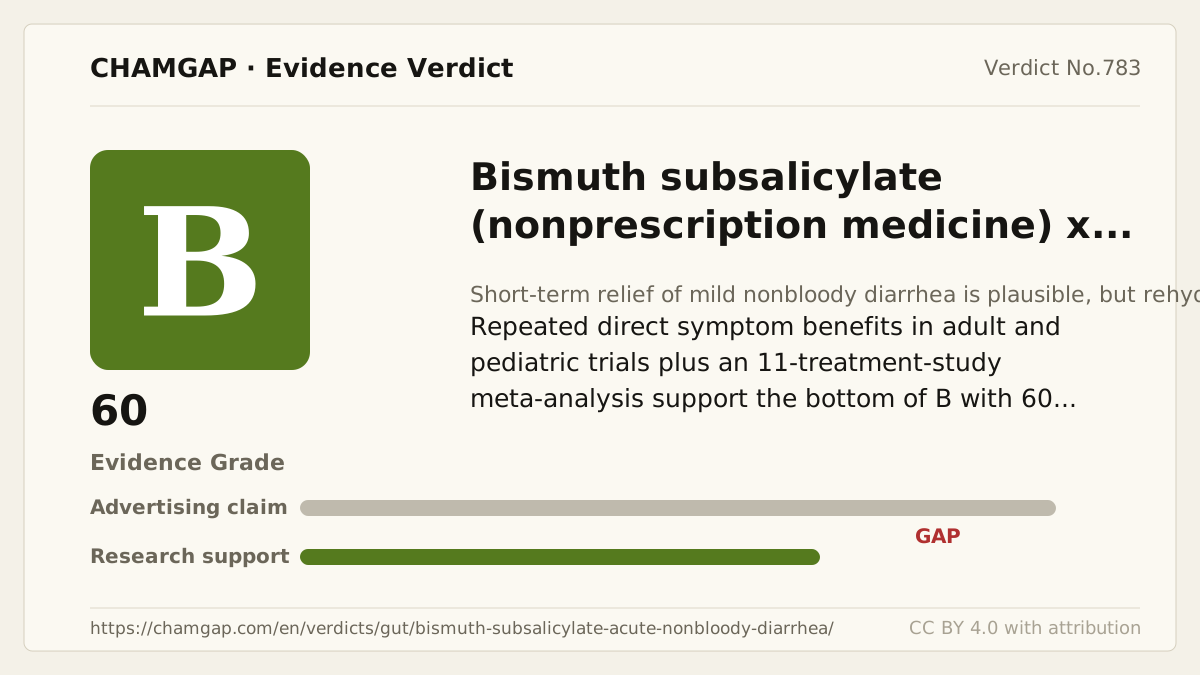
[Chamgap] Bismuth subsalicylate x reduced symptoms of acute nonbloody diarrhea — Evidence Grade B·60. 3 cited sources checked. Source: https://chamgap.com/en/verdicts/gut/bismuth-subsalicylate-acute-nonbloody-diarrhea/ · CC BY 4.0CC BY 4.0 — free to use with attribution; do not distort grades, numbers, or verdict meaning.
What this document does and does not do
Chamgap is an information source. It reports what research has and has not confirmed; it does not tell readers what to take or buy. That decision belongs to readers and, when needed, medical or legal professionals. This verdict reflects literature available up to the search date and may change as new research appears. Nothing here is medical advice.