
Combined Bifidobacterium and Lactobacillus probiotics,
does it really help with Prevention of severe necrotizing enterocolitis and all-cause mortality in preterm or low-birth-weight infants?
research showsCombined Bifidobacterium and Lactobacillus probiotics are graded B because randomized evidence supports reductions in severe necrotizing enterocolitis and all-cause mortality in preterm or low-birth-weight infants. A network meta-analysis of 63 trials and 15,712 infants supported reductions in both outcomes, while another estimated RR 0.47 for NEC and RR 0.56 for mortality versus placebo. Strains, doses, and manufacturing quality varied, evidence in extremely-low-birth-weight infants remains limited, pharmaceutical-grade standardization is incomplete, and rare bloodstream infection or contamination can occur.
ads claimDescriptions can treat probiotics as one uniform ingredient or equate adult retail products with neonatal trial formulations. Trial effects depend on specific strains, dose, manufacturing control, and neonatal intensive-care delivery.
Useful facts when choosing a product
- This intervention consists of live Bifidobacterium and Lactobacillus organisms given enterally to preterm infants under clinical supervision.
- Products sharing genus names can differ in strains, viable count, storage stability, contamination control, and clinical evidence.
- The outcomes are severe NEC, generally Bell stage II or higher, and all-cause mortality, not digestive comfort in healthy term infants.
- Rare probiotic bloodstream infection or sepsis and invasive infection from contaminated products can occur, with particular concern in infants below 1,000 g, with central lines, or impaired gut barriers.
Chamgap Semantic Classification Code
Candidate index · review held
S.combined-bifidobacterium-and-lactobacillus-probiotics.enteral.severe-necrotizing-enterocolitis-and-all-cause-mortality-in-preterm-or-low-birth-weight-infants.prevent.placeboSupplements and nutraceuticals > Combined Bifidobacterium and Lactobacillus probiotics > Enteral or tube feeding > severe necrotizing enterocolitis and all-cause mortality in preterm or low-birth-weight infants > Occurrence-prevention claim > Placebo
An automated migration candidate, not an issued permanent code; exact claim scope remains under review. This machine-generated migration candidate helps retrieval but is not a permanent assignment. The original verdict ID and URL remain authoritative.
What the research actually shows
Morgan and colleagues included 63 randomized trials and 15,712 infants and distinguished multiple single- and multistrain interventions. Lactobacillus plus Bifidobacterium combinations reduced severe NEC and mortality, but evidence quantity and certainty differed by formulation. Chi and colleagues analyzed 45 trials and 12,320 infants and estimated mortality RR 0.56 and NEC RR 0.47 for the combination. The 2021 AAP report acknowledged more than 10,000 randomized participants but did not support universal administration because of the absence of regulated pharmaceutical-grade products in the United States, conflicting safety and efficacy, and vulnerability below 1,000 g birth weight. Unlike general probiotic verdicts, this verdict is restricted to hard neonatal outcomes.
Why this is classified as B (77)
Network meta-analyses of many randomized trials repeatedly reduced severe NEC and mortality, but strain, dose, and product-quality heterogeneity plus rare invasive infection concerns give B with 77 points.
Counterpoint. The AAP position against universal use is not a finding of no efficacy; it incorporates product regulation and safety uncertainty in an exceptionally vulnerable population.
Rejudgment record. New verdict — Accepted network-meta-analytic randomized reductions in severe NEC and all-cause mortality for combined Bifidobacterium and Lactobacillus, while grading B for strain, dose, and product-quality heterogeneity, limited evidence in extremely-low-birth-weight infants, and rare invasive infection risk
Sub-claim grades by effect
This ingredient is marketed for several effects. A single overall grade blends strong and weak claims together, so each effect is graded separately here. The overall grade reflects the strongest disconfirming or core claim.
| Effect (sub-claim) | Grade | Basis |
|---|---|---|
| Prevention of severe necrotizing enterocolitis | B | Many randomized trials show a reduction, but strain, dose, and product heterogeneity is substantial. |
| Reduced all-cause mortality | B | Independent network meta-analyses reproduced a reduction, but it cannot be assigned automatically to a specific product. |
Cross-check — AI research and Codex final gate
Evidence Table
| Study | Design | Sample | Funding | Endpoint | Result | Weight |
|---|---|---|---|---|---|---|
| Morgan RL et al. 2020 | Systematic review and network meta-analysis of randomized trials | 63 randomized trials and 15,712 preterm or low-birth-weight infants | AGA Institute and academic support | Severe NEC, all-cause mortality, and invasive infection | Combined Lactobacillus and Bifidobacterium significantly reduced severe NEC and all-cause mortality versus placebo. | Largest strain-differentiated synthesis |
| Chi C et al. 2021 | Network meta-analysis of randomized trials | 45 randomized trials and 12,320 preterm infants | Chinese public and academic support | NEC and all-cause mortality | Bifidobacterium plus Lactobacillus was associated with RR 0.47 for NEC and RR 0.56 for mortality versus placebo. | Independent network-synthesis replication |
Receipt — 3 References
All 3 cited sources were verified for existence at the original page (as of 2026-07-23).
Final verification and publication gate: Codex · Evidence date: 2026-07-23 · Corrections: none
Cite this verdict
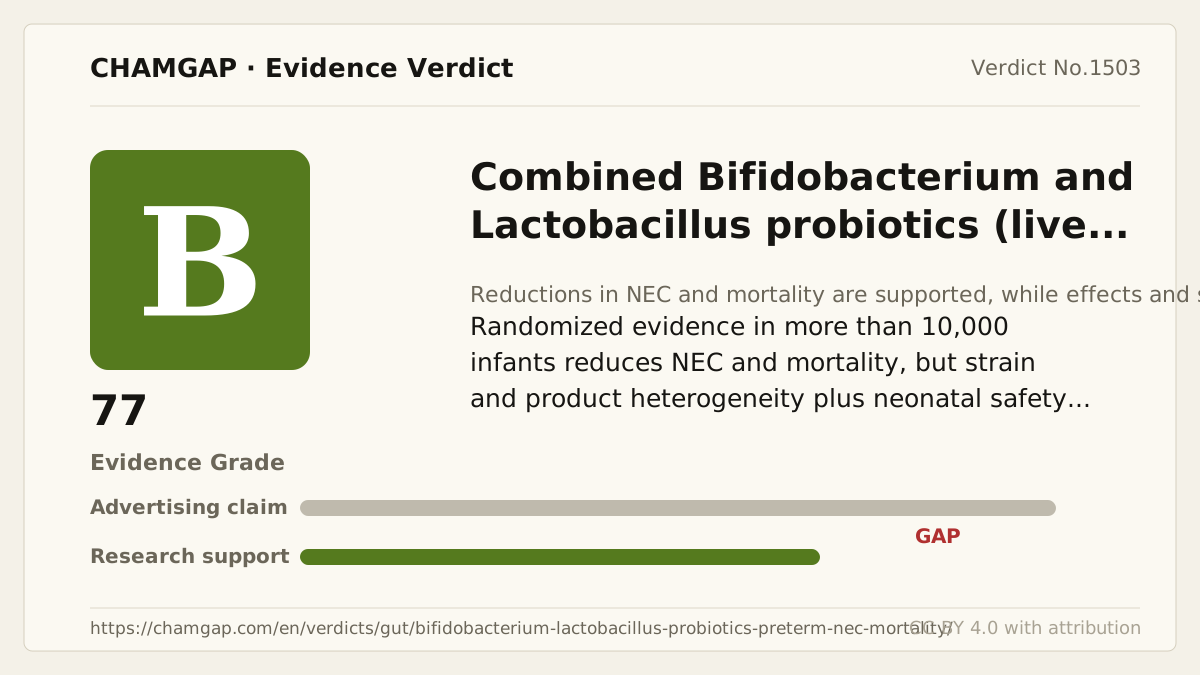
[Chamgap] Combined Bifidobacterium and Lactobacillus probiotics x prevention of severe NEC and mortality in preterm infants — Evidence Grade B·77. 3 cited sources checked. Source: https://chamgap.com/en/verdicts/gut/bifidobacterium-lactobacillus-probiotics-preterm-nec-mortality/ · CC BY 4.0CC BY 4.0 — free to use with attribution; do not distort grades, numbers, or verdict meaning.
What this document does and does not do
Chamgap is an information source. It reports what research has and has not confirmed; it does not tell readers what to take or buy. That decision belongs to readers and, when needed, medical or legal professionals. This verdict reflects literature available up to the search date and may change as new research appears. Nothing here is medical advice.