
Aspirin,
does it really help with Long-term prevention of colorectal cancer in carriers of Lynch syndrome?
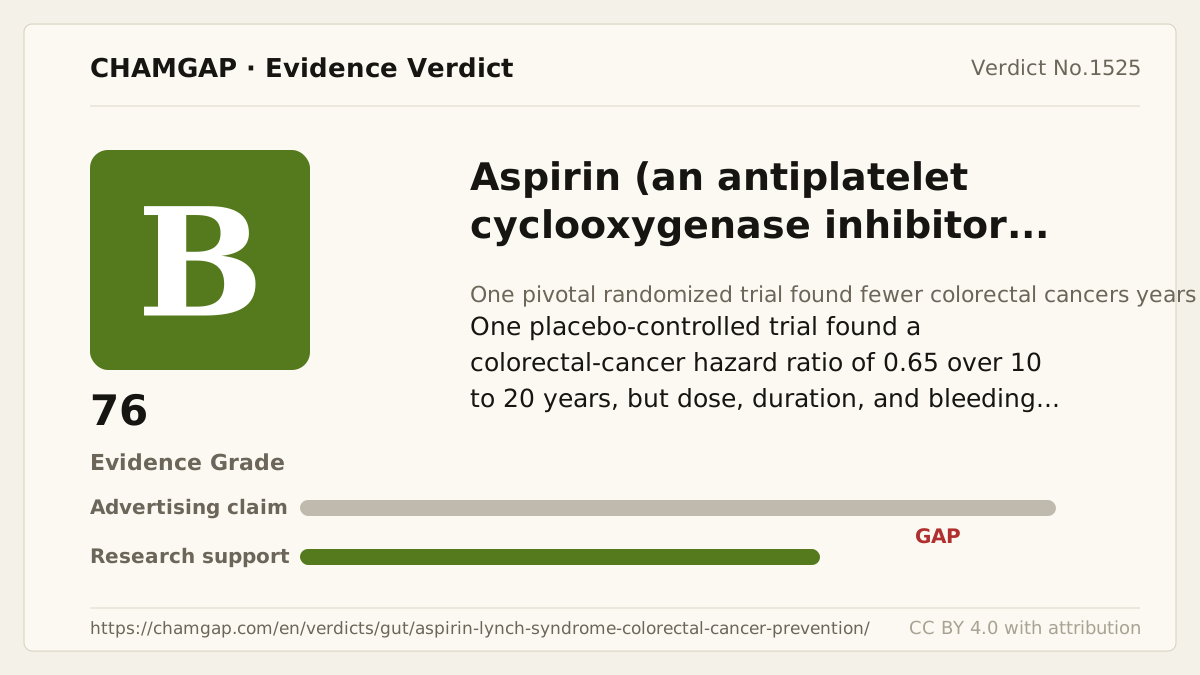
research showsAspirin is rated B because 10-to-20-year follow-up of the placebo-controlled randomized CAPP2 trial found fewer colorectal cancers in carriers of Lynch syndrome. The trial randomized 861 participants to 600 mg daily or placebo, and the long-term intention-to-treat hazard ratio for colorectal cancer was 0.65 with a 95% confidence interval of 0.43 to 0.97. This is a randomized hard-endpoint benefit, but evidence is concentrated in one pivotal trial, the tested dose was high, benefit was delayed, and duration and optimal-dose conditions remain, supporting B.
ads claimEvidence in Lynch syndrome can be broadened into prevention of every colorectal cancer in the general population or replacement of cancer surveillance. Direct evidence concerns genetically high-risk carriers who took aspirin for a period and experienced fewer colorectal cancers years later.
Useful facts when choosing a product
- Aspirin irreversibly inhibits cyclooxygenase and reduces platelet function, and it is available by prescription or over the counter depending on dose and indication.
- CAPP2 tested 600 mg daily for an average of about two years, and the preventive effect became apparent several years after treatment ended.
- CaPP3 compared 100 mg, 300 mg, and 600 mg, but noninferiority differed by endpoint, leaving optimal dose and longer follow-up interpretation unresolved.
- Gastrointestinal bleeding, peptic ulcer, dyspepsia, and other bleeding can occur, and risk is influenced by dose, age, concomitant medicines, and underlying disease.
Chamgap Semantic Classification Code
Candidate index · review held
M.aspirin.UNK.colorectal-cancer-in-carriers-of-lynch-syndrome.prevent.MULTIMedicinal interventions > aspirin > Unknown > colorectal cancer in carriers of Lynch syndrome > Occurrence-prevention claim > Multiple: primary unresolved
An automated migration candidate, not an issued permanent code; exact claim scope remains under review. This machine-generated migration candidate helps retrieval but is not a permanent assignment. The original verdict ID and URL remain authoritative.
What the research actually shows
Burn and colleagues randomized 861 carriers of Lynch syndrome in CAPP2 to aspirin 600 mg or placebo. In the earlier long-term analysis, the intention-to-treat hazard ratio for first colorectal cancer was 0.63 and not significant, while the analysis among those treated for at least two years yielded 0.41. Planned ten-year and registry-based follow-up extending to 20 years later produced a significant intention-to-treat hazard ratio of 0.65. Initial 2026 CaPP3 dose-comparison results found 100 mg noninferior to 600 mg for some cancer-burden analyses, but time-to-first-cancer and 300-mg comparisons were not consistently noninferior, leaving no single optimal dose established.
Why this is classified as B (76)
Placebo-controlled randomized follow-up over 10 to 20 years showed an intervention-specific hard-endpoint benefit, with a colorectal-cancer hazard ratio of 0.65 in intention-to-treat analysis. One pivotal trial, a 600-mg dose, about two years of treatment, delayed benefit, and residual optimal-dose uncertainty yield B with 76 points. Bleeding is a separate safety issue.
Counterpoint. This verdict concerns hereditary colorectal-cancer prevention in Lynch syndrome and is distinct from aspirin verdicts for cardiovascular primary prevention or other diseases.
Rejudgment record. New verdict — Applied B because 10-to-20-year intention-to-treat follow-up of placebo-controlled CAPP2 reduced colorectal-cancer incidence, while evidence rests on one pivotal trial and retains conditions involving a 600-mg dose, about two years of treatment, delayed benefit, and uncertain optimal dose
Sub-claim grades by effect
This ingredient is marketed for several effects. A single overall grade blends strong and weak claims together, so each effect is graded separately here. The overall grade reflects the strongest disconfirming or core claim.
| Effect (sub-claim) | Grade | Basis |
|---|---|---|
| Long-term prevention of colorectal cancer in carriers of Lynch syndrome | B | The 10-to-20-year CAPP2 intention-to-treat hazard ratio was significant at 0.65, but evidence rests on one pivotal trial with dose and duration conditions. |
| Reduction in all Lynch-spectrum cancers after at least two years of treatment | B | The analysis among those treated for at least two years yielded a hazard ratio of 0.63, while the intention-to-treat hazard ratio of 0.76 for all Lynch-spectrum cancers was not significant. |
| Prevention of non-colorectal Lynch-spectrum cancers | C | Neither the intention-to-treat hazard ratio of 0.94 nor the at-least-two-year hazard ratio of 0.75 was significant, so a separate preventive effect was not established. |
Cross-check — AI research and Codex final gate
Evidence Table
| Study | Design | Sample | Funding | Endpoint | Result | Weight |
|---|---|---|---|---|---|---|
| Burn J et al. CAPP2 long-term analysis, 2011 | Long-term analysis of a multicenter randomized double-blind placebo-controlled 2-by-2 factorial trial | 861 carriers of Lynch syndrome | Mixed public and industry funding including the European Union, Cancer Research UK, and Bayer | First colorectal cancer and Lynch-spectrum cancer incidence | The intention-to-treat hazard ratio of 0.63 for first colorectal cancer was not significant, while the analysis among participants treated for at least two years was significant at 0.41. | Pivotal intermediate long-term analysis defining the duration condition |
| Burn J et al. CAPP2 10-to-20-year follow-up, 2020 | Planned ten-year and registry-based follow-up extending to 20 years of the original randomized trial | 861 originally randomized participants | Mixed public and industry support including Cancer Research UK, NIHR, and Bayer | First colorectal cancer and Lynch-spectrum cancer burden | The intention-to-treat colorectal-cancer hazard ratio was significant at 0.65 (95% CI 0.43 to 0.97), while the intention-to-treat hazard ratio of 0.76 for all Lynch-spectrum cancers was not significant. | Pivotal long-term hard-endpoint follow-up |
| Burn J et al. CaPP3, 2026 | Multicenter randomized double-blind dose noninferiority trial | Comparison of 100 mg, 300 mg, and 600 mg in carriers of Lynch syndrome | Public and academic support | Time to first Lynch-spectrum cancer and cancer burden | The 100-mg dose was noninferior to 600 mg in some cancer-burden analyses, but consistent noninferiority was not established across all key dose and endpoint comparisons. | Update on optimal-dose uncertainty |
Receipt — 3 References
All 3 cited sources were verified for existence at the original page (as of 2026-07-23).
Final verification and publication gate: Codex · Evidence date: 2026-07-23 · Corrections: none
Cite this verdict
[Chamgap] Aspirin x long-term colorectal cancer prevention in Lynch syndrome — Evidence Grade B·76. 3 cited sources checked. Source: https://chamgap.com/en/verdicts/gut/aspirin-lynch-syndrome-colorectal-cancer-prevention/ · CC BY 4.0CC BY 4.0 — free to use with attribution; do not distort grades, numbers, or verdict meaning.
What this document does and does not do
Chamgap is an information source. It reports what research has and has not confirmed; it does not tell readers what to take or buy. That decision belongs to readers and, when needed, medical or legal professionals. This verdict reflects literature available up to the search date and may change as new research appears. Nothing here is medical advice.